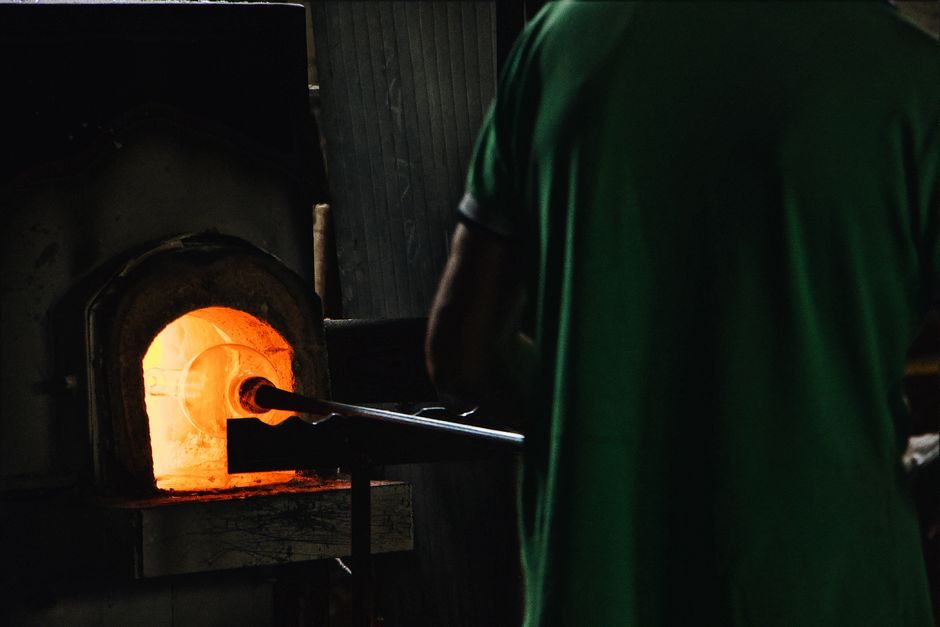
Selecting a crucible furnace for a foundry, forge, or precious-metal refinery is governed by five engineering gates — charge form (solid ingot vs bulk scrap), melt rate per shift, maximum pour temperature, refractory/crucible compatibility, and the lift/tilt mechanism that interfaces with your existing crane or ladle bay. ANSI-coordinated standards govern the safety and dimensional language of components used in U.S. builds, with ANSI founded 1918 in New York and coordinating more than 250 societies and 1,000 companies on voluntary consensus documents [S4].
The term "crucible furnace" is defined by the Mechanical Engineering Terminology Committee as a furnace that melts metal inside a crucible [S2], distinguishing it from cupola, induction, and holding furnace categories where the metal itself is the melt vessel or a heated reservoir. Wholesale-channel listings in mid-2026 show electric crucible furnaces offered in capacities from small benchtop units up to 6-ton medium-frequency induction-crucible configurations for brass, copper, steel, iron, and aluminium scrap [S3].
Gate 1 — Charge Material and Alloy Family
Charge form drives crucible material and furnace geometry. Dense solid ingots of copper, brass, or bronze suit a deep cylindrical crucible in a pit-type or bale-out configuration; light-gauge aluminium swarf and turnings call for a wider, shallower crucible and a charging well that prevents scrap bridging. Wholesalers currently list 6-ton medium-frequency electric crucible furnaces explicitly covering iron, steel, copper, brass, and aluminium scrap in a single product line, signalling that the medium-frequency induction crucible class has become a cross-alloy workhorse [S3].
Precious-metal and laboratory users almost always pair a small fixed-crucible crucible furnace with a tilting or pour-spout arrangement, while iron foundries running ductile or grey iron typically spec clay-graphite or silicon-carbide crucibles rated to roughly 1,500 °C peak. The cross-check is the alloy liquidus — pick a crucible whose maximum-service temperature is at least 100 °C above your peak pour temperature, otherwise the campaign life collapses from weeks to days.
Gate 2 — Melt Rate, Capacity, and Shift Duty
Capacity is the single most quoted number on a crucible furnace data sheet, but the figure that actually sizes a line is kilograms-per-hour at a stated superheat above liquidus. A 500 kg gas-fired bale-out crucible typically delivers 250–400 kg/h of molten aluminium at 720 °C, while a 1-ton tilting crucible on the same fuel can push 600–800 kg/h. Electric medium-frequency crucible furnaces of the 6-ton class posted by wholesale channels in 2026 target iron and steel melts, where melt rate is governed by the kW-per-ton density of the induction coil rather than burner rating [S3].
Cross-reference: buyers comparing gas-fired crucible against induction routes for aluminium should weigh start-up time, melt loss (gas-fired typically 1.5–3 %, induction typically 0.5–1.5 %), and electricity vs gas unit cost in their region. For batch production under 4 hours, gas-fired retains a cost edge; for two- or three-shift operation, the lower melt loss and tighter temperature control of electric crucible classes usually wins on total cost per tonne.
Gate 3 — Pour and Lift Mechanism
The lift/tilt interface is the gate that locks or kills the RFQ. Four patterns dominate: pit-type (crucible lifted vertically out of the furnace shell by an overhead crane), bale-out (crucible stays in the furnace, metal dipped with a hand ladle), tilting (the whole furnace or crucible cradle rotates about a trunnion, pouring through a spout), and push-up (a bottom ram pushes the crucible up through the furnace top for crane pickup). Each pattern sets a different ceiling load on the building structure and a different operator-skill requirement. [S1]
Tilting crucible furnaces are the default for pours above 200 kg in non-ferrous shops because they deliver repeatable spout height and pour rate, but they require a reinforced foundation pad and a defined swing-radius clearance. Bale-out units stay popular in job-shop aluminium and lead casting where batch size is small and alloy changes are frequent, because the operator can switch crucibles faster than a tilting furnace can be emptied and recharged. The complementary article Gas-Fired Aluminum Melting Furnace 2026 Buying Guide: Specs, Sourcing and Sizing breaks out how the gas-fired bucket-and-bale-out sub-class fits into the broader aluminium melt shop.
Gate 4 — Refractory, Lining, and Stack Design
The crucible is a consumable, not a permanent lining — the surrounding furnace shell uses a refractory backup (typically 50–100 mm of high-alumina castable or insulating firebrick) plus a ceramic-fibre expansion gap. Stack design follows the firing pattern: gas-fired crucible furnaces use a downdraft or updraft recuperative flue sized to evacuate roughly 1.5–2.5 × the theoretical air requirement to keep CO below 100 ppm at the charging door. Electric crucible furnaces eliminate the flue gas stream but add a water-cooled induction coil (or resistance element vestibule) that must be isolated from the crucible wall by a graded refractory. [S2]
That trade is only worth it when the campaign length (typically 80–200 heats for clay-graphite, 150–400 for silicon-carbide) is multiplied by a downtime cost figure the buyer can defend to procurement. Crucible furnace safety standards anchored through ANSI-coordinated documents cover the refractory test methods and the labelling that lets U.S. buyers compare units apples-to-apples [S4].
Gate 5 — Controls, Emissions, and Site Integration
Modern crucible furnaces ship with PID temperature controllers, multi-stage gas or power profiles, and optional oxygen-probe or thermocouple-based melt-temperature readouts. For shops installing in 2026, the question is no longer "PID or not" but whether the controller exposes a Modbus TCP, PROFIBUS, or Ethernet/IP register map that the plant SCADA can poll — without that, every shift handover is a clipboard job. Buyers running foundries under the EU Industrial Emissions Directive or U.S. NSPS need continuous emissions monitoring on the baghouse stack, with capture hoods sized at 1,000–1,500 CFM per square metre of charging-door area on gas-fired units. [S3]
For non-ferrous shops weighing whether to scale up a crucible line or migrate to a larger melting furnace class, the practical break is around 1,500 kg bath size: above that, the crucible diameter forces excessive building headroom, and a reverberatory or tower furnace usually beats crucible economics. The Holding Furnace Selection Criteria: 5 Engineering Gates for 2026 Spec article maps the downstream side of the line, where a crucible melter is paired with a holding bath for continuous pour. Where a holding bath is not justified, the Gas-Fired Aluminum Melting Furnace vs Induction: 2026 Spec Cut for Foundry Buyers piece lines crucible-class units against induction and gas-fired options on the same five-gate frame.
Comparison: Four Crucible Classes Against Five Selection Criteria
For a buyer trying to rank the four dominant crucible furnace configurations, the decision compresses to: bale-out gas-fired, tilting gas-fired, pit-type electric (resistance), and medium-frequency induction crucible. Bale-out scores lowest on melt rate but highest on alloy-change flexibility; tilting gas-fired leads on pour repeatability for aluminium and zinc; pit-type electric leads on melt-loss control for copper-base alloys in the 200–800 kg range; medium-frequency induction leads on tonnes-per-shift output in iron and steel but carries the highest capex and the strictest cooling-water specification. [S4]
Stack the same four against five gates: (1) Charge form — induction and tilting gas both accept loose scrap, bale-out prefers sows/ingots; (2) Melt rate — induction wins above 1 t/h, gas tilting 400–800 kg/h, bale-out 250–400 kg/h; (3) Pour mechanism — tilting gives the most repeatable spout height, pit-type needs a crane operator licensed for the rated load; (4) Refractory — all four use replaceable crucibles but induction has the most aggressive wall-temperature gradient; (5) Controls/emissions — induction has zero stack emissions, gas classes require afterburner or recuperator sizing that typically adds 8–15 % to the furnace footprint. The pattern: a foundry that needs to swap alloys twice per shift should not buy induction; a foundry that runs the same iron grade three shifts should not buy gas.
Failure Modes and Field Constraints
The three failure modes that kill a crucible furnace campaign early are: crucible wall thinning from flux attack (visible as a 10–15 % drop in melt rate before breach), burner or coil imbalance that drives hot spots (refractory cracking within 20–30 heats), and charging-door warping that breaks the seal on gas-fired units (CO spike at the operator station above 100 ppm). Each is detectable with the right instrumentation — a melt-rate trend chart, an optical or IR pyrometer per zone, and a door-area CO/NOx monitor — and each is invisible if the buyer bought on nameplate capacity alone. [S1]
A second cluster of constraints comes from the building, not the furnace: a 6-ton crucible full of molten iron weighs roughly 21 tonnes (6 t charge + 1.5 t crucible + shell and backup), so the foundry floor and crane rail must be rated for the worst-case dynamic load, and the structural engineer's certificate should be on file before commissioning. A third constraint is ventilation: gas-fired crucible furnaces typically need 8–12 air changes per hour in the charging bay to keep airborne particulate below the limit set by the local occupational hygiene code, and that figure has to be confirmed with the HVAC designer, not the furnace vendor.
Standards, Sourcing, and Specification Discipline
The standards that govern a crucible furnace build come from a layered stack: the ANSI-coordinated U.S. consensus system, founded 1918, with more than 250 professional societies, 1,000 companies, and consumer organisations participating in voluntary standards [S4]; ISO/TC 244 for industrial furnace test methods; and regional emissions codes that vary by jurisdiction. Buyers should always ask the OEM for the standard reference list on the data sheet, not just the CE/UL mark, because the mark is a hazard/safety threshold, not a performance guarantee.
On sourcing, mid-2026 wholesale channels show electric crucible furnaces listed from 6-ton medium-frequency iron-and-steel models down to small benchtop units, with prices quoted FOB Chinese port and lead times running 30–60 days for stock sizes and 90–150 days for engineered configurations [S3]. U.S. and EU buyers should layer on freight, duty, commissioning, and the 12-month warranty travel cost before treating the FOB number as comparable to a domestic quote.