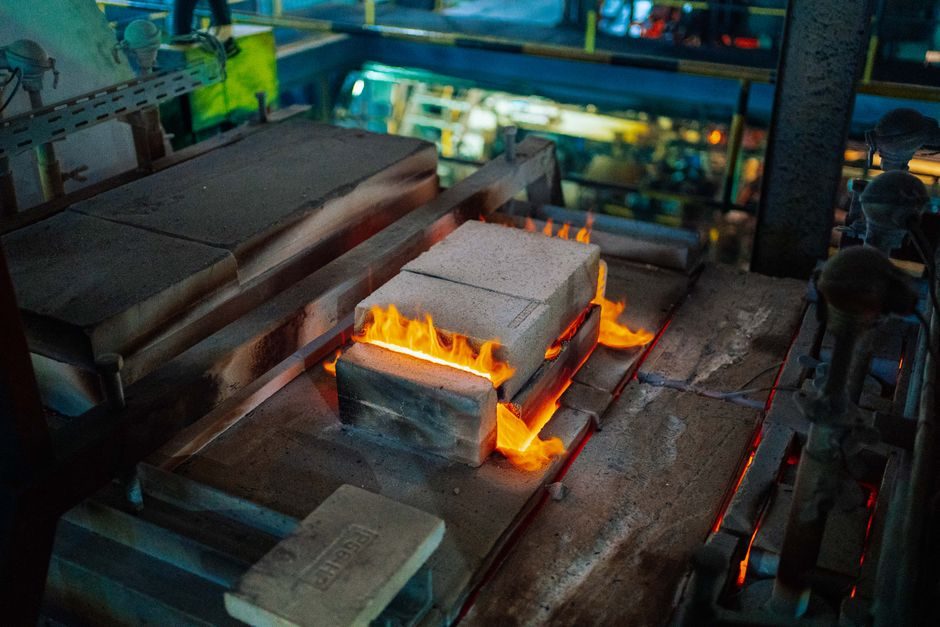
A crucible furnace is any melting unit in which the metal is contained inside a separate, replaceable crucible that is heated from the outside, and that single design choice drives the entire classification tree [S1].
The best-known industrial variant is the crucible induction furnace, but the family also covers fuel-fired (oil, gas, coke) and resistance-electric designs, with capacities from 2 kg benchtop gold-melting units up to 6-tonne medium-frequency brass and copper melters [S1][S3][S4].
Heat-Source Classification: The Three Main Families
Crucible furnaces are split into three heat-source families — induction, fuel-fired, and resistance-electric — and each one constrains crucible material, atmosphere control, and maximum temperature differently [S1]. Induction crucible furnaces couple the melt directly through an alternating magnetic field, fuel-fired designs transfer heat from a combustion chamber surrounding the crucible, and resistance-electric versions heat an external element or the crucible wall itself by Joule effect [S1].
Capacities track closely with the heat source: benchtop resistance units cover 2–3 kg gold/silver casting loads with ratings around 1400–1500 W and 2102 °F peak, while industrial medium-frequency induction melters are routinely quoted at 6 tonnes per heat for brass, copper, and aluminium scrap [S3][S4]. Fuel-fired crucible furnaces (coke, oil, or natural gas) remain common in non-ferrous jobbing foundries where shop power is constrained, though they offer poorer atmosphere control than sealed induction or resistance shells [S1].
Fuel-Fired Crucible Furnaces: Coke, Oil, and Gas
Fuel-fired crucible furnaces are the oldest configuration and remain widely used for non-ferrous melting in foundries without three-phase power, with coke-fired tilting pits still found in brass and bronze casting shops [S1]. Heat is delivered by combustion gases flowing around the outside of the crucible; the crucible itself — typically clay-graphite, silicon carbide, or cast iron — must therefore tolerate both peak metal temperature and the outer flame envelope.
The original Griffin design described in 1909 used three iron rods on a tripod with quartz pointed ends to support the crucible, quartz being chosen because it fuses above platinum, giving uniform heating without a platinum tripod — a direct ancestor of the modern sprung crucible support [S2]. The key engineering constraints are atmosphere (oxidising flue gas versus inert melt), crucible life (thermal cycling and slag attack), and chimney sizing for the chosen fuel. Coke-fired units are the lowest CapEx but the highest in flue-gas treatment burden; oil and gas versions allow cleaner trim and faster melt-down at the cost of burner maintenance.
Resistance-Electric Crucible Furnaces: Benchtop and Laboratory
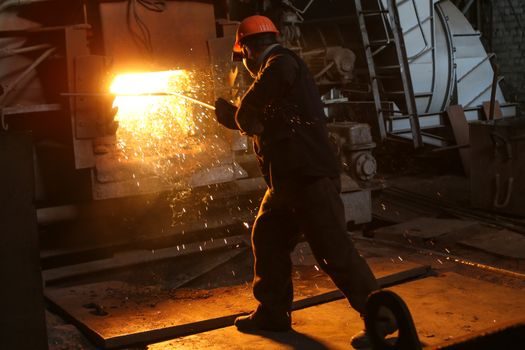
Resistance-electric crucible furnaces dominate the small-capacity, precious-metals, and laboratory segment, with commercial offerings from roughly 2 kg / 1400 W to 3 kg / 1500 W aimed at gold and silver casting in jewellery and dental workshops [S4]. The heating element wraps or surrounds the crucible; graphite or ceramic-fibre crucibles are typical because the element temperature must exceed the metal pour temperature.
These units trade melt rate for simplicity: no water cooling, no RF generator, no high-current busbars, and 220 V single-phase operation is standard. They are not the right tool for tonnage ferrous or aluminium work — for that the melting furnace family scales up through induction and fuel-fired designs instead. Practical limits are set by element life at temperature and by the absence of forced circulation, which makes alloy homogeneity dependent on operator stirring.
Induction Crucible Furnaces: Coreless and Channel Types
The induction furnace configuration is the dominant industrial crucible furnace because it delivers high power density, clean atmosphere, and precise temperature control, and is the variant most often referenced in the foundry lexicon [S1]. Coreless induction crucible furnaces are the most common: a water-cooled copper coil surrounds the crucible, and eddy currents in the charge itself generate the heat, giving melt rates that scale with mains frequency and crucible size.
Medium-frequency units (typically 500 Hz to 10 kHz from a solid-state inverter) are quoted at 6-tonne heats for brass, copper, steel, and aluminium scrap, while main-frequency (50/60 Hz) coreless furnaces handle iron and steel in 1–60 tonne sizes for the same reason: stirring from the induced field produces a homogeneous melt without external agitation. Channel-type induction crucible furnaces use a separate molten-metal channel as the secondary of a transformer, giving higher electrical efficiency at the cost of a heel of metal that must be maintained between heats.
Selection Criteria: Capacity, Alloy, and Atmosphere
Selection is driven by four decision criteria — charge weight, alloy chemistry, atmosphere requirement, and available power — and a quick comparison shows why no single type fits all jobs [S1][S3][S4].
For 2–10 kg precious-metal or jewellery work, a 1400–1500 W resistance-electric crucible furnace on single-phase mains is the lowest-cost fit [S4]. For 100 kg to 6 t non-ferrous production in brass, copper, or aluminium, a medium-frequency induction crucible furnace is standard, with quoted industrial offerings at 6-tonne heats [S3]. For ferrous melts above 10 t, main-frequency coreless induction dominates. For jobbing foundries without reliable three-phase power, a coke- or gas-fired crucible furnace is still the practical default despite the atmosphere and emissions penalty [S1].
Crucible Materials and Failure Modes
Crucible selection is a metallurgical decision in its own right, and the most common failure mode is slag-line attack rather than bulk melt-through [S1]. Clay-graphite crucibles are the industrial default for non-ferrous induction melting because graphite resists thermal shock and wets poorly against most molten alloys, giving a typical service life of hundreds of heats when sized correctly to the coil and power input [S1].
Silicon-carbide crucibles extend temperature ceiling and oxidation resistance, at higher cost; cast-iron and steel crucibles are restricted to zinc, lead, and low-melting alloys because they dissolve rapidly in molten aluminium and copper. Quartz, as the 1909 Griffin support demonstrated, is used for laboratory ignition work because it fuses above platinum and is much cheaper, but it is not a melt-containment material for any production alloy [S2]. Operators extending crucible working life focus on preheat cycles, avoiding wet charges, and matching the coil-crucible gap to the rated frequency.
Related Furnace Families and Crossover Designs
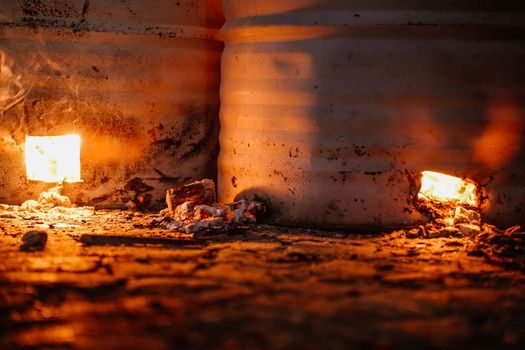
Crucible designs overlap with holding furnace and heat treatment furnace configurations, but the dividing line is whether the container is replaceable and whether the unit's primary job is melting versus temperature maintenance [S1]. A cupola furnace, by contrast, melts by passing a continuous charge through a vertical shaft of hot coke and has no separate crucible at all, which is why cupolas are out of scope for this classification.
Practical crossover cases include crucible-type resistance furnaces used for stress-relief and annealing, and induction crucible furnaces held at set-point for duplexing — melting in one unit, then transferring to a separate channel-induction holder for casting. Both reuse the same crucible-coil geometry but reframe it as temperature maintenance rather than melt-down, and the holding furnace family should be evaluated when the duty cycle shifts from batch melting to continuous supply.
Trackable Signals and Engineering Watch-Items
Three signals are worth monitoring over the next 6–12 months: (1) inverter prices for medium-frequency IGBT stacks, which set the floor on capital cost for 1–6 t induction crucible furnaces; (2) tightening emissions rules on coke- and oil-fired crucible furnaces, which historically force conversions to gas or electric; (3) crucible-grade silicon-carbide supply, where Asian producers are the dominant source and lead time has tracked 8–14 weeks in recent procurement cycles [S3].
For benchmarking, the 1909 Griffin tripod — iron rods, brass springs, quartz pointed ends — remains a useful reference for what a minimum-viable crucible support looks like, and any 2026-era sprung-steel crucible support is a direct descendant of that geometry [S2]. Specifiers comparing a 2 kg / 1500 W benchtop unit against a 6 t / medium-frequency industrial melter should weigh alloy, atmosphere, and power quality before capacity, because the wrong heat source costs more over a year of operation than the right one costs upfront [S3][S4].
See also our earlier report, Torque Sensor Selection Guide 2026: Types, Specs, and Sourcing Criteria.