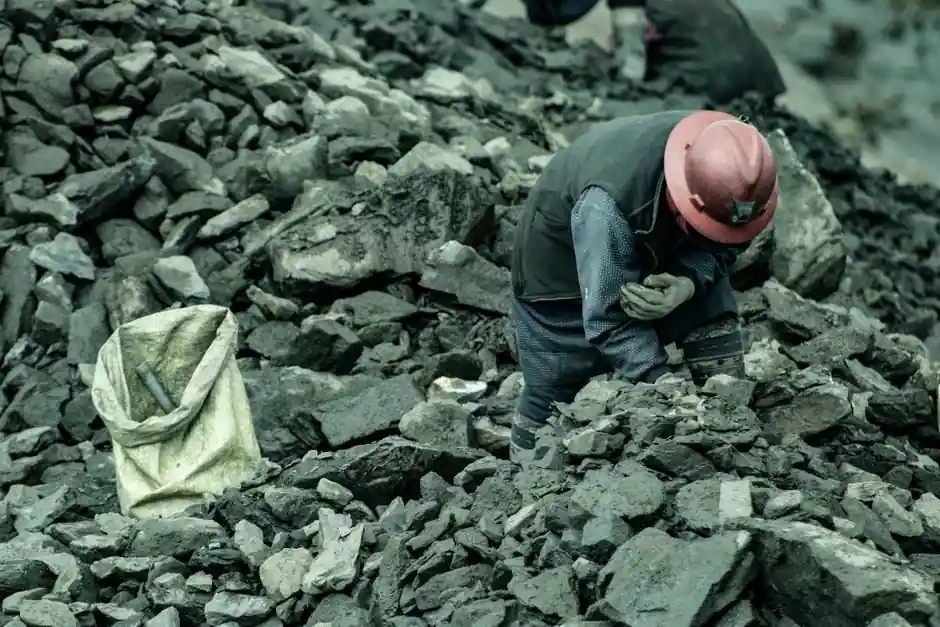
U.S., EU, and Canadian stockpiling programs moved from policy paper to budget line between July 2025 and July 2026, changing how industrial buyers price, contract, and qualify suppliers of cobalt, lithium, nickel, rare earths, tungsten, and graphite [S2][S3][S4][S5].
The stockpile footprint now covers raw ore, processed oxides, and finished alloys. The U.S. National Defense Stockpile (NDS) is under formal posture review by the Secretary of Defense after an executive order issued on day one of the Trump administration, and the EU announced a U.S.-EU deal in late April 2026 covering standards, investments, and price floors [S2][S4].
Why stockpiles are back on the agenda
Governments returned to stockpiling because Chinese export controls on gallium, germanium, graphite, and several rare earths have tightened since 2023, and because recycling and friend-shoring cannot close the gap in time [S2][S4]. Chinese firms control roughly 60% of global mining capacity for the relevant raw minerals and process around 90% of the metals, leaving Western buyers exposed on the conversion step, not just the dig step [S4].
The U.S. Department of Defense placed a $20 million investment in a New Brunswick tungsten and molybdenum mine in May 2024, signalling that defense procurement dollars are now funding allied midstream assets rather than only domestic ore [S5]. Recycling rates for rare earth metals currently sit below 1%, and a new European mine still needs 15-20 years from discovery to first production, so the political timeline for self-sufficiency is measured in decades, not quarters [S4].
Program shapes: NDS, EU stockpile, and Canadian reserve
The three programs are not architecturally identical, and the differences matter to a procurement team building a multi-year supply plan. The NDS review focuses on restoring coverage depth for defense-critical inputs, with the Critical Materials Future Act and the SECURE Minerals Act separately proposing a Strategic Resilience Reserve that would behave more like a price-stabilisation tool than a wartime warehouse [S2]. The EU proposal, outlined in April 2026, leans toward a countercyclical buyer-of-last-resort model that purchases when Chinese supply floods the market and releases tonnage when Beijing throttles exports, profiting on the spread while buffering downstream users [S4]. Canada's program, framed by the Public Policy Forum in May 2025, adds a third leg: a national reserve paired with price floors and innovative financing aimed at de-risking the mine-to-midstream investment pipeline [S5].
Comparison of the three programs on buyer-visible criteria: scope (NDS is defense-led and raw-material weighted, EU proposal is industrial and conversion-step weighted, Canadian reserve is mining-pipeline weighted); trigger (NDS runs on stockpile targets set by Defense, EU runs on market-spread signals, Canadian reserve runs on price-floor breach); buyer interface (NDS is indirect via DLA contracts, EU is direct sales to industrial off-takers, Canadian reserve is indirect via guaranteed offtake); and ESG overhead (all three now require chain-of-custody documentation, but the EU proposal is the most explicit on traceability because it must justify buying from third-country producers without fuelling labour abuses flagged in recent NYU Stern reporting) [S2][S4][S5][S8].
What changes for industrial buyers
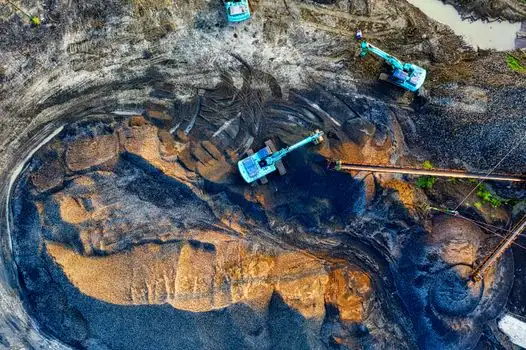
Spot index pricing for gallium, germanium, and dysprosium oxide now moves on rumours of stockpile purchase orders the same way WTI moves on Strategic Petroleum Reserve headlines, so a buyer's hedging policy has to widen the tenor window and add an event-risk premium to physical contracts [S3][S6]. Long-term offtake contracts, previously written as 12-month fixed price, are being rewritten as 24-36 month formulas tied to a published index plus a stockpile-policy adjustment clause, because both buyer and seller recognise that government action can reprice the market mid-contract [S2][S6].
For capital projects specified in 2026, the practical impact is a higher qualification bar on suppliers: mills and refiners are now asked to disclose plant-level country of origin for each input, not just final-goods origin, because stockpile eligibility rules reward verifiable midstream geography [S7][S8]. Canada alone holds roughly 3% of world lithium reserves, 2% of cobalt and graphite, and 1.7% of nickel, with in-ground value across just six critical minerals estimated at over $300 billion, so Canadian-domiciled converters and processors will likely see preferential treatment under allied procurement preferences [S5].
Sourcing risks a stockpile cannot fix
Stockpiles blunt short, sharp shocks; they do not add processing capacity, and they do not create mines. Recycling rates for rare earth metals are still below 1%, and Western midstream conversion remains the binding constraint even if every proposed mine reaches production on the optimistic schedule [S4]. A stockpile that buys refined dysprosium oxide still depends on the same Chinese or Chinese-controlled separation plants that an unrestricted buyer would use; the buffer changes timing, not topology [S4][S8].
There is also a documented human-rights cost. NYU Stern's Center for Business and Human Rights warned in 2025 that U.S. and EU stockpiling risks amplifying child and forced labour in mining regions if traceability and due-diligence standards are not embedded in stockpile procurement rules [S8]. For a buyer subject to OECD-aligned supply-chain reporting, this means stockpile eligibility should be treated as a separate compliance filter, not a substitute for the existing mineral origin audit, because the audit covers what the stockpile does not.
Standards, market data, and decision triggers
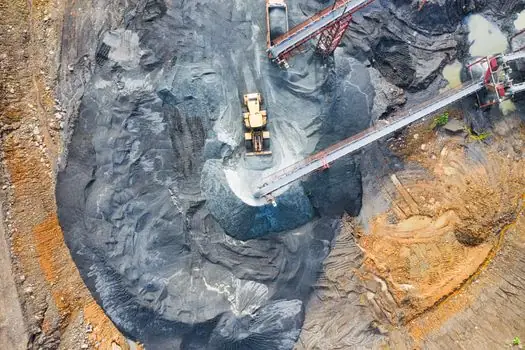
The U.S. Geological Survey's critical minerals list, restated by CRS report R47982, defines the policy scope: a critical mineral is a nonfuel mineral essential for use and exposed to considerable supply-chain vulnerability [S1]. The IEA's January 2026 commentary frames stockpiles as one protective layer in a wider system that still requires mine permitting reform, midstream investment, and demand-side efficiency [S3]. The factmr April 2026 market study and the Grand View Research 2025-2033 sizing both treat stockpiling as a growing spend category, with industrial buyers, defense agencies, and trading houses competing for the same finite tonnage of qualifying material [S6][S10].
A practical buyer's checklist for 2026 contract reviews: confirm whether the seller's feedstock is on the U.S. critical minerals list or the EU Critical Raw Materials Act list; check whether the contract carries a stockpile-policy adjustment clause tied to a named index; require plant-level country of origin for the conversion step, not only the ore; and pre-qualify a secondary converter inside an allied jurisdiction to avoid single-node exposure on materials like rare earth oxides and battery-grade graphite. The pressure transmitter and flow meter supply chains in process plants are direct end-markets for cobalt and rare earth permanent magnets, so these stockpile rules propagate into instrument spares pricing within one or two contract cycles, as the same upstream volatility that the lighting equipment and electric lamps and lamps and light fittings sectors already saw on rare-earth phosphors. Demand for lithium, cobalt, and copper could grow almost fourfold by 2030 and overall critical mineral demand up to six-fold by 2040, with the annual market value of energy-transition minerals projected near $400 billion by mid-century, which is why even modest stockpile releases will move spot indices visible to anyone bidding on construction machinery and equipment driveline magnets and checking and testing apparatus subassemblies [S5].
Signals to track through year-end 2026
Three trackable signals will tell a procurement team whether the stockpile era is stabilising or escalating: the first U.S. NDS purchase order issued under the new executive-order review, which will set a precedent bid; the EU's formal stockpile legislation and the disclosure of its initial commodity basket, expected after the April 2026 U.S.-EU framework deal; and Canada's first price-floor or offtake-guarantee contract with a domestic midstream processor, which would set the allied-procurement reference price for cobalt and nickel converters. Comparable engineering-side coverage of how upstream material volatility flows into specific component markets runs in parallel briefs, including a recent piece on low-alloy steel powder Cu and Ni control and on counterfeit bearing detection in the gray market, both of which touch the same quality-versus-cost trade-off a stockpile-eligible buyer is now negotiating. [S4]