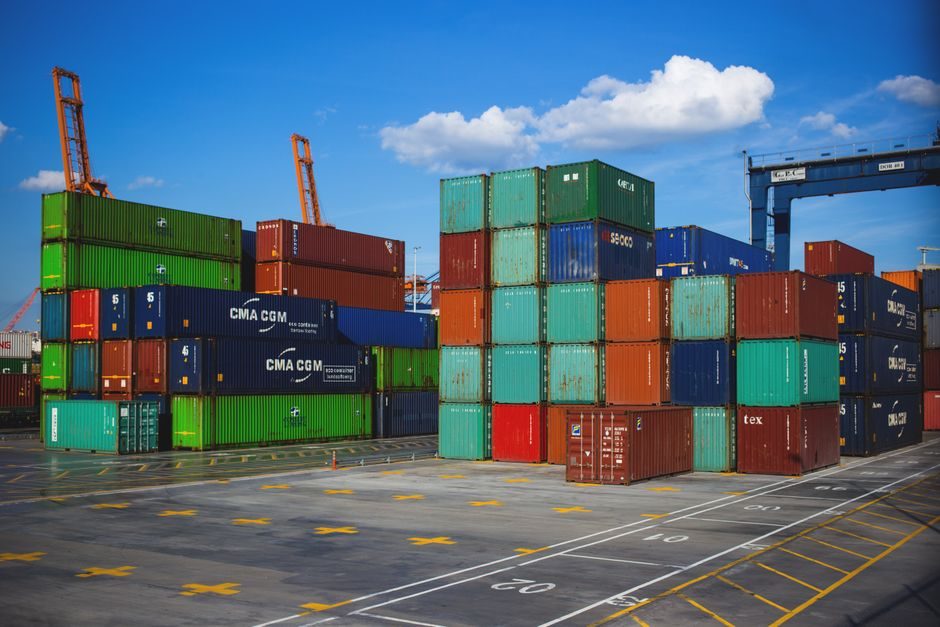
Crystalline silicon modules account for more than 80% of cross-border PV shipments tracked in the ENF panel directory, with TOPCon and mono-PERC dominating the 2026 product mix [S3].
Shipment volumes are reported under HS code 8541.43 (photovoltaic cells assembled into modules or panels), the customs line that anchors almost every PV import-export transaction logged in public trade data systems [S2].
Module Spec Bands Buyers Should Anchor On
Front-of-meter utility modules shipped across borders in 2026 cluster in the 550 Wp to 730 Wp power class, with module efficiencies between 21.0% and 23.5% on TOPCon n-type wafers and 20.0% to 21.5% on p-type PERC lines [S3].
Standard 182 mm and 210 mm wafer formats account for the bulk of crystalline shipments, and bifacial double-glass configurations have displaced monofacial backsheet modules in new utility tenders across MENA, Brazil and India [S1][S3].
Buyers comparing offers should pin datasheet values against the ENF panel directory, which lists STC power tolerance bands of 0% to +3% (positive-only) for Tier-1 Chinese and Vietnamese lines and temperature coefficients of power in the -0.30 %/°C to -0.35 %/°C range for TOPCon [S3].
Country-Level Export Concentration
China remains the single largest exporter of crystalline PV modules, with Vietnam, Malaysia, Thailand, Cambodia and India functioning as the principal offshore assembly corridors for Chinese cell and wafer capacity [S1].
For comparison, the same concentration pattern that compresses solar supply into a handful of Asian manufacturing hubs is visible in adjacent energy-commodity flows, including the May 2026 China semiconductor export drop mapped to specific HS-code lines and the multi-year-high lithium battery export corridor tracked in the parallel China battery trade flow update [S1][S2].
Traders building supplier shortlists should treat the ENF company directory as the primary filter: it lists more than 3,800 crystalline panel models and lets importers narrow by cell technology, junction-box rating (typically IP67 or IP68 for utility modules) and frame material, with the string-level data logger used at the receiving warehouse reading out STC flash values for cross-check [S3].
Import-Side Demand Hubs and Tariff Exposure
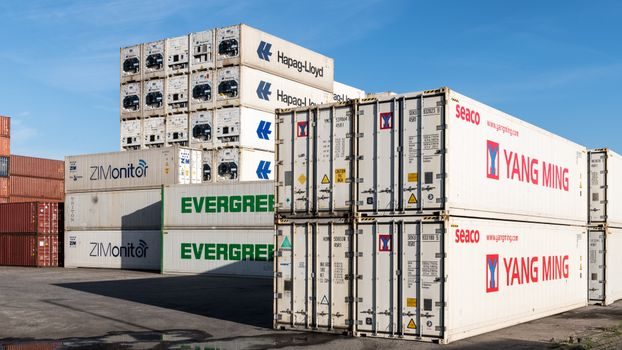
The European Union, India, Brazil, the United States and Australia are the largest import destinations in 2026, with the EU's CBAM carbon levy and the U.S. Section 201 / AD-CVD framework continuing to reshape landed-cost math for crystalline modules [S1].
India's ALMM list and basic customs duty on PV modules have lifted domestic content requirements, while the EU Net-Zero Industry Act has begun flagging "resilience" thresholds for module sourcing — both directly influence which Asian factories remain competitive in EU and Indian tenders [S1].
Importers verifying a shipment's country-of-origin should reconcile the bill of lading, the certificate of origin and the manufacturer's IEC 61215 / IEC 61730 test certificate, which together determine the applicable preferential tariff line under most bilateral trade frameworks [S3].
Decision Matrix: Module Family vs Project Type
For utility-scale ground-mount projects above 50 MW, n-type TOPCon bifacial double-glass modules in the 580-720 Wp class with bifaciality factors of 80% to 85% deliver the lowest LCOE per kWh against current Chinese FOB prices [S1][S3].
For C&I rooftop and carport applications, the 410 Wp to 550 Wp p-type PERC monofacial band remains the default, because the lower weight per m² (typically 19-23 kg/m²) and proven 25-year linear power warranty reduce balance-of-system cost in space-constrained sites [S3].
For off-grid and hybrid applications in sub-Saharan Africa and island microgrids, thin-film and shingled-cell modules offer better partial-shade and high-temperature behaviour, though their $/W landed cost is typically 5% to 15% above mainstream crystalline lines [S1][S3].
Trade-Data Verification Workflow

Each import-export transaction can be audited through three independent signals: the customs HS-code declaration (8541.43 for assembled modules, 8541.42 for cells), the bill of lading weight in kg, and the manufacturer's serial-number range shipped in the container [S2].
Public trade-data platforms such as 52WMB expose shipment count, quantity in watts, and weight in kilograms at the buyer-level, allowing importers to cross-check a supplier's claimed monthly capacity against actual customs-cleared volumes, with the inverter-room HMI panel logging the same shipment's string-level IV-curve data on commissioning [S2].
Working with a Chinese trading company that has been in business since the 1980s — for example, Anhui Technology Import & Export, established 1985-03-20 — typically provides access to consolidated multi-factory sourcing and IEC-certified logistics handling, useful for small-volume buyers without a dedicated QC team [S4].
Standards and Certification Anchors
Every imported module should carry IEC 61215 (design qualification), IEC 61730 (safety), and a country-specific add-on: UL 61730 for the U.S. and Canada, PVEL PQP for bankability screening, and CEC listing for the Australian market [S3].
Junction-box IP rating (IP68 for utility-grade), front-load mechanical tolerance (typically 5,400 Pa snow load and 2,400 Pa wind load on bifacial double-glass) and PID-resistance certification (IEC 62804) are the three datasheet fields that most often separate a Tier-1 line from a Tier-3 lookalike [S3].
Buyers should also demand the manufacturer's IEC 62941 quality-system certificate, which covers PV-specific production controls and is increasingly required by European EPCs in 2026 tenders, and confirm that the AC-side digital panel meter is on the grid-acceptance punch list.
Field Constraints and Failure Modes
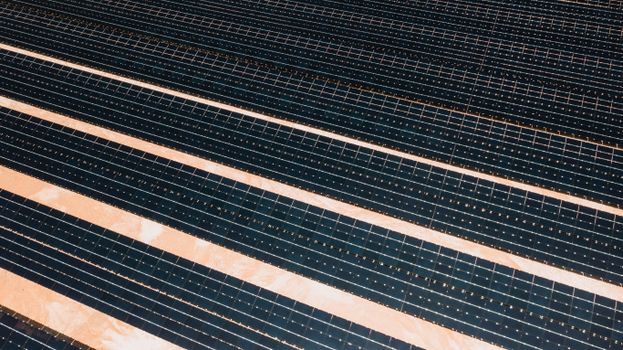
The three recurring import-quality failures logged in ENF and customs data are micro-cracks from poor packaging during containerised sea-freight, hot-spot heating from sub-spec encapsulant, and PID losses on systems grounded negative without proper isolation transformers [S3].
Snail trails and backsheet delamination continue to surface on modules shipped without IEC 61215 long-term stress certification, and buyers should reject any shipment whose 1,000-hour damp-heat test result is not in the datasheet [S3].
Containerised modules that experience more than 15 days of salt-spray transit on open-deck vessels should be re-flashed under EL tester on arrival, and any cell with more than 0.5% cracked area should be quarantined before string assembly [S3].
Trackable signals over the next quarter: ENF panel directory updates to its 2026 H2 module database, the next EU CBAM embedded-emission declaration deadline, and the Indian ALMM list revision — each will reset the cross-border PV cost stack.
For related coverage, see Best Suspended Working Platform for Data Center Facade and Atrium Maintenance.