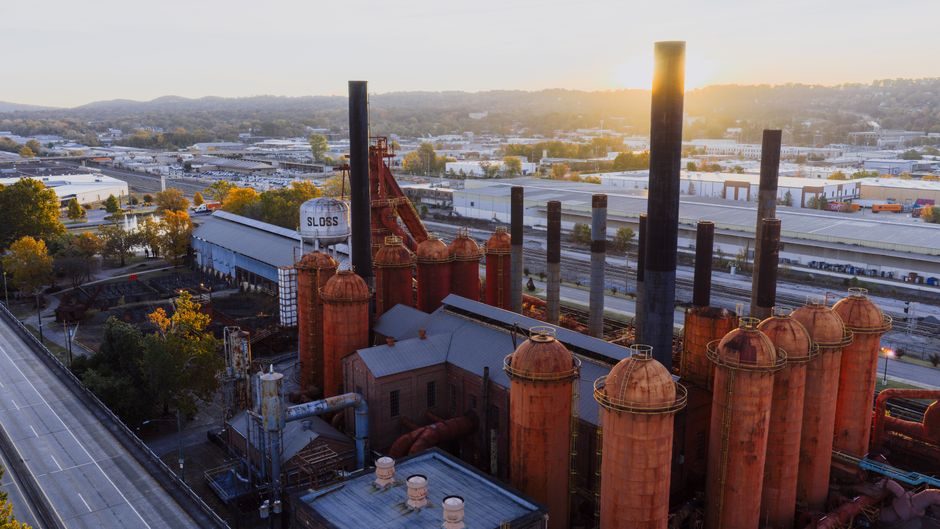
A complete installed cupola furnace for a 5–10 t/h grey-iron melt in 2026 typically costs US $450,000–$900,000 for the shell and stack, with another 30–60% added once hot-blast blowers, recuperators, wet scrubbers, charge elevators and ducting are integrated [S2]. Used and small-batch units between 0.5 and 2 t/h remain available for US $35,000–$120,000 from Chinese and Indian rebuilders, with the spread driven by refractory lining condition, blower package, and whether a spark-arrester and dust collector are included [S1].
The decision axis is not "cupola vs. something else" — it is stack diameter, melt rate, lining life and energy-recovery package. Buyer spec sheets and OEM quotes from 2024-2026 cluster around four price bands: hobby/used, light commercial, mid-volume production, and large automated green-sand lines [S1][S2]. Cost per ton of iron melted remains the most useful comparison metric because installed-price ratios can mislead on small units.
2026 Cupola Price Bands by Tonnage Class
Cupola pricing in 2026 scales primarily with internal stack diameter (the "well" diameter) and rated melt rate, not with the steel shell weight, because the refractory lining — typically 230–380 mm of silica, alumina or SiC brick — is the dominant material cost. A 0.5–1 t/h hand-charged cold-blast unit commonly lists at US $35,000–$80,000 ex-works from Chinese and Indian suppliers, with a 2–3 t/h cold-blast production unit at US $120,000–$220,000 [S1]. A 5–10 t/h water-cooled, hot-blast cupola with recuperator and twin tuyeres reaches US $450,000–$900,000, and a fully automated 15–25 t/h installation with charge elevator, weigh hopper and emissions train exceeds US $1.5 million [S1][S2].
On a cost-per-ton-hour basis, 2026 quotations cluster around US $35,000–$90,000 per rated t/h for cold-blast, US $70,000–$130,000 per t/h for hot-blast without recuperator, and US $90,000–$180,000 per t/h for hot-blast with recuperator and emissions package. These ratios explain why small foundries continue buying cold-blast: payback on a recuperator typically requires more than 6,000 melt-hours per year to justify the additional US $150,000–$300,000 of capex [S1].
Refractory, Lining Life and the Hidden Operating Cost
The silica or high-alumina lining inside a cupola furnace is the single largest consumable, with a campaign life of 6–24 weeks on a hot-blast production unit and 2–6 weeks on a small cold-blast stack depending on melt temperature, slag chemistry, and coke ratio. Chinese OEM data sheets and US foundry surveys from 2024–2025 indicate a typical lining replacement cost of US $8,000–$25,000 per campaign for a 3–5 t/h cupola, and US $30,000–$80,000 per campaign for a 10–15 t/h unit, dominated by imported magnesia-carbon or resin-bonded SiC brick. Foundries running 24/7 typically budget US $15–$30 per ton of iron melted for refractories alone, which often exceeds the depreciation share of the furnace capital [S1][S2].
SiC linings carry a 30–50% premium over fireclay or 42% alumina brick, but extend campaign life by 40–80% and tolerate the higher flame temperature of a hot-blast, oxygen-enriched melt. The trade-off is that a SiC lining cannot be patched with cheap fireclay; full cool-down, drop-bottom discharge, and a re-stamp are required. Buyers who under-quote the refractory number typically see 18-month operating costs that exceed the purchase price of the furnace itself [S2].
Hot-Blast, Recuperator and Oxygen Enrichment Cost Stack
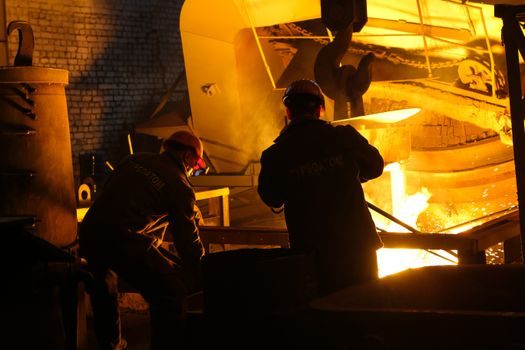
The cost gap between a 2026 cold-blast cupola and a hot-blast recuperated cupola is not the shell — it is the air-handling and energy-recovery package. A cold-blast unit needs only a 30–80 kPa positive-displacement blower sized to roughly 80–120 Nm³/min per t/h of melt rate, costing US $8,000–$25,000. A hot-blast system adds a refractory-lined recuperator (US $60,000–$180,000), a high-pressure blower with VFD (US $25,000–$70,000), a combustion-air preheater control skid, and a hot-blast valve train rated for 400–600 °C inlet [S1].
Compared with an induction furnace of equivalent tonnage, a hot-blast cupola with oxygen still wins on coke-melted iron cost in regions where power exceeds US $0.10/kWh, but loses decisively where grid power is cheap and emissions caps are tight [S1][S2].
Emissions, Scrubbing and Compliance Cost Layer
A 2026 cupola installation in any region with enforced PM, CO and SO₂ limits must include a cooling/scrubbing train that adds 20–45% to the bare-furnace price. A wet venturi scrubber for a 5–10 t/h cupola is quoted at US $80,000–$220,000 with recirculation pump, ID fan, sludge handling, and stack monitoring. A dry baghouse with afterburner for CO and VOC control on a foundry pouring resin-bonded sand cores adds another US $60,000–$180,000. Buyers in the EU and California need to also budget continuous emissions monitoring (CEMS) at roughly US $40,000–$90,000 installed, plus annual calibration and reporting [S2].
Buyers should treat emissions hardware as a separate line item rather than rolling it into the "furnace" quote, because most Chinese and Indian ex-works prices exclude it and European system integrators typically mark it up 25–60%. For comparison, a crucible furnace of equivalent melt rate usually has lower dust loading but higher per-ton fuel cost, which is why hybrid cupola-plus-crucible lines are still being installed in mid-volume brass and bronze foundries in 2026 [S1].
Source Geography, MOQ and 2026 Sourcing Levers
Chinese suppliers on Made-in-China.com listed lab- and pilot-scale coke and box furnaces in 2026 in the US $1,000–$20,000 MOQ-1 range, while mid-volume cupola shells and stacks surfaced at US $35,000–$700,000 with MOQ 1 and 30–60 day lead time [S1][S4]. Indian suppliers on Tradeindia and IndiaMART typically undercut Chinese ex-works on shell fabrication by 8–15% but quote longer delivery windows (90–150 days) and longer refractory pre-heat schedules. European rebuilders (Italy, Germany) generally price 40–80% above Chinese for comparable melt rate but include CE marking, ATEX documentation, and a 12-month performance warranty, which a Chinese OEM will not provide as standard [S1].
The strongest 2026 cost levers, in order of typical savings, are: (1) buying a refurbished cold-blast shell with new refractory (40–55% saving vs. new), (2) sourcing the blower and recuperator separately from a domestic industrial-fan vendor rather than the OEM package (15–25% saving), (3) specifying domestic refractory brick rather than imported (10–20% saving on lining cost), and (4) shipping the shell knocked-down (KD) for on-site re-assembly, which can cut ocean freight by 30–50% on 20 t-plus stacks. The weakest lever is bargaining on OEM-supplied controls: PLC and instrumentation mark-ups on Chinese cupolas routinely run 200–400% over equivalent industrial-hardware list price [S1][S4].
Cupola vs. Induction and Crucible: When the Cupola Still Wins on Cost
A 2026 cost comparison for a 5 t/h grey-iron melt line shows a cupola with hot blast at roughly US $90–$110 per liquid ton in fuel + refractories, a medium-frequency induction furnace at US $95–$140 per ton, and a gas-fired crucible furnace at US $130–$180 per ton. The cupola loses to induction on melt cleanliness and to crucible on flexibility, but still wins on per-ton cost wherever metallurgical-grade coke is available below US $350/t and grid power exceeds US $0.09/kWh [S1][S2].
For brass, bronze and small-tonnage specialty melts, a holding furnace paired with a small cupola or shaft furnace remains the lowest-capex route in 2026, with a 2 t/h package typically installed for US $180,000–$320,000 including pouring launder and tilter.
Buyers should lock refractory and blower quotes before signing a shell PO, since both lead times and prices moved materially through 2024–2025 [S1].
For related coverage, see Rebar Threading Machine 2026 Price & Cost Guide: Motor Class, Roller Geometry and.