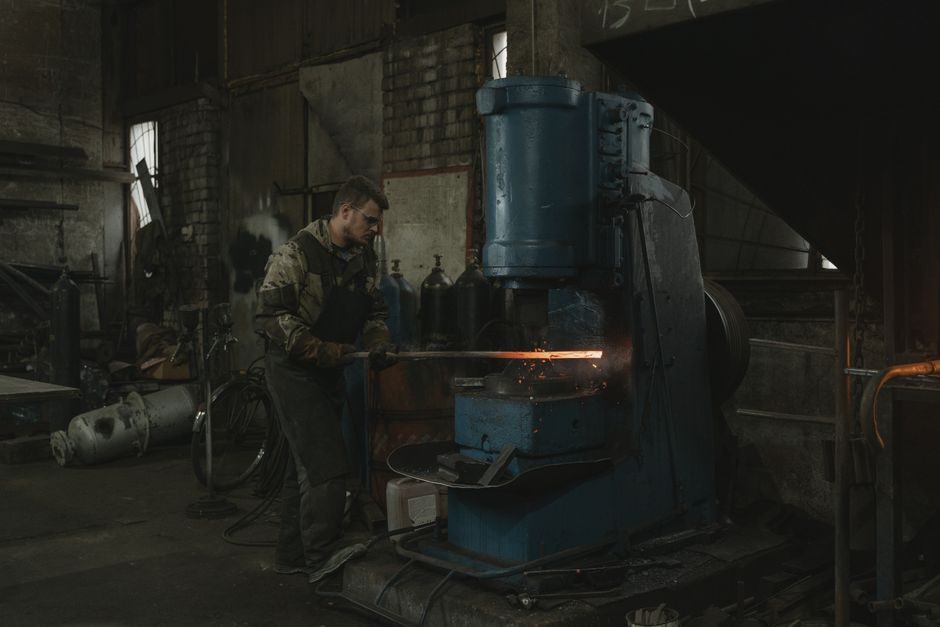
A cupola furnace is a vertical, refractory-lined shaft furnace charged with iron scrap, coke, and flux, through which a forced air blast is introduced through tuyeres to remelt cast iron — the principal melting unit in small and mid-size foundries worldwide [S3].
Classifications diverge on three axes: blast temperature (cold vs hot), shell cooling strategy (uncooled vs water-cooled), and refractory chemistry (acidic silica vs basic magnesia); each axis drives a different tonnage, lining life, and emissions profile [S4].
Foundry Cupola Anatomy and Operating Envelope
A working cupola combines a cylindrical steel shell, a refractory stack divided into a well (molten metal pool), a tuyere zone, a melting or combustion zone, and a preheat stack topped by a charging deck and spark arrestor [S4].
Product classes produced cover the grey cast iron C-class spectrum — C.I. (normal) and graded C.I. castings are the typical output, as catalogued by Indian manufacturer P.S Trading Co in Howrah, West Bengal, alongside ancillary ladles, gear boxes, and multi-cyclone exhaust trains [S2]. Cupola melt temperature at the tuyere zone runs 1500–1700°C with a tap-to-pour delta of 50–120°C depending on hold time and ladle preheat [S4].
Classification Axis 1: Cold-Blast vs Hot-Blast Cupola
The cold-blast cupola is the baseline design: ambient air (typically 20–40°C) enters the tuyeres directly off a positive-displacement blower, no recuperative equipment, and coke rate sits at 12–18% of metallic charge by mass [S4]. Sourcing records on Made-in-China.com show hot-blast units quoted at 100 TPD (tonnes per day) melt capacity, indicating that hot-blast scaling is now mainstream in mid-size foundry procurement [S6].
The hot-blast cupola routes tuyere exhaust gas through a hot-blast stove or recuperative cowl and preheats combustion air to 400–600°C, cutting coke rate to 8–10% of charge and raising melt rate 20–35% versus a cold-blast unit of equivalent hearth diameter [S4]. A 100 TPD hot-blast unit in the Made-in-China sourcing log drew six quotations, four of them from Shandong and Guangdong suppliers, with 2024-11-25 being the most recent bid timestamp [S6].
Spec-level rule: hot-blast is the lower-emissions option, and basic-lined water-cooled hot-blast is the cleanest large-tonnage configuration in the cupola family — relevant where foundry PM and CO caps apply [S4]. For comparison context against a different shaft-class melting unit, see the related crucible furnace types breakdown.
Classification Axis 2: Acid vs Basic Refractory Lining
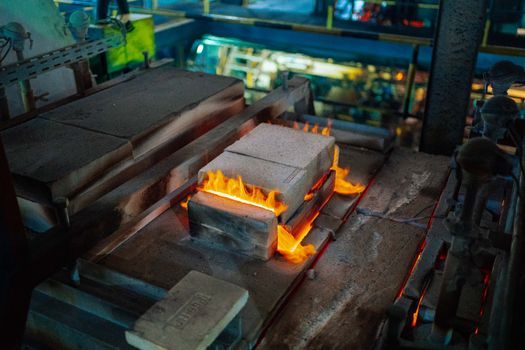
Acidic (silica) linings are the historical default: fireclay or ganister stacked against the steel shell, paired with a slightly acidic slag, and the lowest installed cost of any cupola configuration [S4]. Acidic linings tolerate 4–6 weeks of continuous campaign on a 5–15 TPH melt rate before the tuyere zone erodes past serviceable thickness.
Basic (magnesia or dolomite) linings, used in conjunction with water-cooled shell sections, are specified where foundries melt steel scrap additions, manganese-rich returns, or sulphur-sensitive ductile iron — basic slag desulphurises the bath down to 0.02% S versus 0.08–0.12% S in an acid-lined unit [S4]. Capital cost runs 1.5–2× an acid-lined unit of the same hearth diameter, and basic lining life is typically 3–5 weeks at the same melt rate, traded for the metallurgical gain.
The auxiliary kit scales with lining choice: P.S Trading Co in Howrah lists dewatering cyclones, multi-cyclone separators, venturi scrubbers, and exhaust chimneys as the matched pollution-control train for a basic-lined cupola cell [S2].
Classification Axis 3: Water-Cooled vs Uncooled Shell, and Dual-Shell Designs
Uncooled (or "dry-shaft") cupolas use thicker refractory at the tuyere and melting zones and are limited to melt rates below ~10 TPH; above that rate, refractory wear accelerates faster than campaign economics can absorb [S4]. Water-cooled cupolas weld a copper or steel cooling box into the tuyere belt and lower stack, extending campaign life to 8–14 weeks on basic linings and enabling 15–30 TPH continuous melt rates.
Dual-shell cupolas — two refractory-lined shafts sharing a single common gas cleaning and charging system — are specified where a foundry needs continuous pouring through tuyere maintenance; one shaft stays on blast while the other is relined, with a swing valve redirecting the air blast [S4]. Compared to a single-shell 100 TPD unit, a dual-shell plant achieves 90–95% annual availability against 80–85% for the single-shell baseline. The heat balance for any cupola plant is documented in the Springer chapter "Fundamentals of the Cupola Furnace" (chapter 11), which lists solved mass- and energy-balance problems against measured plant data [S4].
Within the broader melting-furnace family the cupola sits alongside induction, crucible, and holding furnaces; for installation-side detail on refractory and stack design, see crucible furnace installation walkthrough and the cupola furnace reference page on the encyclopedia.
Slag Output, Secondary Uses, and What the Numbers Mean for a Foundry Buyer
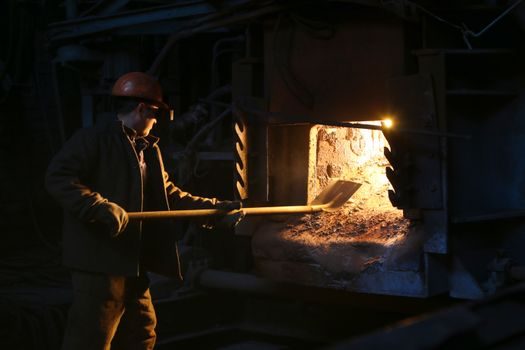
Every tonne of molten iron tapped from a cupola carries 50–100 kg of slag — a calcium-silicate-aluminate melt whose disposal cost has driven reuse research since the early 2020s [S7]. A study reported in the International Journal of Environmental Science and Technology indicates that cupola slag exhibits good hydraulicity and pozzolanic properties when compared with conventional building materials, opening a door to its reuse in construction [S7].
A 2021 companion paper in the same Springer family analysed cupola slag converted to glass-ceramic tiles via powder metallurgy with sintering-temperature and binder-addition matrices; SiO₂ and CaO are the dominant oxides, and wollastonite/anorthite formation during firing drives the mechanical-strength gain [S5]. For a foundry operator, this is the disposal-cost angle: cupola slag going to landfill costs roughly $15–40/tonne in 2025 foundries, and the same tonne in a 10–20% cement blend recovers a feedstock credit of comparable magnitude [S7].
The "cupola" term itself is Italian, from Late Latin cūpula ("little tub"), diminutive of cūpa; the architectural-cupola usage and the furnace usage share that root and the rounded geometry [S1]. For an induction-melting comparison the holding furnace reference page covers the alternative class of equipment, while the melting furnace overview situates the cupola inside the wider foundry-melting landscape.
Selection Criteria and Decision Matrix
For 1–5 TPH batch operations with frequent grade changes, a cold-blast acid-lined uncooled cupola remains the lowest-capex, simplest-control path; maintenance crew sizes of 3–5 cover the lining and blower routine [S2][S4]. For 10–30 TPH continuous grey or ductile iron production with emissions limits, a hot-blast basic-lined water-cooled cupola is the mainstream mid-2020s specification [S4][S6].
For foundries running 24/7 above 20 TPH that cannot accept relining downtime, the dual-shell hot-blast basic-lined configuration is the only configuration that hits 90%+ annual availability without an installed induction furnace backup. For comparison against a different melting-class equipment family, see the crucible furnace types reference. Quick decision rules: coke ratio under 10% → hot-blast; melt rate over 10 TPH → water-cooled basic lining; S-spec ductile iron → basic slag with desulphurisation to 0.02% S; year-round 24/7 → dual-shell.
Trackable signals to watch for 2026 sourcing: hot-blast 100 TPD units continue to attract 4–6 competitive bids per inquiry on Made-in-China, with Shandong and Guangdong as the dominant supply regions [S6]; and cupola-slag reuse under cement-blend and glass-ceramic pathways is publishing at a steady Springer rate, with at least one review per year since 2021 [S5][S7].