
Hydraulic power units (HPUs) are classified in two intersecting ways: by actuator duty (single-acting vs double-acting) and by application class (compact, mobile, industrial, customized), with pump topology (gear, vane, piston) and motor supply (single-phase vs three-phase) chosen inside each class [S1][S2][S6].
The four-class taxonomy of compact, mobile, industrial, and customized units covers the bulk of OEM offerings in 2026 catalogs, while sub-classes such as micro power units (sub-1 kW) appear as a fifth niche for OEM and medical-style applications [S1][S7]. Within each class the pump architecture and reservoir volume are the dominant variables, not the brand on the nameplate.
Pump Topology: Gear, Vane, Piston, and Intensifier as the Inner Differentiator
All HPUs in the compact, mobile, industrial, and customized classes are built around a positive-displacement pump, with three topologies dominating: gear pumps for high-flow, low-pressure service; vane pumps for mid-pressure, lower-noise service; and piston pumps (fixed or variable displacement) for high-pressure circuits [S1][S3]. A gear pump is the common choice for HPU duty classes where pressure stays at or below roughly 200 bar and flow is the priority, while a piston pump is preferred for pressures above 250 bar where volumetric efficiency drops too low for gear designs [S1][S3].
Hydraulic intensifiers appear in a small slice of the population, used where very high pressure is required from a lower-pressure supply, and they are cataloged as a fourth pump category alongside gear, vane, and piston units in the Tooling U-SME Hydraulic Power Sources 302 course outline [S3]. For typical industrial HPU builds the practical ranking on operating pressure is gear (low) to vane (mid) to piston (high), with intensifiers as a special-purpose booster, and this ordering is what an applications engineer uses to shortlist a pump before sizing the reservoir and motor [S3].
Compact and Micro HPUs: Footprint-First Designs Below Roughly 1.5-3.0 kW
Compact HPUs are specified when installation envelope and weight dominate, and they typically deliver lower power capacities while remaining efficient for their size, finding common use in mobile applications, light industrial machinery, and tight installations [S1]. Below the compact tier, micro power units cover sub-1 kW applications, with Hidroman cataloging them as a separate class for OEM equipment where space and integration cost outweigh absolute flow [S7].
Single-phase mains supply is the practical marker of a compact or micro HPU: AutomationDirect's M-series units use single-phase power for the pump, while their T-series step up to three-phase power for higher flow and pressure ratings, giving a clean electrical rule of thumb for class selection before pressure is even discussed [S6]. A concrete example from the 2026 VEVOR catalog is a 12V DC, 1.6 kW single-acting dump-trailer HPU rated at 3200 psi maximum relief pressure and 0.91 GPM flow, which sits squarely in the compact/mobile band on both electrical and hydraulic metrics [S5].
Mobile HPUs: DC, Engine-Driven, and Trailer-Mounted Variants
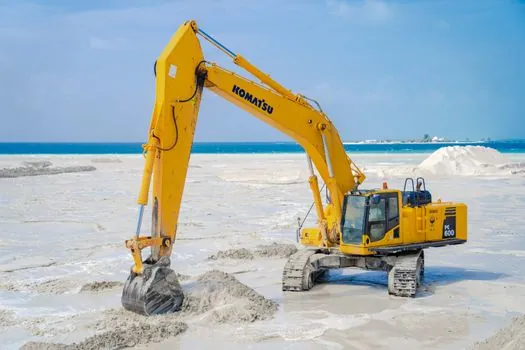
Mobile HPUs run from three power sources: DC battery (12V or 24V) for dump trailers and small lifts, single-phase AC for shop-floor wheel kits, and engine-driven PTO pumps for tractors and field equipment, and they trade absolute flow for portability, with flowfit offering PTO pump assemblies in Group 2 and Group 3 frames for agricultural and mobile platforms [S4][S5]. Within the mobile class, the 12V double-acting variant from VEVOR is rated at 3200 psi relief and 0.91 GPM from a 6 quart reservoir, illustrating how reservoir size shrinks to roughly 2-6 gallons on mobile units versus tens of gallons on industrial HPUs [S5].
Mobile HPUs also span both single-acting and double-acting actuator categories: the same 12V VEVOR line includes a horizontal-mount single-acting 4 quart unit at 3200 psi / 0.91 GPM and a 6 quart double-acting counterpart, confirming that actuator duty is orthogonal to application class and is selected by the cylinder, not the chassis [S5]. For agricultural and off-highway use, Flowfit's aluminium and cast-iron PTO gearboxes pair with the HPU to set pump speed independent of engine RPM, which is the standard way to control flow on tractor-mounted units [S4].
Industrial HPUs: Three-Phase, Fixed Installation, and High Duty Cycle
Industrial HPUs are the three-phase, fixed-installation class, sized for continuous duty rather than intermittent cycle, and they cover the bulk of factory presses, machine tools, injection molding machines, and large lifts [S1][S6]. The T-series units from AutomationDirect run on three-phase power and step up flow and pressure well beyond the M-series single-phase compact line, with reservoir sizes that scale into tens of gallons to support thermal dissipation on continuous duty [S6].
Within the industrial class, component selection follows the application: piston pumps for high-pressure presses, vane pumps for lower-noise machine tool circuits, and gear pumps for general factory flow, with filtration, cooling, and pressure relief valves specified to match the duty cycle rather than the pump topology [S1][S3]. Industrial HPUs also integrate FRL units, or filter-regulator-lubricator modules, to condition fluid before it reaches sensitive valves, and a hydraulic power unit reference page typically breaks out these subsystems by flow and cleanliness class. Where the actuator is a construction machinery and equipment class cylinder, the HPU is often paired with directional control valves in the 1/2" BSP to 3/4" BSP range, with rated flows of 45-160 L/min matching the cylinder bore and stroke profile [S4].
Customized HPUs: Engine-Specific, Bespoke, and Application-Matched
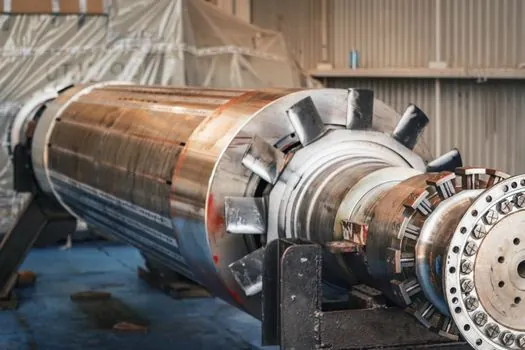
Customized HPUs cover build-to-order configurations where the standard catalog does not fit, typically driven by unusual voltage, exotic fluids, hazardous-area certification, or integration with a specific prime mover, and they are explicitly listed as a fourth class alongside compact, mobile, and industrial in the Rotontek taxonomy [S1]. Examples include petrol-engine-driven HPU bell housings from Flowfit, which mate a small engine to gear pumps for off-grid mobile service, and the broader bespoke hydraulic engineering services offered by Flowfit for non-standard reservoir shapes, mountings, and control architectures [S4].
Customized HPUs also include units with cooling systems as an option rather than a default, and the lamps and light fittings type accessory tier (gauges, level switches, temperature sensors) is often integrated for remote status, since the unit may sit in an unmanned pump house or on a skid [S1][S4]. For hazardous-area service, specifying customized HPUs with ATEX-certified motors and junction boxes is the standard route, and the lighting equipment and electric lamps tier of accessories sometimes includes explosion-proof indicator lights that share the same certification envelope as the HPU itself.
Comparison Matrix: How the Four HPU Classes Line Up
Across the four application classes the dominant differentiators are flow, pressure, prime mover, and reservoir size, and a side-by-side view makes the selection logic explicit. Compact and micro units sit at the bottom on flow and pressure, mobile units add 12V DC or PTO prime movers, industrial units jump to three-phase AC at high duty cycle, and customized units break the matrix when standard ratings do not fit [S1][S4][S5][S6][S7].
On the actuator axis the two main categories remain single-acting and double-acting, where single-acting HPUs drive a cylinder in one direction with spring or load return, and double-acting HPUs power the cylinder in both directions through valving [S2]. The actuator category is selected after the application class, not before, because the same 12V mobile HPU is available in both single-acting and double-acting variants in current catalogs [S5].
Selection Criteria, Failure Modes, and Sourcing Standards
The first-pass selection rule is electrical supply: single-phase AC for compact, DC battery or PTO/engine for mobile, three-phase AC for industrial, and any atypical supply pushes the spec into customized [S1][S6]. Second-pass is pressure: gear pumps below ~200 bar, vane pumps in the mid range, piston pumps above ~250 bar, and intensifiers added on top of a base supply for spike pressure [S3]. Third-pass is actuator duty, which fixes the HPU as single-acting or double-acting, and fourth-pass is reservoir size, which scales with flow and duty cycle to manage thermal load and de-aeration [S1][S2].
Common failure modes track back to the same three components: pump wear from contaminated fluid (filter maintenance skipped), motor overheating from undersized reservoir (thermal load not modeled), and valve sticking from moisture in the fluid (breather and degassing unit neglected). Sourcing against this class taxonomy typically pulls from a frl unit accessory list for the fluid conditioning side, and from pump OEM catalogs for the positive-displacement core, with hydraulic motor trade-offs covered separately for downstream actuator sizing. For related reading, the hydraulic motor advantages and disadvantages spec map covers the actuator end of the same circuit, and the motor protector supplier map covers the overload protection on the electric motor that drives the pump.
Track for the next refresh: VEVOR's 2026 catalog already lists a 2950 psi, 3 HP, 220V single-phase HPU with a 3.5 gallon reservoir for 2-post and 4-post lifts, and AutomationDirect's M-series vs T-series split remains the cleanest electrical rule of thumb for compact vs industrial class selection, both unchanged from prior catalog issues. Watch for ATEX/IECEx-certified customized HPUs entering more agricultural and off-highway quotes as European farm machinery moves toward harmonized hazardous-area rules on refueling and grain-handling sites.