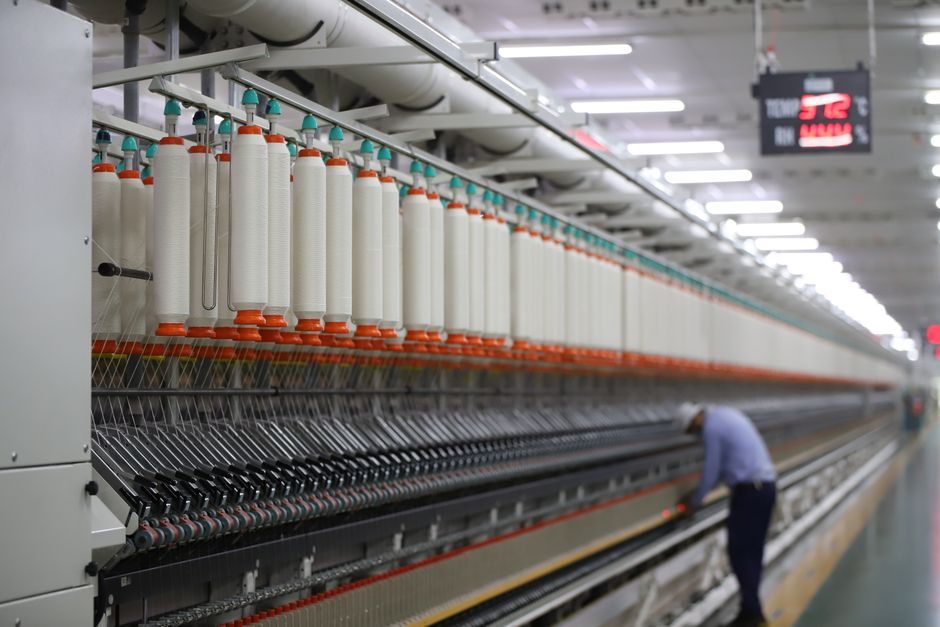
As of 2026-04, the Vossic INDEX AIoT service-enabler platform publishes a sub-one-hour cell bring-up time for data-center and smart-manufacturing deployments, leaning on patented edge ingestion and a built-in protocol translator that maps MQTT, OPC UA, and Modbus TCP into a normalized time-series store [S2]. The platform is positioned specifically for what the vendor calls "Data Center & Smart Manufacturing" service enablement, treating white-space rack rooms, switchgear cells, and SMT lines as one operational graph rather than two separate automation silos [S2].
That convergence is the throughline of the 2026 stack: industrial automation vendors are collapsing the gap between IT-grade data-center telemetry (rack PDU, BMS, thermal mapping) and OT-grade line telemetry (machine vision, spindle load, additive-manufacturing build-chamber pressure). Advantech's iFactory continues to bundle sensing, I/O modules, IoT gateways and edge AI into one reference architecture, with the stated goal of shortening the path from raw sensor to actionable dashboard in brownfield plants [S3]. Renishaw's smart-manufacturing data platform, refreshed 2026-06-08, extends that pattern into industrial process control by linking probe measurement, in-cycle offset correction, and factory-wide analytics through a single data spine [S4].
Defining the 2026 Data-Center Smart-Manufacturing Stack
Smart manufacturing in 2026 is defined by the layering of IoT, AI, big-data analytics, and cloud computing across every tier of the production process, with industrial automation and information technology treated as a single control plane rather than two parallel hierarchies [S1]. The Industrial Internet of Things (IIoT) remains the data-collection substrate: high-tech sensors pull vibration, thermal, acoustic, and current signatures from spindle motors, CRAC units, and additive-manufacturing build chambers, then forward them to edge or cloud analytics [S5].
What has changed since 2023 is the protocol layer underneath. Where IBM's 2023 framing emphasized IIoT sensors feeding predictive-maintenance models, 2026 deployments routinely run OPC UA over Time-Sensitive Networking (TSN) on the cell backbone, with MQTT 5.0 bridging to public-cloud brokers for cross-site aggregation. Vossic's INDEX architecture exposes this translation explicitly, advertising a "minutes-to-service" onboarding path that suggests a pre-built adapter library rather than a custom integration per site [S2]. For context on how this IT/OT convergence is reshaping adjacent sectors such as electric-vehicle cells and gigafactory tooling, see the EV Smart Manufacturing 2026: Digital Twins, Vision Gates, and the New Automation Stack reference frame.
Selection Criteria for an AIoT Cell Platform
Three engineering criteria separate workable 2026 platforms from proof-of-concept pilots: protocol coverage at the edge, time-to-first-dashboard, and the depth of the closed-loop control path. EMQ's reference architecture groups these under the umbrella of "monitor, analyze, and optimize production in real time," which translates concretely into sub-second publish intervals, durable on-prem buffering during WAN loss, and bi-directional write-back to PLCs and CNC controllers [S1].
Vossic's published positioning supports the time-to-first-dashboard criterion with an explicit "minutes" claim for service bring-up, conditional on pre-existing sensor and PLC inventory [S2]. Advantech iFactory leans on the closed-loop criterion by offering a sensing-to-MES bundle from a single vendor, reducing the integration tax that historically dominated brownfield retrofits [S3]. For plants evaluating multiple platforms, the practical gate is: can the platform ingest from the existing sensor mix (vibration, current, thermal, vision), normalize the time-series, expose the result via OPC UA or REST to the MES, and write corrections back to the line — all without a custom middleware layer per site?
Who This Stack Is For — and Where It Fails
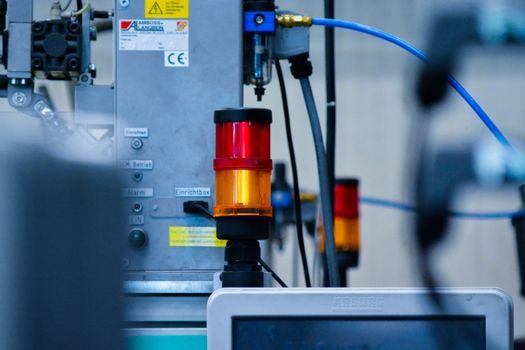
The stack fits mid-to-large discrete and hybrid manufacturers running 50+ connected assets per cell, plus colocation and hyperscale data-center operators who need line-grade telemetry on switchgear, UPS strings, and rack-level thermal loading. It does not fit small job shops with fewer than ten machines, where the per-cell integration cost of OPC UA over TSN and edge AI inference outweighs the predictive-maintenance payoff, and it does not fit continuous-process plants (refineries, bulk chemical) whose control loops are already governed by pressure transmitter redundancy schemes rather than discrete-event scheduling. [S1]
The failure modes that re-appear in 2026 brownfield retrofits are predictable: undersized edge buffers that drop samples during network blips, AI/ML models trained on one SKU family that misclassify on the next, and additive-manufacturing cells where inline metrology data is collected but never closed back into the slicer. Renishaw's smart-manufacturing data platform addresses the last point by tying probe measurement directly to in-cycle offset correction on machine tools, a pattern that translates cleanly to metal-powder-bed fusion cells where the additive manufacturing material lot certificate is logged alongside the build-chamber telemetry [S4].
Comparing the Main Platform Options on Decision Criteria
Three families dominate 2026 platform selection: vendor-stack bundles (Advantech iFactory, Renishaw data platform), AIoT service enablers (Vossic INDEX, EMQ-based builds), and hyperscaler IoT suites (AWS IoT SiteWise, Azure Industrial IoT). The comparison below is qualitative because vendor-published performance numbers are not directly comparable across these three families. [S2]
Vendor-stack bundles win on integration depth and on closed-loop support — Renishaw's data platform is a measurement-first design, while Advantech iFactory is a sensing-to-MES bundle from a single supplier, which compresses the integration tax on brownfield retrofits [S3][S4]. AIoT service enablers win on time-to-first-dashboard and on protocol breadth, with Vossic's INDEX claiming a sub-one-hour cell bring-up against a pre-built protocol-translator library [S2], and EMQ's reference architecture emphasizing real-time monitoring and optimization across MQTT, OPC UA, and Modbus TCP [S1]. Hyperscaler IoT suites win on global aggregation, identity, and security posture, but require more custom integration at the OT edge and offer weaker out-of-the-box support for line-grade closed-loop control.
For plants already running Siemens, Rockwell, or Mitsubishi PLC estates, the vendor-stack bundle typically shortens the closed-loop write-back path; for greenfield data-center builds with a heterogeneous sensor mix, the AIoT service-enabler path tends to win on integration time. A secondary data source worth tracking is the wider EV battery and gigafactory ecosystem, where the same AIoT patterns are being stress-tested — the EV Battery Upstream and Downstream Chain: Materials, Cells, and Process Equipment reference covers the cell-level applications in detail.
Real Use Cases: Data Center + Smart Manufacturing Convergence

The 2026 use case that most clearly illustrates the convergence is liquid-cooled AI-server manufacturing running parallel to data-center operations on the same campus. Inline vision gates verify rack PDU wiring and bus-bar torque, the same vision pipeline inspects additively-manufactured cold plates and manifold fittings, and a single smart camera network streams to both the line MES and the data-center DCIM. EMQ's framing of smart manufacturing as the integration of IoT, AI, big-data, and cloud across "every layer of the manufacturing process" maps directly to this dual-use case, where the same edge gateway feeds two control planes from one sensor set [S1].
Renishaw's 2026-06 refresh extends the pattern into in-process gauging: probe measurements on machined cold-plate covers feed offset corrections back to the CNC, while the same probe data logs to a process-control database that flags chamber-pressure drift on the metal-powder bed fusion cell downstream [S4]. Advantech's iFactory solutions document the pattern at the sensing and I/O tier, with explicit support for bridging brownfield PLC estates to greenfield IoT gateways and edge-AI inference engines [S3]. A complementary view of the underlying mechanical-handling layer — conveyors, transfers, and the woven-mesh belts that carry parts between cells — is given in the Mesh Belt Conveyor Buying Guide 2026: Weave, Alloy, Drive and Total Cost reference.
Limitations, Constraints, and Standards Anchors
Three constraints cap the 2026 deployment ceiling. First, edge inference latency on machine-vision defect classification is still bounded by the on-prem GPU footprint, and small cells cannot justify a dedicated inference server per line. Second, the data-sovereignty posture around telemetry leaving the plant — particularly for sites governed by IEC 62443-style network segmentation — pushes most operators toward on-prem or private-cloud aggregation rather than public-cloud brokers. Third, additive-manufacturing cells remain bottlenecked on real-time build-chamber sensing: the powder-bed thermal and gas-flow fields are still inferred from sparse thermocouples rather than dense in-situ imaging, which limits the resolution of the data logger stream that feeds the closed-loop control model. [S3]
Standards anchors that hold the stack together in 2026 include OPC UA over TSN for cell backbones, MQTT 5.0 for northbound telemetry, IEC 62443 for industrial network security, and ISA-95 for the MES-to-ERP boundary. EMQ's 2025-06 reference architecture explicitly cites these patterns as the integration glue between physical machinery, networked sensors, and the analytics layer [S1]. Vendor platforms such as Vossic INDEX and Advantech iFactory position themselves as the protocol-translation and edge-orchestration layer that makes the OPC UA, MQTT, and Modbus TCP coexistence work without per-cell custom middleware [S2][S3].
Trackable Signals Through End of 2026
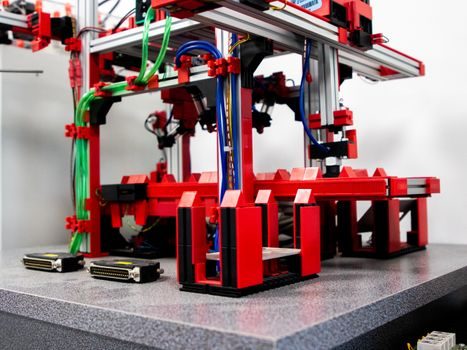
Three signals are worth watching through the rest of 2026. First, Vossic's published claim of "minutes" to service bring-up will face its first independent benchmark as multi-tenant colocation operators begin publishing integration timelines; expect the first peer-reviewed number to land in the Q3-Q4 2026 window [S2]. Second, Renishaw's smart-manufacturing data platform refresh on 2026-06-08 hints at a Q4 2026 release of the in-cycle offset-correction module for additive-manufacturing cells, which would close the loop between probe measurement and powder-bed fusion parameter sets [S4]. Third, the Advantech iFactory roadmap — last documented in the 2022 case-study portfolio but actively extended through 2026 — will likely surface a tighter integration with hyperscaler DCIM suites, given the dual-use case for liquid-cooled AI-server lines.
Plants evaluating a 2026 deployment should anchor the decision to four numbers: protocol coverage (count of OT protocols natively supported), edge-to-dashboard latency (seconds, not minutes), closed-loop write-back depth (sensor → MES → PLC), and total integration cost per cell. The platforms that lead on all four by end of 2026 will set the procurement baseline for the 2027 data-center smart-manufacturing build cycle.