
Data center supply chain analysis for 2026 is dominated by three structural shifts: an EMEA-led capacity build, an AI-driven procurement spike for high-density server and liquid-cooling hardware, and a reshoring of power and electrical equipment away from single-region concentration [S3].
The scope spans four interlocking layers — power & electrical (transformers, switchgear, switching power supply modules, UPS strings), thermal (CDUs, immersion tanks, rear-door heat exchangers), IT hardware (GPU nodes, fabric switches, data logger telemetry) and orchestration software (DCIM, observability, asset mapping) [S1][S3].
EMEA Capacity Wave Reshapes Land, Power and Concrete Lead Times
Cushman & Wakefield's 2026 Data Center Market Study reports sustained double-digit growth in EMEA leasing activity, with the FLAP-D markets (Frankfurt, London, Amsterdam, Paris, Dublin) absorbing the majority of new wholesale take-up and Paris emerging as the fastest-growing sub-cluster on a 24-month rolling basis [S3].
Consequence for the supply chain: utility-grade transformers, MV/LV switchgear and on-site DC power supply cabinets are running on 60- to 90-week lead times across major EU OEMs, and contractors are pre-ordering long-lead electrical gear 18-24 months before energisation [S3]. Sourcing strategies now blend Tier-1 EU electrical OEMs with Turkish and Korean MV equipment as the second-source layer, while concrete and steel rebar remain sourced regionally to keep logistics costs under 4-6% of capex [S3].
AI Workloads Drive a New Component Mix: HBM, Optics, Liquid Cooling
AI training and inference clusters have pushed average rack density from 8-12 kW (2022-2023 baseline) into the 40-80 kW envelope in 2026, with hyperscale pilot rows already operating above 130 kW per rack using direct-to-chip cold plates and immersion-assisted pods [S3]. This shift is rewriting the BOM: high-bandwidth memory (HBM3E / HBM4), 800G/1.6T optical transceivers, and coolant distribution units (CDUs) have moved from niche SKUs to long-lead, allocation-managed lines.
Server uniformity is now a procurement spec, not an IT decision — buyers standardise on 2-3 node SKUs to compress the SKU count and keep spare-parts pooling viable, as detailed in the server hardware 2026 node uniformity guide. Side-by-side on a typical 2026 buyer scorecard, the four dominant categories line up as follows:
* GPU/HBM node: highest cost-per-rack, 50-70% BOM share of liquid cooling, longest lead time (30-45 weeks for HBM4 allocations).<br/>* 800G fabric switch: optics-constrained, 1.6T roadmap adds 15-25% BoM over 800G.<br/>* CDU + manifold + cold plate: now standard on >40 kW rows, secondary loop adds ~$80-120 k per MW cooled.<br/>* Telemetry stack: rack-level data logger and environmental sensors feed DCIM, sized at roughly 1 sensor per 5-10 kW of IT load [S1].
Power Equipment: Transformers, UPS, Switchgear, and the Switch-Mode Tier
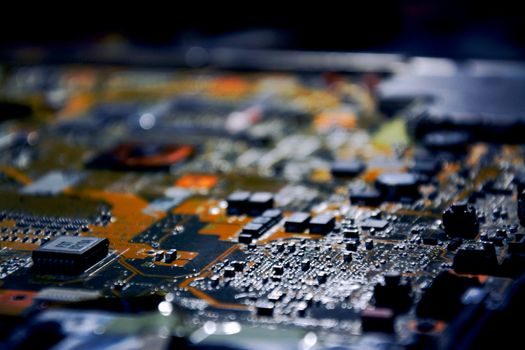
Power remains the single longest pole in the data center supply chain. Three sub-categories dominate the 2026 risk register: large power transformers (LPT, >100 MVA), MV switchgear (11-52 kV), and modular UPS strings built from switch-mode rectifier modules. Lead-time compression has been attempted through factory pre-assembly, but LPT slots at major EU and Korean makers are still booked into 2027-2028 [S3].
At the rack and row level, switching power supply conversion stages (typically 48 V DC bus architectures, with 400 V / 800 V DC pilot rows in 2026) are now specified on a 97-98% peak-efficiency target and a >0.99 power factor at 50% load, with harmonic compliance to IEEE 519 at the PCC [S1]. The tier-2 rack-PDU market is also seeing a shift toward metered-plus-monitored units, which integrate a data logger per outlet group to feed DCIM dashboards in real time [S1].
DCIM and Observability: From Asset Mapping to AI-Driven Change Control
Software spend in the data center supply chain is small relative to power and silicon, but it is the layer that de-risks everything else. The 2026 DCIM market clusters into three sub-segments: asset and dependency mapping, energy and environmental monitoring, and AI-assisted change/incident management [S1]. Faddom-class always-live infrastructure mapping can produce a dependency graph within an hour of deployment, supporting security audits, change-impact analysis, cloud migration, IT documentation, and incident response in a single workflow [S1].
Integration depth is the key buying criterion. The leading 2026 platforms expose RESTful APIs and pre-built connectors for CRM, ERP and SCM suites, so a change in, for example, a switch-mode PSU firmware baseline in the ERP is reflected in the DCIM asset record without manual data entry [S1]. Procurement teams should score vendors on four axes — connector coverage, API latency under load, RBAC granularity, and offline reconciliation mode — and run a 30-day pilot against a non-production fabric before sign-off [S1].
Who the 2026 Stack Is For — and Who It Is Not

Buyers running 1-5 MW single-site deployments on standard air cooling can still procure largely from regional Tier-2 integrators, with off-the-shelf 10-40 kW racks and standard DCIM. The high-density, allocation-managed stack (HBM4-class GPU nodes, immersion/CDU cooling, >100 MVA transformers, 800G/1.6T optics) is justified only at the 20+ MW scale and where the workload is AI training, large-scale inference, or HPC — anything below that sees utilisation losses and excess capex. [S1]
Conversely, operators who try to ride the AI density curve with a 2022-vintage air-cooled row will hit a thermal and power ceiling inside 12-18 months and end up paying twice (retrofit + lost revenue). The hyperscaler/colocation split on the demand side is covered in the top data center companies 2026 stack comparison, which is the natural next read for any buyer deciding between build, lease, and hybrid.
Sourcing Risks, Standards, and Trackable Signals for H2 2026
Three risk vectors dominate 2026 sourcing. First, transformer and switchgear concentration: 60-90 week LPT lead times [S3] mean a single missed slot can push a 50 MW project out by 6-9 months. Second, HBM and advanced-node silicon allocation, where hyperscaler pre-empts absorb most of the wafer-start capacity. Third, regulatory and ESG pressure on embodied carbon in concrete, steel and PFAS-containing dielectric fluids, which is now written into several EU member-state procurement frameworks.
Standards to anchor specs on: IEEE 519 for harmonic limits at the PCC, IEC 62040 for UPS, IEC/EN 62477 for power electronic converter systems, and the EU's CSRD reporting cycle for embodied-carbon disclosure. Two signals to track through H2 2026 are EU LPT order-book disclosures (the leading indicator of capacity for 2027) and CDU vendor consolidation (which compresses secondary-loop sourcing options). A 5% quarter-on-quarter rise in EMEA pre-lease commitments versus 2025 would be a strong confirmation that the 2026 supply-chain squeeze is still widening, not easing.