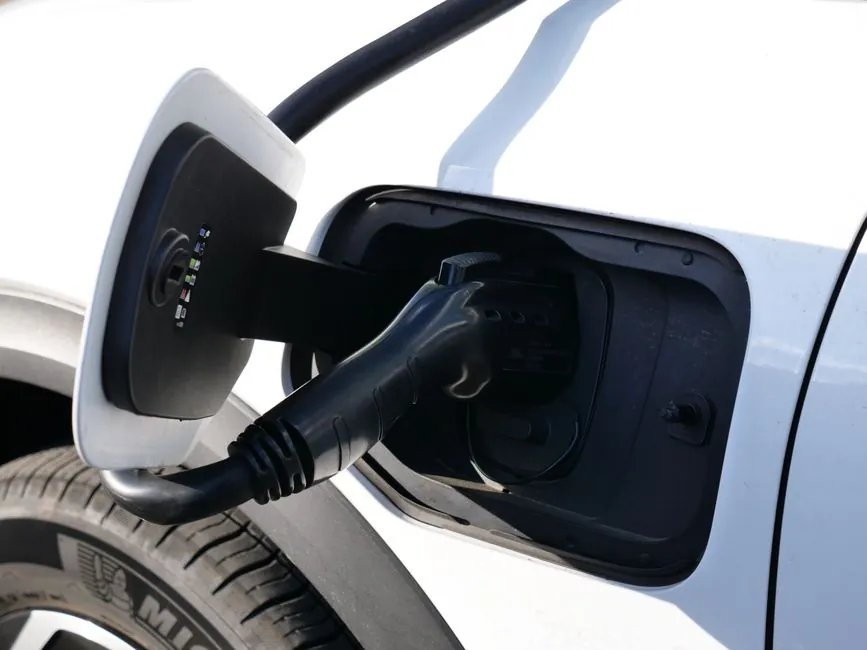
As of 2026-10-06, a standard DC fast charger order from a Chinese OEM ships within 2 weeks, and a custom-configured order (custom cable length, branding, special OCPP integration, or higher-power 350 kW / 480 kW cabinets) takes 2-4 weeks, with the window confirmed in writing before any purchase order is accepted [S1].
The 2-week stock window covers the most-asked configurations: 60 kW and 120 kW single-gun units, 150 kW dual-cabinet, and CCS-1 / CCS-2 / NACS plug variants. The 2-4 week custom window applies when the buyer changes connector count, output voltage envelope (400V vs 800V platform), or requests a non-OCPP 1.6/2.0 back-end. Site delivery, pad-mounting, and grid-side commissioning sit on top of the factory lead time and are typically a separate 4-12 week civil and electrical works package, depending on utility interconnect queue [S1].
Lead-Time Drivers: Power Class, Connector, and Back-Office Stack
The single biggest variable that pushes a DC fast charger from the 2-week lane into the 2-4 week lane is the power stack, not the cosmetic build. A 50 kW unit uses a single 25 kW power module in 1+1 redundant configuration; a 150 kW unit stacks six 25 kW modules; a 350 kW unit uses fourteen 25 kW modules or seven 50 kW modules, and the module-bin allocation at the factory drives the ship date more than any other factor [S1].
Connector choice is the second variable. CCS-1, CCS-2, CHAdeMO, GB/T, and NACS all sit in the same supply pool, but multi-standard units (CCS + NACS, or CCS + CHAdeMO dual-cable) require a second high-voltage harness and a longer factory test cycle, adding roughly 5-7 working days. Cold-climate variants add a heated cable, a sealed electronics bay, and a block heater for the cooling loop, which is another 7-10 working days on the build sheet [S1][S4].
The back-office stack is the silent lead-time item. OCPP 1.6 is the default firmware on most 2026 production runs; OCPP 2.0.1, ISO 15118 Plug & Charge, and credit-card payment terminals that meet EMVCo L3 are still firmware-burn or hardware-stuffed at the bench, which is why payment-enabled or PnC-enabled units tend to land at the back of the 2-4 week custom window rather than the front of the 2-week stock window [S1].
Charge-Time Reality Check Before You Order
Real-world 10-80% session time on a 250 kW Tesla V3 Supercharger measures about 38.5 minutes on a typical long-range pack, and on a 150 kW public stall it lands between 40 and 45 minutes for the same SoC window, per independent State of Charge testing reported in the Equinox EV forum thread dated 2026-08-02 [S2].
Electrify America's published 2026 spec for its 150 kW Ultra-Fast and 350 kW Hyper-Fast cabinets targets 30 minutes or less of dwell time, and its 350 kW Hyper-Fast units reach that figure only on vehicles with 800V architecture and a pack large enough to hold the full charge curve without taper [S3]. The Drive Electric Minnesota FAQ notes that 50 kW stations, the most common legacy power class, deliver 80-90 miles of range in 30 minutes, while 350 kW stations can push a 100 kWh+ pack to 80% in roughly 15 minutes when the vehicle can accept that power level [S4].
Comparison of Common Power Classes for Buyer Spec'ing
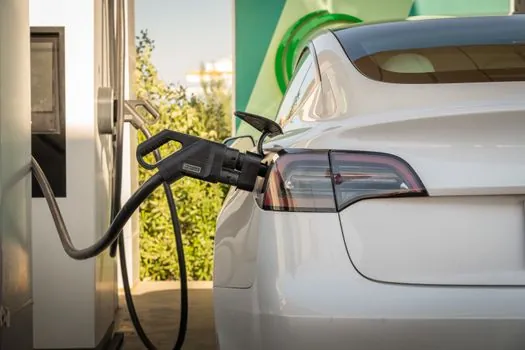
Three power classes dominate 2026 procurement: 50 kW, 150 kW, and 350 kW, and they line up against each other on the criteria that actually drive a specifier's decision. The Electway 2026 buying guide gives an average 10-80% charge time on a 60 kWh EV of 45 minutes at 50 kW, 18 minutes at 150 kW, and 8 minutes at 350 kW, with cold-weather, taper, and vehicle acceptance all cutting the real-world number further [S1]. The State of Charge test on a 250 kW Supercharger returned 38.5 minutes for the same 10-80% window, which sits between the 150 kW and 350 kW guide figures and tracks the 800V-pack / taper envelope typical of current production EVs [S2].
On capital cost, 50 kW is the lowest entry barrier and qualifies for the most utility and federal incentive programs, but it serves 8-10 times fewer vehicles per day than a 150 kW unit, per the Electway commercial-project database [S1]. On revenue per unit per month, 2026 industry data cited in the same guide puts commercial DC fast charging at roughly 3x the monthly revenue per unit of a Level 2 station, with 150 kW and 350 kW pulling ahead of 50 kW on utilization [S1]. On grid impact, a 350 kW unit typically needs a 400-500 kVA service upgrade and a dedicated utility interconnect, which can push the install-and-commission window past 12 weeks even when the charger itself ships in 2 weeks [S1][S4].
Selection Criteria That Actually Move the Lead-Time Calendar
Four checks separate a 2-week ship date from a 2-4 week ship date, and the buyer can run them before issuing the PO. First, confirm the site power capacity: a 50 kW unit is fine for a small lot, but highway-corridor sites that need 150 kW or higher must verify three-phase service and transformer headroom before the unit ships, because utility-side upgrades are not on the OEM's clock [S1].
Second, verify platform compatibility: 400V and 800V support must be specified at order time, because a 800V-only stack is a different module allocation than a dual-voltage stack. Third, confirm the connectivity standards: OCPP 1.6/2.0 compliance, ISO 15118 Plug & Charge, and the network-operator back-end (e.g. EVgo, Electrify America, Tesla NACS, Ionna) all need to be named in the PO so the factory burns the right firmware [S1][S3][S4]. Fourth, check the warranty and the after-sales support window: a 2-year parts-and-labour warranty is the 2026 baseline, but extended 5-year service contracts on 350 kW cabinets are common and they affect the spare-parts allocation that the factory holds against the build slot [S1].
Who a 2-Week Stock DC Fast Charger Is, and Is Not, For

A 2-week stock unit fits a fleet depot, a small retail lot, or a single-stall pilot where the operator already has three-phase service, a known OCPP network, and no unusual connector or branding requirement. It does not fit a multi-stall highway corridor that needs simultaneous 350 kW charging, a PnC-enabled payment stack, or a non-standard colour or cabinet footprint, because those land squarely in the 2-4 week custom lane [S1].
Operators who need 480 kW cabinets for 800V-platform EVs are also in the custom window, and the 2-4 week figure should be read as a build-window floor rather than a ceiling when the 480 kW module-bin allocation at the factory is tight. Buyers planning a Q1 2027 corridor build should treat the 2-4 week custom window as a single-digit-month lead time and place POs 8-12 weeks ahead of energisation to absorb the civil and utility-interconnect queue on top of the factory window [S1].
Trackable Signals to Watch Between Now and Year-End 2026
Three signals will tell a 2026 buyer whether the 2-week stock lane is holding or slipping. First, the OCPP 2.0.1 and ISO 15118 PnC firmware burn-in: as more 2026 builds leave the bench with PnC enabled, the 2-week stock lane is expected to absorb more PnC units, which would compress the 2-4 week custom window. Second, the 480 kW module allocation: 800V-platform vehicle registrations are climbing, and if the 480 kW module-bin queue at Chinese OEM factories tightens, the 2-4 week figure for 350 kW and 480 kW custom orders is the figure most likely to move. [S1]
Third, network-operator rollouts: Electrify America's published 150 kW Ultra-Fast and 350 kW Hyper-Fast targets and Tesla's NACS access for non-Tesla vehicles are both accelerating the demand side of the 2026 production calendar, and any new corridor-funded procurement wave (NEVI, CFI, European AFIR) will pull the 2-4 week figure toward the back end of the window rather than the front [S3][S4]. For spec-side reference work on the related grid and balance-of-plant side, see the 2026 reality check on prefabricated power modules for data centers and the corporate PPA vs onsite solar decision matrix, both of which feed the upstream capacity that a DC fast charger site needs to clear before the 2-4 week unit lands.
For the relevant spec sheets and selection criteria, see lead screw, time relay, and dc dc converter.