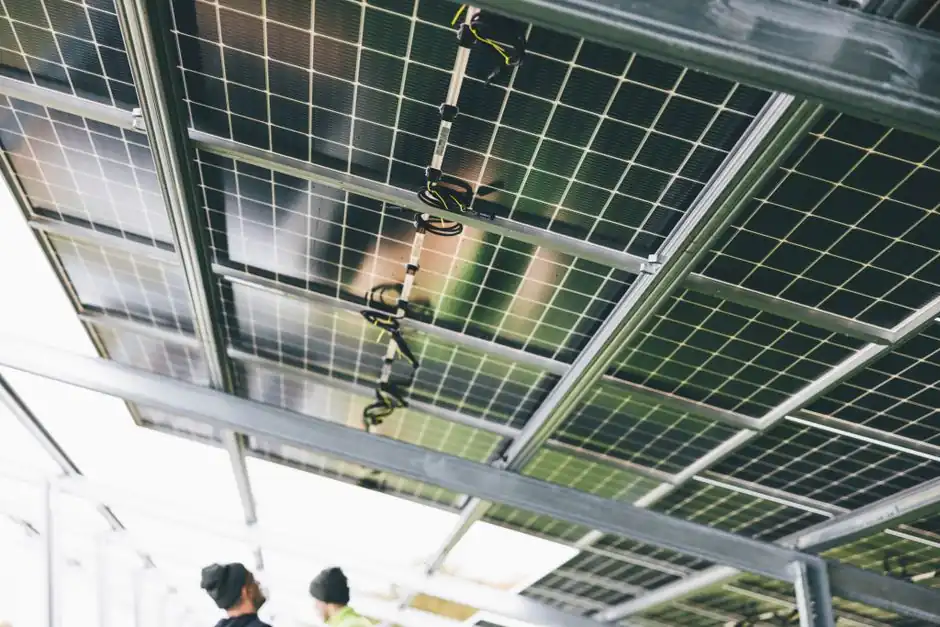
Factory-integrated power skids for data centers can compress on-site build time by up to 60% compared with conventional stick-built construction, and Delta formally launched such a solution at COMPUTEX 2026 in Taipei under the theme "Superior Efficiency, Shaping Sustainable AI" [S1].
The wider market is responding: Fortune Business Insights pegs the global modular data center market at $35.44 billion in 2026, expanding to a projected $116.53 billion by 2034, with power modules called out as a key product category in that growth path [S2]. For a working definition of the underlying hardware, see the power supply reference, while buyers focused on UPS sizing should also review the industrial UPS entry.
What a Prefabricated Power Module Actually Is
A prefabricated power module is a factory-assembled skid that bundles medium-voltage transformer, switching power supply or UPS stages, battery cabinets, switchgear, busway, and monitoring into a single transportable enclosure, which arrives on site with factory acceptance testing already complete. [S4]
Huawei's prefabricated data center white paper specifies that such a module "should adopt the mains+UPS power supply mode and use the 2N or DR power supply architecture based on application scenarios," giving procurement a clear two-axis choice between redundancy and cost [S5]. Vertiv's 2N skid range covers 400 kVA and 600 kVA in a single enclosure, integrated with bus bars, and the vendor has shipped over 1,500 modular data center units to more than 800 sites worldwide, totalling over 250 MW of IT load and more than 5,000 racks [S4]. Schneider Electric separately markets prefabricated IT modules across a broad size and configuration matrix for plug-and-play deployment [S8].
Why 800 VDC Became the 2026 Default
800 VDC distribution is now the architecture of choice for AI-class prefabricated skids, because it removes two AC-to-DC conversion stages between the grid and the GPU rack and cuts distribution loss versus legacy 415 V AC topologies. [S7]
Delta's COMPUTEX 2026 launch pairs an 800 VDC in-row power solution with what the company describes as an industry-leading 3 MW liquid cooling system, targeting MW-scale, high-density AI racks in a single factory-built module [S1]. NVIDIA's GTC 2026 session "800 VDC and Modular Data Center Solutions" makes the same case architecturally: high-voltage DC reduces conversion losses, lifts end-to-end efficiency, and pairs naturally with modular build strategies that accelerate deployment [S7]. Ares Chen, VP and GM of Delta's Power and System Business Group, stated that traditional AC-DC power architectures are expected to reach their limits within one to two years, making HVDC "a critical solution to minimize distribution losses and maximize energy efficiency" [S1].
Selection Criteria: 2N vs DR vs N+1

Three redundancy topologies dominate 2026 prefabricated power module bids, and the choice is set by the tier the operator must hit rather than by brand preference. [S1]
2N (fully redundant mirrored paths) is the default for Tier III and Tier IV designs and is what Huawei and Vertiv both quote in their prefabricated reference designs: Vertiv's 2N modules ship at 400 kVA and 600 kVA per enclosure, with parallel bus bars for hot-swap [S4][S5]. DR (distributed redundancy, typically N+1 on each of two independent paths) is specified where the customer wants Tier III conformance at lower capex than full 2N [S5]. N+1 within a single path is the cost-down option for edge and telecom sites, where Tier II is acceptable and modular DRUPS skids are common. Vertiv's published footprint, more than 250 MW of IT load and many Tier III-certified sites, anchors 2N as the high-availability reference point against which DR and N+1 are measured [S4].
Schedule, Density, and Supply-Chain Headwinds
Factory pre-assembly plus parallel site work is the main lever on delivery time, and 2026 buyers are using it to absorb both schedule pressure and component tightness. [S4]
Vertiv's own data puts time savings from a prefabricated modular build at "40% or more versus a traditional new-build data center" [S4]. Delta's 2026 announcement raises that to "up to 60%" for the AI modular configuration, reflecting deeper factory integration of power and liquid cooling [S1]. On the demand side, the CMiC 2026 construction-trend brief notes that "data center construction in 2026 demands tighter schedules, higher power density, and unified controls," which is exactly the problem statement prefabricated skids are designed to solve [S3]. Industry projections indicate that 30-50% of planned 2026 AI data center capacity is projected to slip to 2028 due to power grid interconnection queues and construction bottlenecks, so any tool that compresses on-site time has direct schedule value [S6].
Where Prefabricated Power Modules Fit, and Where They Don't
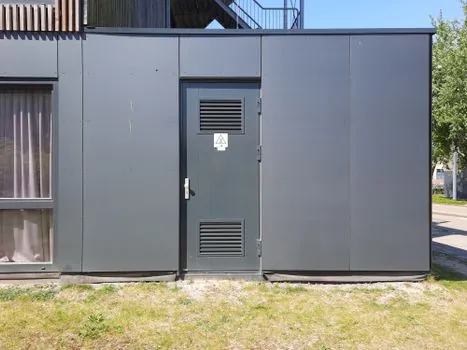
Prefabricated skids fit where schedule dominates, where power density per rack exceeds what a legacy electrical room can serve, and where the site is constrained from a long on-site build (urban infill, brownfield retrofits, or leased space with strict delivery windows). [S4]
They are a poor fit where the utility interconnect is itself the long pole, where custom medium-voltage transformer ratios are required, or where the operator needs a building façade and structural envelope that cannot be modularised. For buyers evaluating the broader build-cost picture, the Data center electrician shortage: 2026 numbers, pay, and fix paths piece is directly relevant, because off-site pre-assembly is one of the few mitigations against the on-site labour squeeze.
Standards, Acceptance, and What to Put on the Datasheet
The datasheet items that actually decide a 2026 prefabricated power module award are the ones the factory acceptance test will not be able to fix later. [S4]
Specifiers should pin: input voltage (commonly 11 kV or 33 kV MV with step-down transformer inside the skid), UPS topology and rating (2N at 400 kVA or 600 kVA per enclosure is the Vertiv reference, with parallel bus bars for maintenance bypass [S4]); output distribution voltage (415 V AC for legacy IT loads, 800 V DC for AI racks, with the Delta in-row 800 VDC unit as the current benchmark [S1]); battery autonomy at nameplate load, typically 5-15 minutes for UPS-only modules, longer where the module also carries a DRUPS or diesel rotary buffer; cooling interface, whether the module ships with its own liquid-to-air or liquid-to-water heat exchanger, or hands off to a plant loop; and a Tier III or Tier IV design conformance statement from the manufacturer. The Huawei white paper's "mains+UPS" and "2N or DR" language is the cleanest engineering requirement to copy into a procurement spec verbatim [S5].
Trackable Signals for the Rest of 2026

Two verifiable signals will mark whether the 2026 prefabricated power module market is hitting the projected $35.44 B baseline or pulling forward toward 2034 scale. [S2]
First, watch the ratio of 800 VDC to 415 V AC orders in hyperscaler RFPs through the rest of 2026; Delta's claim that AC-DC architectures will reach their limit "within one to two years" is testable against public tender documents [S1]. Second, watch whether the 30-50% 2026-to-2028 capacity slip from grid interconnection queues improves as prefabricated modules absorb schedule slack, or whether it widens as transformer and switchgear lead times extend [S6]. Edge-side demand, which pulls a different class of small-form-factor modules, is covered separately in Edge AI server demand in plants and retail: 2026 spec reality.