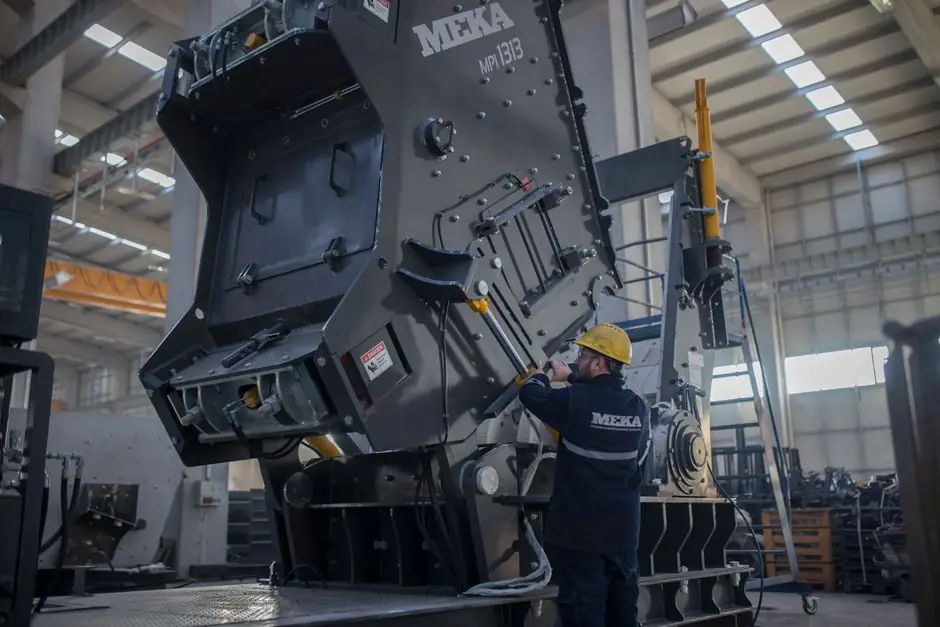
DC fast charger quality is a stack of three standards layers, not a single certification, and a build that satisfies only one of them tends to fail in the field within 18 months [S2][S4].
The category covers Level 3 units that bypass the vehicle's onboard charger and feed DC directly to the battery, typically at highway-corridor and commercial-hub sites where dwell time is short and duty cycle is high [S3].
U.S. NEVI baseline: ports, uptime, and 97% reliability
For OEM build programs, the four-port rule reshapes cabinet sizing, cable management, and liquid-cooling plumbing before the electrical BOM is even locked, and the 97% target filters out power-module topologies without parallel redundancy [S1][S2].
IEEE Std 519-2014: the grid-side quality gate
Harmonic distortion on the AC feed is the most common cause of interconnection rejection at utility review, and IEEE Std 519-2014 sets the voltage and current THD limits that a fast-charger station model must respect to pass that review [S4].
Reliability engineering, not just enclosure testing
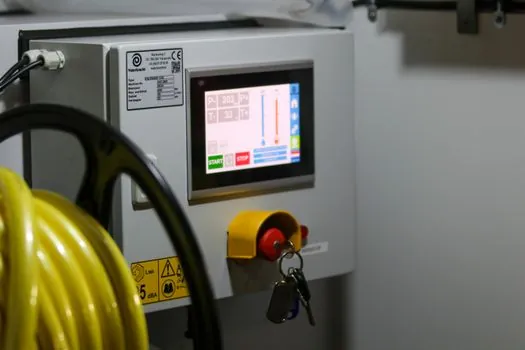
Public and commercial DC fast chargers must survive continuous operation, temperature extremes, dust, moisture, and repeated user interaction without degradation, which forces the enclosure, cooling, and power-electronics design to be selected as one coupled system rather than three independent specs [S2].
Thermal management is the dominant failure mode at 150-350 kW per cabinet: liquid-cooled dispensers keep cable weight manageable and connector temperature below the 90°C touch-safe limit, while air-cooled stacks need oversize heat sinks and derated SiC MOSFETs above 250 kW to hold junction temperature within the maker's 150°C max [S2].
Enclosure protection, materials, and what IP rating actually buys
Outdoor dispensers are commonly specified to IP54 for sheltered sites and IP65 for exposed highway pads, with NEMA 3R as the U.S. equivalent for the cabinet alone, and a polycarbonate or powder-coated aluminum skin over a galvanized steel skeleton for corrosion resistance near coastal corridors [S2].
For internal sub-assemblies such as the DC-DC converter and the DC power supply that ride behind the front-end rectifier, the operating envelope is typically -40°C to +70°C with 5,000 m altitude derating, and 10G vibration tolerance is now standard for units destined for cabinet-mounted or trailer-mobile deployments [S2].
Networking, OCPP, and remote serviceability
A modern DC fast charger is only as reliable as its backend, and Open Charge Point Protocol (OCPP) 1.6/2.0.1 over a 4G or wired Ethernet link is what makes the 97% NEVI uptime number physically attainable, since remote firmware updates, session diagnostics, and selective module restart cut mean time to repair from days to hours [S2].
That network layer also feeds the power quality analyzer data stream that utilities increasingly require under IEEE 519, so the same OCPP backhaul carries billing, OCPP diagnostics, and PQ telemetry in one channel [S2][S4].
Selection checklist for procurement and OEM partnerships
A spec-driven buyer should score any candidate DC fast charger against four decision criteria: NEVI 88 FR 12724 compliance evidence (4 ports, uptime reporting, [S1]), IEEE 519-2014 THD test data at the rated power point [S4], IP/NEMA rating matched to the deployment site [S2], and OCPP 1.6/2.0.1 support with a documented remote-service workflow [S2].
For U.S. corridor bidding the additional filter is Buy America and JIT domestic content, which is reshaping the supplier map across cabinets, additive manufacturing of thermal plates, and final assembly [S3]. A parallel read on the U.S. competitive field, including spec sheets and retrofit economics, is in the U.S. DC Fast Charging Competition 2026 specs, networks, and retrofit economics brief.
Constraints and failure modes buyers still underestimate
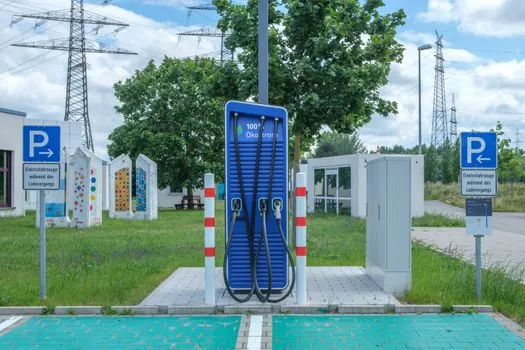
The three most common field failures are not power-module burnouts but connector-pin wear at 10,000+ insertion cycles, cooling-loop leaks in liquid-cooled dispensers after thermal cycling, and OCPP session collisions under concurrent multi-port start, all of which sit outside the headline power-rating conversation and routinely drive the first 18-month service cost [S2].
Chargers that pass early lab tests but rely on tight margins or unproven components tend to fail under sustained real-world use, which is why buyers should require at least 12 months of in-field MTBF data on the same firmware revision before awarding volume orders [S2].
Trackable next signals: any 88 FR 12724 amendment changing the four-port minimum or the 97% uptime target, and any IEEE 519 revision that re-bands the 5% voltage THD limit for high-power EV charging at the point of common coupling, both of which would reset cabinet sizing and front-end filter cost across the U.S. NEVI corridor build-out [S1][S4].