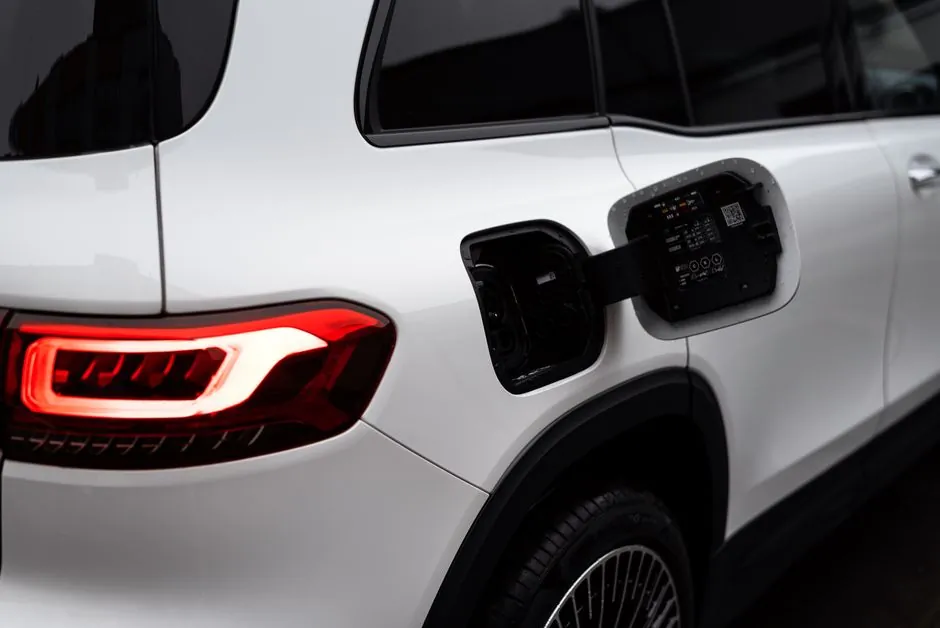
By mid-2026 the U.S. DC fast-charging field has moved past the early "who has the most stalls" race and into a hardware-software stack contest, with new product entries like Ekoenergetyka's Axon Easy 180 (120–180 kW, dual CCS1/NACS) being folded into existing managed networks such as PowerFlex's 70,000+ port footprint [S2].
Three forces shape site economics for operators entering today: $150,000–$450,000 per-site retrofit capex [S1], a 6–18 month utility upgrade window, and a competitive radius defined by the count of DC fast chargers within roughly 5 miles [S1]. Buyers who treat DCFC as an equipment swap, rather than an electrical and zoning project, typically overrun both schedule and budget.
Site Feasibility: Electrical Capacity and Utility Lead Time
A 4-port DC fast-charging site at 150 kW per port draws 600 kW continuous, while a typical U.S. gas-station service entrance sits at 400 A / 480 V, roughly 320 kW [S1]. Closing that gap to 800 A, 1,200 A, or 2,000 A service is the single largest schedule variable, and 6–18 months is the realistic range depending on whether a new substation feeder is required [S1]. Electrical infrastructure typically represents 30–50% of total project cost inside the $150,000–$450,000 per-site envelope [S1].
Operators planning a bidirectional EV charging rollout in 2026 will find that V2G-capable cabinets pull from the same 480 VAC three-phase service, so the utility coordination work overlaps and should be sequenced together rather than re-permitted later [S3].
Hardware Spec Battle: 120 kW vs 180 kW vs 350+ kW
The 2026 mid-range DCFC class is anchored by 120 kW and 180 kW power ratings, with the Axon Easy 180 specifying 480 VAC / 60 Hz input, a 300 A breaker at 180 kW, 500 A max current, and OCPP 1.6-J plus OCPP 2.0.1 backend support [S2]. Dual CCS1 and NACS connector configurations are now baseline, and ISO 15118 Plug & Charge with DIN 70121 fallback is the de facto authentication stack [S2].
Compared against incumbent U.S. networks, the decision criteria for an operator shortlisting hardware are: (1) per-port power guarantee under shared cabinet load, (2) OCPP 2.0.1 readiness for managed load balancing, (3) Buy America compliance for NEVI corridors, and (4) documented mean time between failures plus service-level response. Stations that pick on equipment price alone typically pay for it in uptime penalties inside 18 months.
Software, Networking, and Competitive Density
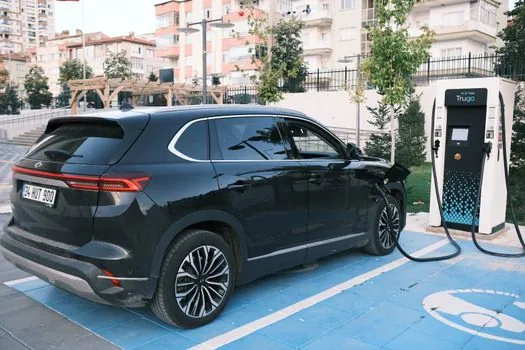
PowerFlex's Adaptive Load Management claims to enable up to 10x more ports without grid upgrade by dynamically balancing power across chargers, with TOU-rate response and CTEP-compliant pricing baked in [S2]. That software layer is now a hard requirement: an OCPP 1.6-J-only charger that cannot accept remote setpoint commands is increasingly non-competitive in fleet and corridor RFPs. Network operators are also layering advertising displays (23.8–24 in) and payment terminals onto the same enclosure, turning the charger into a retail surface [S2].
Site-selection models now start with a 5-mile competitive radius scan: how many DC fast chargers, and which networks operate them, determines whether a 4-port build is oversaturated or under-served [S1]. The U.S. has approximately 145,000 gas stations, and the share evaluating EV charging as revenue diversification is rising as fuel margins compress [S1].
Retrofit Economics: NEVI, Buy America, and Capex Stack
NEVI funding can cover up to 80% of eligible costs, but corridor location requirements on designated Alternative Fuel Corridors and Buy America documentation must be resolved before submission [S1]. Operators who front-load the corridor eligibility check typically compress their application-to-NTP window by 2–3 months. The remaining capex stack, demolition of legacy fuel systems, canopy modification for taller dispensers, and ADA-compliant pull-up spaces, sits outside the charger line item and is routinely underestimated by 15–25%.
For operators with existing industrial control assets, the charger-to-fleet integration is a natural fit with PLC-based depot energy management, since most modern DCFCs expose OCPP 2.0.1 setpoints that map cleanly onto pressure sensor and flow meter telemetry already pulled into site SCADA.
Bidirectional Charging as the 2026 Differentiator
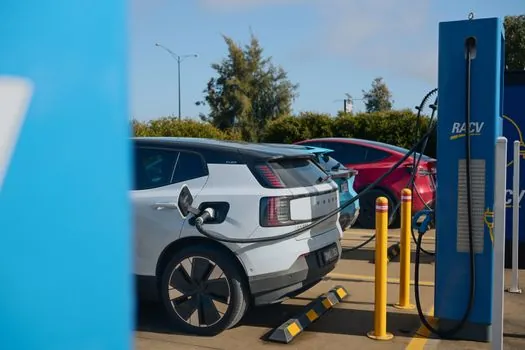
Bidirectional EV charging in 2026 has moved from a handful of pilots to a competitive segment, with V2G, V2H, and V2L use cases each carrying different certification and tariff requirements [S3]. Chassis and onboard charger support now varies by make and model year, so an operator specifying a V2G site must verify ISO 15118-20 conformance on the vehicle side before promising grid services revenue. Software platforms that aggregate bidirectional ports into virtual power plants are emerging as a separate competitive layer from the hardware OEMs.
For a U.S. operator, the practical filter is: confirm utility tariff acceptance of backfeed, specify chargers with hardware-ready V2G firmware (even if not enabled day one), and contract for OCPP 2.0.1 smart-charging profiles that can later switch to discharge setpoints without a hardware swap.
Decision Rules for a 2026 U.S. DCFC Bid
A shortlist that survives 2026 procurement reviews will satisfy: UL 2202, UL 2231-1/2, UL 991, UL 1998, NFPA 70, SAE J1772, and SAE J3400 (NACS) certifications, dual CCS1+NACS connectors, OCPP 2.0.1 with ISO 15118 Plug & Charge, and a published per-port power curve under shared load [S2]. Anything missing one of these is a maintenance liability, not a charger. Operators should also pre-negotiate service response time SLAs in writing, since the difference between 24-hour and 5-business-day on-site response is worth more than a 5% equipment discount over a 10-year operating horizon.
Watch the NEVI cycle award dates through Q4 2026 and the next OCPP 2.1 conformance pushes from major networks, both will reset competitive positioning for early-2027 RFPs.