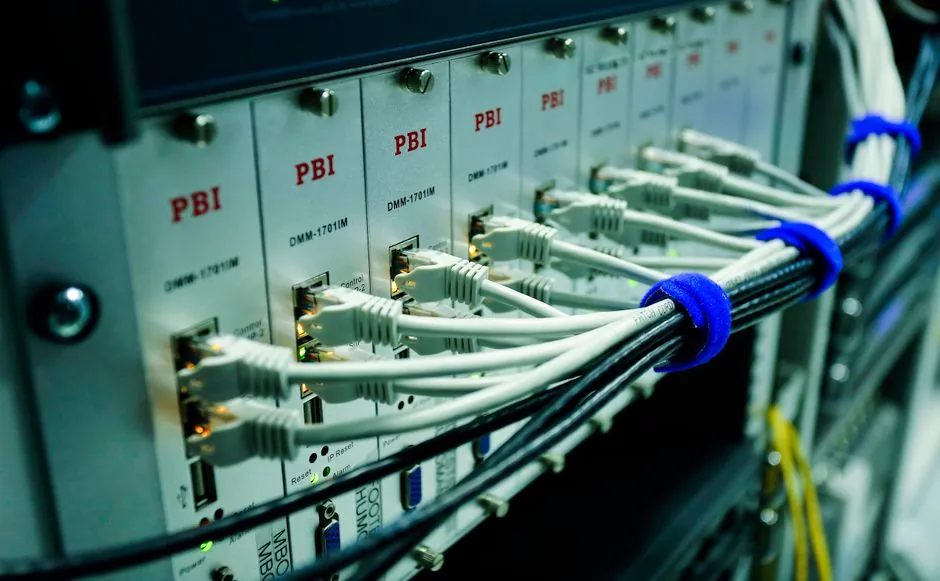
Average data center rack density hit 27 kW in 2026, a 69 percent year-over-year increase from 16 kW, with AI training clusters routinely running 40–132 kW per rack and next-generation GPU systems targeting 250 kW and beyond [S4][S6].
The shift is redrawing the spec sheet: air cooling is operationally inadequate above roughly 30–40 kW, so liquid-cooled and hybrid-ready rack enclosures are now mainstream in hyperscale procurement [S4]. For a baseline on how the underlying rack infrastructure connects to power and monitoring, see the storage rack and pallet rack reference pages, which cover load rating and structural design principles that translate directly to IT enclosure selection.
2026 market size: definitions diverge by 2.5x depending on scope
The data center rack market is reported in two distinct bands, and the gap reflects what each analyst counts. The narrower enclosure-only market sits at USD 3.24 billion in 2026, growing at a 10.74% CAGR to USD 5.41 billion by 2031 [S5]. A broader scope that bundles rack-level power distribution, cooling integration, and structural support reaches USD 7.26 billion in 2026, scaling to USD 14.55 billion by 2034 at a 9.10% CAGR [S1]. Precedence Research tracks a similar mid-range value of USD 5.44 billion in 2026, with 9.15% CAGR through 2034 [S2].
The range is wide, but the directional signal is consistent: every report that includes AI-density deployments is growing at high single digits to low double digits, while broader legacy-focused estimates grow more slowly.
Rack architecture in 2026: 42U still leads, but 48U and >1200 mm depth are where growth is
By rack height, 42U installations held 53.10% revenue share in 2025, but 48U designs are expanding at an 11.78% CAGR to 2031 [S5]. By depth, the 1001–1200 mm segment held 40% of the 2024 market, while enclosures deeper than 1200 mm are projected to grow fastest through 2034 to accommodate rear-door heat exchangers, coolant manifolds, and bulkier GPU sleds [S2].
By rack type, enclosed cabinets dominated with 71.50% share in 2025, while open-frame units continue to lose share as containment becomes a thermal-management requirement rather than a tidy-cable option [S5]. Precedence's segmentation tracks the same pattern: enclosed racks/cabinets held 60% share in 2024, with 19-inch width at 70% and floor-mounted at 80% [S2]. For infrastructure planners, the practical takeaway is that 48U, >1200 mm deep, enclosed-cabinet configurations are the fastest-growing spec cells, and any new build that defaults to 42U, 1100 mm depth is now behind the procurement curve for AI-ready whitespace.
Cooling compatibility: 77% air-cooled today, but liquid-ready is the new default
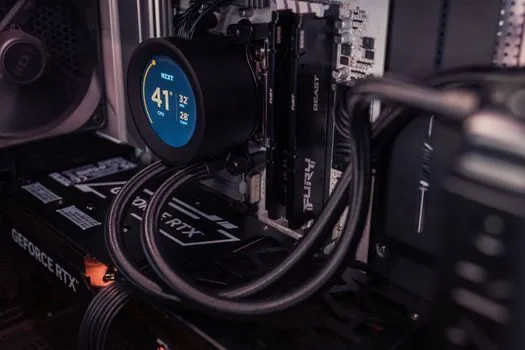
Air-cooled racks are projected to retain roughly 77% share of the high-density segment in 2026, a figure that reflects the installed base of legacy and mid-density enterprise whitespace rather than new AI build-outs [S3]. Hyperscale data centers, which lead end-user demand at approximately 53% of the 2026 high-density segment, are the cohort that has moved decisively to liquid cooling and hybrid-ready rack structures [S3].
Air cooling hits its physical limit at roughly 30–40 kW per rack: the volumetric flow and velocity needed to remove that much heat from a standard enclosure becomes impractical, which is the threshold that is forcing liquid integration into rack specifications rather than into room-level CRAC upgrades [S4]. North America leads the high-density segment with approximately 43% share in 2026, while Asia Pacific is the fastest-growing region as modular and sovereign-AI facilities scale [S3]. The decision criterion for new builds is straightforward: anything planned above 30 kW per rack should be specified as liquid-ready from the rack structure up, not retrofitted later. For a deeper look at how that power and cooling stack is hitting the wall upstream of the rack, see the related Data Center Electrical Equipment 2026: Switchgear, UPS, and Busway Capacity Hits a Wall report.
Who this is for, and who it is not for
High-density 2026-class rack specifications are aimed at hyperscale AI training clusters, sovereign-AI facilities, large colocation operators running GPU-as-a-service, and HPC installations in research and defense. The procurement signal is clear: 74 percent of respondents in a 2026 survey planned to deploy higher-density configurations, and operators view rack infrastructure as the physical foundation for AI, HPC, and latency-sensitive edge nodes [S5][S6].
These specs are not aimed at conventional enterprise IT rooms running 5–10 kW per rack of general-purpose compute, branch-office edge closets, or wall-mounted network enclosures. For those deployments, 42U, 19-inch, 1100 mm deep, air-cooled configurations remain the right answer, and 80% of the rack market by mounting type is still floor-mounted for exactly this reason [S2]. A pressure transmitter on a coolant loop or a flow meter on a secondary loop is the kind of monitoring hardware that becomes mandatory once the rack side crosses 30 kW, but is overkill at 5 kW.
Material, load rating, and structural design for AI-grade racks
Steel accounted for 64.80% of the 2025 rack market by material, with aluminum the fastest-growing substrate at 11.45% CAGR through 2031 as weight becomes a constraint at the floor-loading level [S5]. Standard enterprise racks are typically rated to 3,000 lb static load, a figure that is sufficient for 1U servers and 2U storage but is being re-evaluated for GPU sleds, integrated liquid manifolds, and rear-door heat exchangers that can push a single populated rack past 4,000 lb [S4].
Encor Advisors' 2026 guide flags that standard 42U/19-inch blanking-panel-and-cable-management baselines remain valid for conventional workloads but are insufficient for AI infrastructure, which requires deeper enclosures, higher structural load ratings, and integrated power delivery that legacy racks were not designed to support [S4]. On the application side, servers represented 50% of 2024 rack demand, networking equipment is the fastest-growing application segment, and colocation data centers led end-users at 35% share in 2024 [S2]. For a comparable reference on structural reinforcement and load-bearing frame design, the pallet rack and data logger encyclopedia entries cover the same engineering principles (static load rating, deflection limits, environmental monitoring) that govern AI-grade rack selection.
Demand drivers ranked by impact on CAGR
Mordor Intelligence's driver-impact analysis ranks the forces lifting the rack market's compound annual growth rate. Hyperscale and colocation build-outs contribute +3.2% to CAGR globally, concentrated in North America and Asia Pacific over a 2–4 year horizon. Rising cloud and edge adoption adds +2.8% on a longer 4-year-plus timeline. High-density server deployment above 40 kW per rack adds +2.1% in the short term (under 2 years), and AI-optimized liquid-cooled rack architectures add +1.8% on the same short-term horizon [S5].
Energy-efficiency regulation, primarily the EU Code of Conduct and ASHRAE thermal guidelines, contributes +1.4% with EU primary and North America secondary relevance, and national incentives for local rack manufacturing add +0.9% in the US, EU, and select APAC markets [S5]. The cumulative picture: roughly 12% of CAGR lift comes from the AI-density transition, and another 6% from colocation and cloud build-out, which is why every forward-looking estimate shows double-digit growth through at least 2031 [S5]. For context on the macro construction pull behind those build-outs, see the related coverage on Data Center Construction Overtakes Office and Retail Spend in 2026, which documents the same demand cycle at the shell-and-core level.
Limits, failure modes, and what the 2026 data does not yet show

The 27 kW average is a survey mean across AFCOM's 2026 respondent base, not a fleet-wide deployment figure, and the 40–132 kW AI training range is concentrated in roughly the top decile of new builds [S4][S6]. Megawatt-class rack designs (250–900 kW) are vendor roadmaps for systems like NVIDIA's next-generation Rubin family, not shipping volume; a reader planning a 2026 procurement should treat any spec sheet citing those numbers as forward-looking rather than as-deployed [S4].
Failure modes that are showing up in 2026 deployments include floor-loading limits on raised-access floors not engineered for 4,000+ lb populated racks, rear-door heat exchanger condensate management in hot-aisle/cold-aisle layouts, and busway and PDU derating at the densities involved. The cooling-side of the rack has crossed 30 kW faster than the upstream electrical and structural sides have been re-engineered, which is the binding constraint the industry is now working through. Operators planning 2026–2027 builds should spec the rack structure and the upstream power train (UPS, switchgear, busway) as a coupled system, not as separate procurement packages, and should validate floor loading with structural engineering before locking in 48U, >1200 mm deep configurations.
The next verifiable nodes to track: AFCOM's 2027 State of the Data Center Report (typically published Q1 2027) for the next density average, hyperscale capex disclosures for North America and Asia Pacific 2026 fiscal-year closings, and the first shipping volumes of liquid-ready rack designs into non-hyperscale colocation operators. These will be the data points that confirm whether 2026's 27 kW average was a transition year inflection or a mid-step on the way to the 100+ kW fleet mean that several analysts are already modeling.