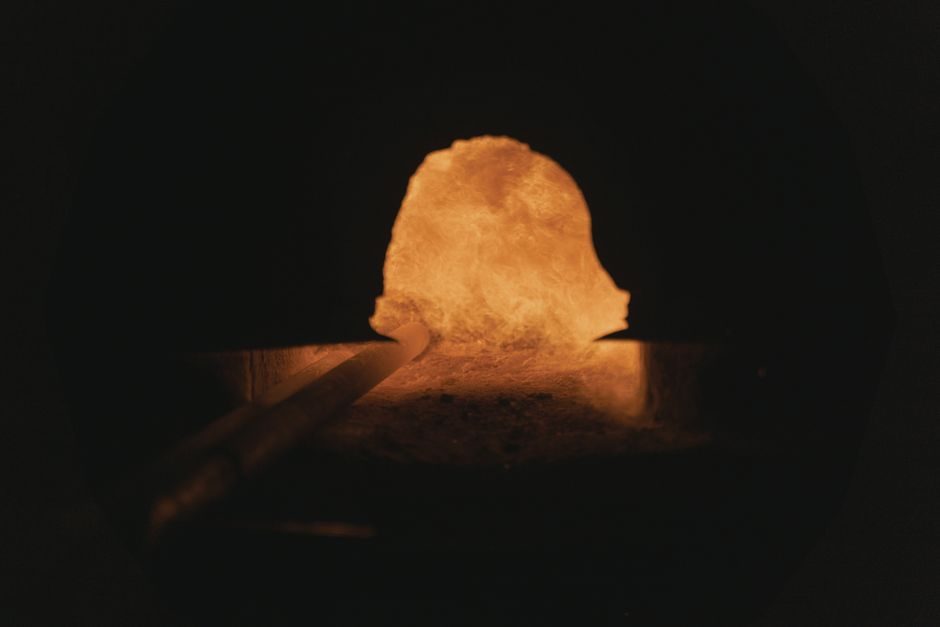
A degassing & refining unit and a holding furnace sit on opposite sides of the casting cell: one is an active metallurgical reactor, the other is a passive thermal reservoir, and confusing the two is the most common capex mistake in secondary-aluminium foundries.
Both pieces of equipment appear in nearly every molten-metal transfer line, but their design drivers, refractoriness, gas-handling packages and unit costs diverge sharply. Sourcing data from Chinese OEM listings on 2026-05-28 lists a homogenizing/holding furnace at US$253,000–258,000 per set with a 1–2 set MOQ and 5 sets/month capacity [S1], while a separate holding-furnace category on 2026-01-23 is priced at US$41,000–59,000 per piece for a 1-piece MOQ at Jiangsu Huahong Technology Stock Co. [S3] — a 4–6× spread that reflects capacity, refractory lining and burner/electrical heating choices rather than function alone.
Function Split: Active Reactor vs Passive Thermal Buffer
A degassing unit is built around a treatment ladle or in-line chamber with an injector array that delivers argon, nitrogen or argon-chlorine mixtures through rotating or static lances into the melt; the cited 2024 Scientific Reports study at MOTOR quantified refining efficiency over the full degassing cycle on aluminium alloys under industrial conditions, treating the FDU as a controlled kinetic reactor whose hydrogen removal follows a time- and flow-dependent decay rather than a single-pass equilibration [S2].
A holding furnace has no chemical job. Its purpose is to decouple the melting furnace from the casting line, smooth tundish-level swings and hold the bath within a narrow temperature band — typically ±5–10 °C of set-point — over many hours. A 2018 gas-fired holding furnace modelling study in secondary aluminium documents that regenerative and recuperative burner retrofits, multi-chamber stacks and improved refractory insulation are where the energy savings actually live, not in the metallurgical hardware [S5].
Process Inputs, Outputs and Verification
The degassing unit accepts molten metal plus injected gas and flux, and delivers cleaned melt with measurable hydrogen reduction (often tracked via reduced-pressure test or Telegas) and reduced inclusion count; the cited FDU study treats the cycle time, gas-to-metal ratio and rotor speed as the dominant control variables for inclusion float-out and hydrogen stripping [S2]. Spec gates therefore include rotor/stator type, gas flow range, treatment time and a sampling/QC interface for hydrogen and inclusion checks.
The holding furnace accepts molten metal from the melter and delivers it on demand to the die-casting machine or casting line. Verification is thermal, not chemical: bath thermocouples, roof and well thermocouples, burner/element status, and door-cycle counters. Sourcing listings on 2026-05-21 explicitly differentiate induction electric holding furnaces for copper/bronze/brass continuous casting machines from gas-fired aluminium units — a useful cross-check that the holding function is alloy-agnostic but the heating medium is not.
Capacity, Footprint and Capex Comparison
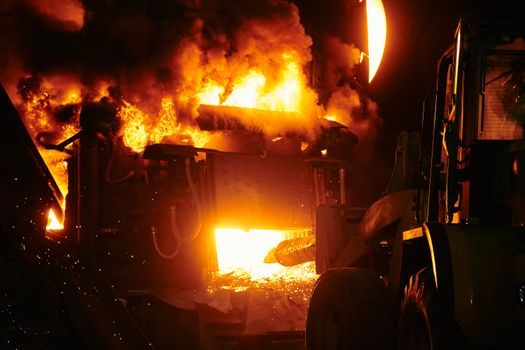
Capacity scales very differently. A holding furnace is sized to the casting machine's hourly metal demand plus a safety buffer; a 2020 ALD Vacuum Technologies product brief for the VID 400–4000 series shows vacuum induction degassing units commercialised for charge weights "up to 30 tons" per batch — a metallurgical reactor class sized to ladle metallurgy throughput, not tundish-level smoothing [S4]. When a foundry quotes a 5-ton, 10-ton or 30-ton "furnace" it is almost always the degasser or melter; holding furnaces are usually specified in the 1–5 t/h pour-rate envelope.
Price follows the same logic. The Guangdong OEM's homogenizing/holding furnace package on 2026-05-28 was listed at US$253,000–258,000/set at low MOQ with a 5 sets/month production capacity [S1], a figure consistent with a refractory-lined, gas- or electric-heated, multi-tonne station that includes burner train, control cabinet and stack. The Jiangsu holding-furnace entry on 2026-01-23 at US$41,000–59,000/piece is a smaller, single-piece unit more typical of a die-casting cell buffer [S3]. Within a single sourcing channel, an order-of-magnitude delta between two "holding furnace" hits is a clear signal that capacity, alloy and refractory class are doing the work, not the label.
Selection Criteria: Who Each Unit Is For
Spec a degassing & refining unit when hydrogen porosity, inclusion rating (e.g. Al-5× standards such as the Alcan or PoDFA inclusion index) or melt cleanliness drives casting rejection. The MOTOR industrial trial frames the FDU as a kinetic device whose efficiency depends on cycle time, gas-to-metal ratio and rotor design — buying the cheapest static lance box and calling it a "degasser" is the documented failure mode [S2].
Spec a holding furnace when the constraint is throughput stability: a die-cast machine that idles because the melter is down, or a continuous caster that surges because the melt supply is uneven. The 2018 modelling paper makes the case that burner technology, recuperator choice and stack geometry dominate holding-furnace operating cost, not metallurgical sophistication [S5]. For foundries running a single alloy and a single casting machine, the holding furnace is usually the right capex; for foundries chasing aerospace, automotive structural or thin-foil stock, the degasser is non-negotiable.
Alloy, Atmosphere and Standards Fit
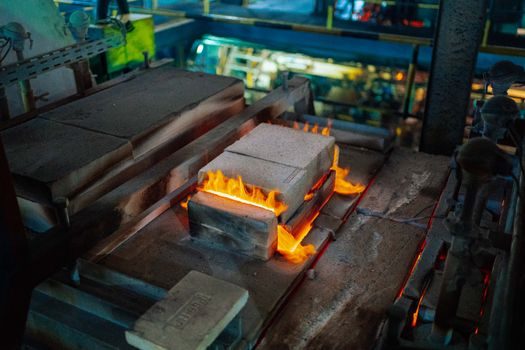
Holding furnaces run oxidising (gas-fired) or neutral (electric induction) on aluminium with no special atmosphere; copper/bronze/brass continuous-caster holding units are typically induction-electric to avoid pickup and to integrate with the caster's power bus, as the 2026-05-21 Made-in-China product page groups these as one package. Degassing units, by contrast, must be sized to the gas-handling package: argon, nitrogen or argon/Cl₂ mix, with rotary degassing requiring a rotor/stator service loop and stationary lance boxes requiring only gas pressure regulation. [S1]
Vacuum induction degassing is its own sub-class: ALD's VID 400–4000 explicitly positions itself as "the economic alternative to ladle metallurgy for charge weights up to 30 tons" and is sold as a metallurgical tool, not a buffer [S4]. For foundries that already have ladle metallurgy in place, the VID class is a different buying decision; for foundries that don't, an in-line rotary degasser plus a holding furnace is the more common pairing.
Limits, Failure Modes and Cross-Checks
A holding furnace cannot fix dirty melt. Pouring a high-hydrogen, high-inclusion bath into a holding furnace and out again at "perfect" temperature still produces porous castings; the metallurgical damage is done upstream and is not reversible by holding time alone. A degassing unit without a downstream buffer is equally fragile: it cleans the melt but cannot smooth tundish-level swings for the caster, and a poorly matched cycle time creates intermittent flow that defeats the cleanliness gains [S2].
Cross-check the OEM claim by asking for: rotor/stator type and service life, gas flow range, treatment cycle time, refractory class (and lining life in months), and bath thermocouple count. The homogenizing/holding-furnace listing on 2026-05-28 is shipped from Foshan, China, with payment terms L/C or T/T and a 5 sets/month capacity [S1] — useful only if the buyer's tonnage and timeline match; a 5 sets/month supplier is not the right partner for a 20-foundry chain needing 40 units in a quarter.
Sourcing Levers and What to Verify on the Quote
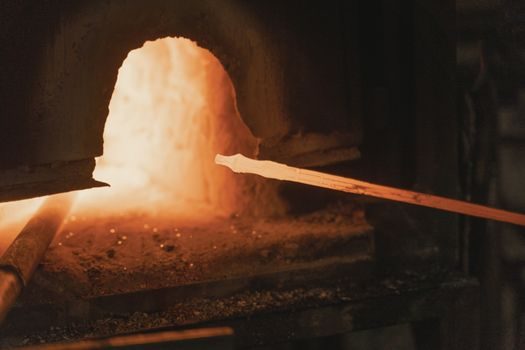
For a degassing & refining unit, the buying levers are alloy, charge weight, gas type, rotor/stator vs static lance, inclusion-target rating, hydrogen target (cm³/100 g Al), and refractory life. The cited FDU efficiency study treats cycle time, gas flow and rotor speed as the three dominant process variables [S2], which is why vendors selling "degasser + flux" bundles without disclosing the rotor spec should be treated cautiously.
For a holding furnace, the buying levers are capacity (tonnes or t/h), alloy, heating medium (gas/electric/induction), temperature uniformity, refractory class, burner or element efficiency, and control integration with the casting machine. A separate 2026 spec walkthrough on this site's degassing & refining unit buying guide covers the process/spec gates in detail, and a sibling piece on the crucible furnace buying guide lines up a related small-batch melting option for shops weighing crucible vs holding configuration. For foundries sizing the upstream melter to match either downstream unit, the cupola furnace buying guide gives the tonnage/refractory numbers a cupola-fed line requires.
Track the next node: 2026-Q3 secondary-aluminium holding-furnace retrofits driven by gas-price spreads will determine whether the 2018 burner-efficiency modelling literature gets pulled into active OEM datasheets [S5], and any new industrial-scale FDU cycle-time data after the 2024 MOTOR study will be the main calibration point for degasser cycle-time claims in 2026 sourcing [S2].
For component-level specifications, see frl unit.