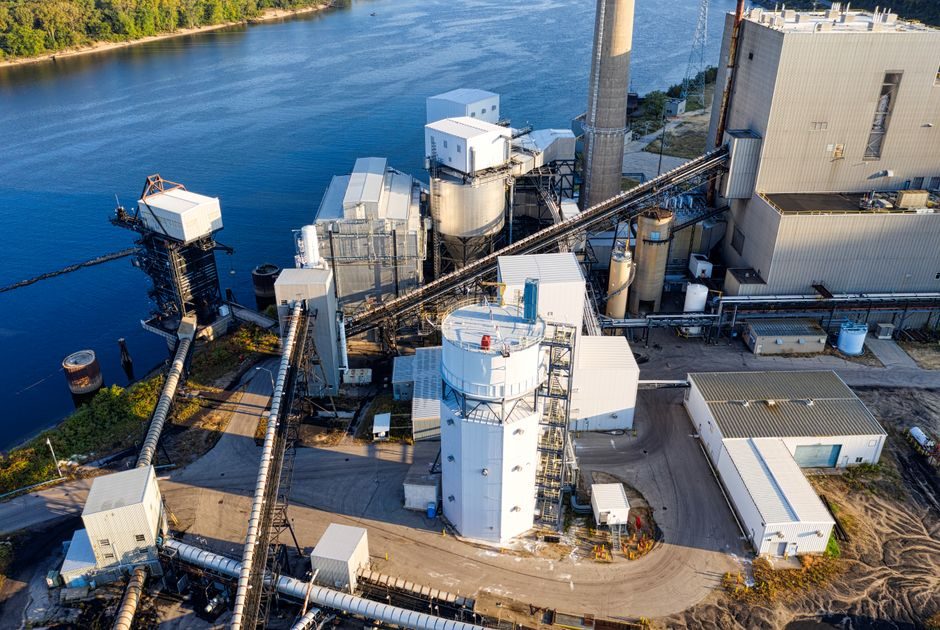
A degassing & refining unit is a metallurgical processing station that strips dissolved hydrogen and entrained non-metallic oxides from molten metal before casting, and selecting one in 2026 is a function of four hard gates: melt mass, target cleanliness, refractory life, and process mode [S1][S2].
The equipment family spans small in-line aluminium fluxing boxes rated at 5 sets/month from a typical Qingdao OEM, up to multi-station ladle-degassing vessels for secondary steel refining where MgO-C and dolomite refractories set the maintenance cadence [S1][S2]. Specifying engineers should treat the unit as a refractory-wearing asset first and a gas-handling asset second, because the wear data from operating ladle-degassing units dictates tonnage-per-campaign, not the blower curve [S1].
Process Modes: Ladle Degassing, In-Line Fluxing and Rotary Degassing
Three mechanical formats dominate 2026 buying shortlists: (1) vacuum-ladle degassers (VD/VOD) for steel, where a sealed ladle is evacuated and argon-stirred to drop dissolved hydrogen below roughly 2 ppm, (2) in-line fluxing boxes through which molten aluminium is routed while nitrogen or argon is injected, and (3) rotary degassers (RID), where a spinning impeller shears gas into fine bubbles in an aluminium holding furnace [S2].
For aluminium foundries, the in-line fluxing box is sold as a one-piece unit with rated throughput keyed to the casting line, and one major Chinese manufacturer lists a production capacity of 5 sets per month with negotiable MOQ, payment in L/C, T/T, D/P, Western Union, PayPal or Money Gram, and FOB Qingdao as the reference port [S2]. Steel-mill buyers are effectively buying a refractory-lined vessel plus a vacuum-pump train; published wear studies confirm that MgO-C working linings and dolomite safety linings are the two refractory stacks that drive campaign life in ladle-degassing service [S1].
Selection Gate 1: Melt Mass and Throughput Class
Throughput gates the entire spec. For aluminium holding furnaces, units are commonly sized for 1–30 t/h melt flow, with rotor speed and gas flow-rate tied directly to the metal mass that must be treated in the dwell time available before the casting launder [S2].
For steel, the gate is ladle capacity: 30 t, 60 t, 100 t, 150 t and 200 t are typical nameplate tonnages, and the vacuum-pump set, argon-flow control and ladle-lid sealing system are all sized from the ladle cross-section. Buyers who under-rate melt mass find that the station becomes the casting-line bottleneck within one shift, while over-rated stations waste purge gas and refractory budget [S1][S2].
Selection Gate 2: Target Hydrogen and Inclusion Class
Final hydrogen is a hard limit, not a suggestion. Aluminium die-casting alloys typically require H below 0.10 ml/100 g to avoid porosity; aerospace-grade aluminium targets H below 0.05 ml/100 g, and rotor-degasser dwell times of 6–12 min are the engineering lever for reaching it [S2].
Steel for plate, linepipe and forging is usually specified below 2 ppm H, and the ladle-degassing cycle length (typically 15–30 min under vacuum) is set by the initial H, ladle freeboard and argon-stir flow rate. The relation between rotor speed, gas flow and hydrogen removal is logarithmic rather than linear, so doubling the gas flow does not halve the cycle time; this is the most common rookie mistake in a buying spec [S1].
Selection Gate 3: Refractory Stack and Wear Class
Refractory selection sets campaign life and is the line item that quietly dominates lifecycle cost. In ladle-degassing service the published wear data identifies MgO-C working linings and dolomite safety linings as the two most common stack combinations, with wear concentrated at the slag line and the argon-purge plug zones [S1].
Buyers should request the OEM's wear-isopach map for a full campaign, not just the lining drawing, and confirm brick grade, pitch/resin bond, and the preheat schedule. For aluminium rotary degassers, the rotor shaft and the upper box wall see the most erosion, and silicon-carbide-coated rotors are now a baseline option in longer-campaign cells [S1][S2]. For a related buying frame on furnace-side refractory stacks, the Cupola Furnace Buying Guide 2026 lays out the same tonnage-and-refractory logic in cast-iron context, and the Crucible Furnace Selection: 5 Engineering Gates Before RFQ covers the small-batch heat-selection counterpart. The underlying degassing unit reference page lists the canonical sub-assemblies — vessel, lid, pump train, heater and dust catcher — that every OEM RFQ should itemise.
Selection Gate 4: Gas System, Control and Heat-Side Auxiliaries
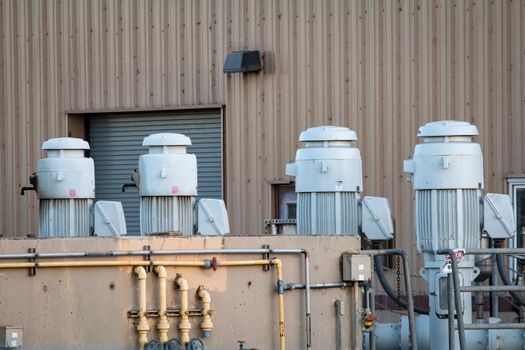
Gas-side hardware is what differentiates a serious station from a kettle on legs. The argon (or nitrogen) supply train, flow-control skids, pressure regulators, gas-heater dew-point control, and the dust-catcher/afterburner are the components that make the rated H level reproducible from shift to shift [S2].
For a steel-side vacuum-ladle degasser, the heat-side auxiliary list expands to ladle preheaters, ladle-lid lifts, vacuum-pump sets (steam-jet or mechanical), H2/CO afterburners, and a clean-gas vent stack. None of these are good candidates for value engineering: cheap flow control is the most common reason that a brand-new degasser fails to meet its 2 ppm H spec on the second campaign. Buyers comparing OEM quotes should also verify that the station's PLC/HMI exposes a digital recipe for argon flow, vacuum level and treatment time, because most modernising programmes in 2026 treat the degasser as a data node in the melt-shop MES, not a standalone box. Adjacent process flow hardware is covered by the hydraulic power unit and the FRL unit reference pages, which cover the pneumatic and hydraulic services that feed a typical degasser station.
Who the Unit Is For — and Who It Is Not For
The unit is for plants pouring aluminium billet, slab or foundry alloys, and for steel mills running a clean-steel ladle metallurgy step (VD, VOD, RH) ahead of continuous casting or forging. It is not for low-end cast-iron or scrap-remelt shops that don't measure H or inclusion class; in those shops a simple ladle-slag-off plus a passive gas lance will return 80% of the value at 20% of the capex [S1].
For shops running both aluminium and steel at low volume, a smaller rotary degasser is almost always a better buy than a vacuum-ladle system, because operating cost is dominated by refractory and argon, not vacuum-pump energy.
Limitations, Failure Modes and Standards to Insist On

Three failure modes account for the majority of unplanned outages: (1) argon-purge plug clogging in steel ladles, (2) rotor-shaft erosion in aluminium rotary units, and (3) vacuum-lid seal degradation on VD/VOD stations. Each one is detectable in trend data before the campaign collapses, which is why a 2026 RFQ should require on-board trending for rotor current, gas flow, vacuum base pressure and ladle-lid temperature [S1].
On the standards side, refractory specifications typically reference ISO 5017 and ISO 12678 for dense shaped refractories, and buyers should also confirm compliance with ASTM C401 for castable classification where castables are used. Pressure-side and gas-train components are usually required to carry a PED/2014/68/EU or ASME B31.3 fit-for-service basis, and the control cabinet typically must meet IEC 61439-1 for low-voltage switchgear assembly; ATEX 2014/34/EU zones apply when the station is installed in a classified area. For foundries pouring aerospace aluminium, additional reference is commonly made to AMS 2774 for heat treatment and to internal OEM cleanliness protocols tied to ASTM E2331 for inclusion rating. None of the existing sources pin a 2026 revision date on any of these standards, so the buyer should verify the current revision against their own compliance register before signing the PO [S1].
Sourcing, Lead Time and 2026 Market Signals
Lead time in mid-2026 for a Chinese-built in-line aluminium fluxing box is typically 30–60 days ex-works, and freight from Qingdao to most Asian, Middle Eastern and African ports adds another 20–35 days depending on Incoterm; a steel-side ladle-degassing vessel is a 6–10 month project from PO to commissioning because of the refractory dry-out, mechanical run and metallurgical acceptance test [S2].
For 2026, the in-line fluxing box market is dominated by a small group of Chinese manufacturers advertising FOB Qingdao terms with negotiable MOQ down to one set, while steel-side ladle-degassing equipment is supplied by a longer list of metallurgical OEMs in China, Europe and India, and is increasingly bundled with digitalisation packages for the melt-shop. Trackable signals worth watching through the rest of 2026: (1) the Refining India 2026 summit agenda, which lists process optimisation, energy efficiency, digitalisation and AI as core themes and is a useful proxy for which refining technologies Indian operators expect to procure this year [S3], and (2) refractory-wear papers surfacing through 2025–2026 that are pushing buyers toward higher-purity MgO-C grades and doloma-enriched safety linings for ladle-degassing service [S1]. Buyers who lock these two signals in their RFQ evaluation will be ahead of most of the 2026 bid pool.