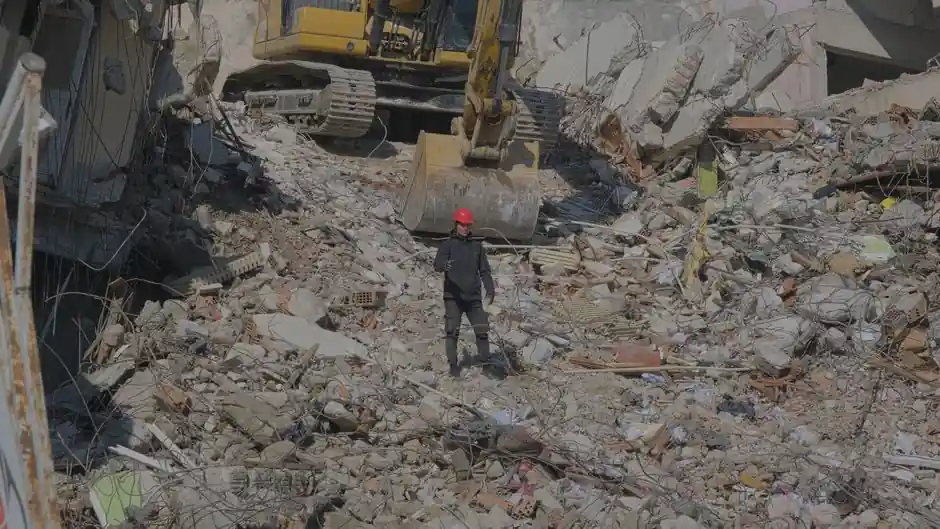
A demolition theodolite in 2026 is specified as a 5″–6″ angular-accuracy instrument with an integrated 200–600 m reflectorless EDM, IP65-rated housing, and a dual-axis tilt sensor for reading wall plumb through dust, not as a 1″–2″ deformation-monitoring instrument reserved for dams and high-rise verticality [S1].
Demolition layouts are short-baseline, high-tolerance-to-error work: set a cut line, verify a wall is plumb before a breaker hits it, confirm a floor slab is at grade before a mechanical hoe chews into it. That job class maps to the 2″–10″ accuracy band common to civil and structural contracts, sitting between roughly 0.6–2.8 mm per 100 m, with 5″–6″ covering earthworks volumetrics and bench checks at a usable price point for the demolition contractor [S1]. Mechanical 1″ units are over-spec for rubble; plain 9″–10″ optical theodolites without an EDM cannot push a sightline through the dust column behind a breaker, which is exactly when the demolition surveyor needs a number.
For background on the instrument class itself, see the theodolite encyclopedia entry for the angle-measurement principles and the historical mechanical-versus-electronic split; the 2026 buying decision, however, lives at the intersection of EDM, IP rating and tilt-correction electronics [S1].
Angular accuracy: 5″–6″ is the demolition sweet spot
2″ instruments are the 2026 default for general construction layout, building set-out and road work, while 1″ units are reserved for short-span deformation monitoring, dam and high-rise verticality, and tight rail/metro control traverses; 5″–6″ covers earthworks volumetrics, mining bench checks and cadastral traverses, and 9″–10″ optical units are budget instruments for education and small-site stake-out [S1].
For demolition, the operating question is: how much angular error can the cut tolerate before a structural member is mis-aligned? A 5″ instrument at 50 m produces about 1.2 mm of lateral error, which is well inside the 10 mm tolerance band most concrete-cut and wall-removal drawings allow. Encoder technology on 2026 production lines is almost universally absolute-encoding, so the instrument retains angle on power-down and does not need re-initialisation between breaker cycles; incremental encoders are confined to a small tail of low-cost optical theodolites [S1]. Dual-axis tilt sensors on 1″ and 2″ units compensate over a typical range of ±3′ (about ±0.05°) at roughly 1″ resolution; on a 5″ demolition unit the same sensor class still catches the tripod-knock error that ruins a cut line on a vibrating deck [S1].
EDM range: reflectorless through the dust
A 2026-mainstream theodolite EDM hits 2,000–3,500 m on a single prism, 5,000 m or more on a triple prism under good conditions, and 200–600 m reflectorless on a white target, with the reflectorless figure being the one demolition actually feels [S1].
Demolition sightlines run through airborne concrete dust, rebar spray and water mist from suppression hoses, all of which kill a prism constant unless a pole-man walks into the cut zone, which safety rules often forbid. The 200 m non-prism figure is the floor for concrete-pour and façade layout, and 500 m+ drives the spec for quarry faces and stockpile volumetrics, both common in structural demolition where a slab has been removed and the underlying bench needs to be verified before the next breaker pass [S1]. Prism constant should be field-adjustable on any 1″ or 2″ unit with standard values of 0 mm and −30 mm, and the instrument should also accept user-entered constants for non-OEM prisms; beam divergence in the 0.3–1.0 mrad class is typical for 2026 prism EDMs, with sub-0.5 mrad worth specifying for long-range stakeout where walk-up of a prism is impractical [S1].
For comparison, the steel-construction theodolite spec map treats 1″–2″ instruments as the steel-erection default because column-plumb tolerances are tighter than demolition-cut tolerances, which is why the demolition spec can sit one band lower on the accuracy scale without losing contractual compliance.
IP rating, temperature and the dust-and-water reality
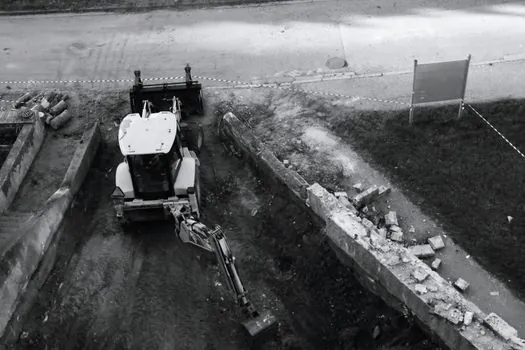
IP54 is the floor for any field theodolite outdoors in 2026; IP65/IP66 is specified on coastal, monsoon-region and tunnel-mouth sites, and the IP rating maps directly to the dust-and-rain survival of the encoder housing, the EDM optics and the keypad [S1].
Demolition sites are dominated by dust ingress on the keyboard and condensation on the objective during cold/warm swing conditions, so the practical minimum is IP65: dust-tight and resistant to low-pressure water jets, which covers both water-suppression spray and unexpected rain on a half-stripped slab. Operating temperature window on survey-grade units is typically −20 °C to +50 °C; arctic and desert demolition sites need a vendor-confirmed window at the extremes rather than the marketing brochure figure [S1]. For demolition contractors working in regions with summer over 40 °C or winter below −15 °C, the spec should be cross-checked against the manufacturer's tested envelope, not the catalog headline. Power is handled by internal Li-ion packs rated for 8–36 hours on a 2″–5″ instrument, with hot-swap batteries now standard on 1″–2″ units so the EDM does not lose count mid-cut.
Tilt-correction, plumb reading and the data path
Dual-axis tilt sensors are standard on 1″ and 2″ units in 2026, with compensation range ±3′ and resolution around 1″; for high-rise vertical plumbing and pier alignment, look for units that report the tilt-corrected angle directly to the face display so the operator does not have to apply corrections manually [S1].
Demolition plumb checks on a partially-cut wall are exactly the case where manual correction gets skipped and a wall comes down out-of-true: a tilt-corrected direct readout on the face display removes the temptation to back-calculate in the field. The data path on a 2026 theodolite is typically Bluetooth or cable-tether to a controller running Android or Windows, with export to CSV, DXF and LandXML; demolition deliverables are usually a stake-out report plus a DXF of the as-cut line, both of which are within the standard export set of a 2″–5″ instrument [S1]. For atmospheric correction on long demolition baselines, an integrated pressure/temperature sensor or a dedicated ppm-correction input is the difference between a clean and a compromised plumb reading, particularly on summer sites where a 10 °C delta across the working day is routine [S1].
What a demolition spec sheet looks like in practice
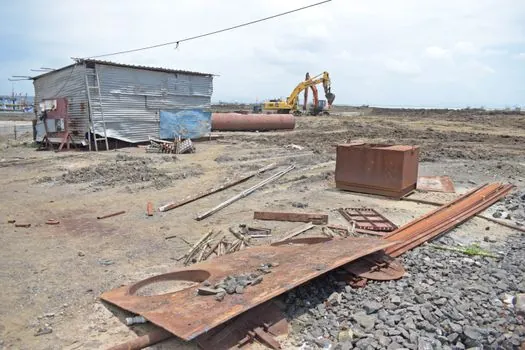
A 2026 demolition theodolite spec sheet typically lands on these lines: 5″ angular accuracy (or 2″ if the contract also covers re-build layout), 200–500 m reflectorless EDM, IP65 housing, dual-axis tilt sensor with ±3′ range, Bluetooth data export, and a 2,000 m single-prism range for back-check shots to control points outside the dust cloud [S1].
Compared side by side, a 1″–2″ instrument over-specs the demolition tolerance band and under-uses the deformation-monitoring firmware; a 9″–10″ optical-only theodolite has no EDM, so it cannot read through dust to a wall corner, and it cannot push a cut line in real time against a digital drawing; a 5″–6″ electronic theodolite with an integrated EDM hits the cost-accuracy-EDM intersection that demolition procurement actually buys [S1]. The cross-check on the contract side is whether the same instrument will be used for re-build layout once the slab is cleared, in which case a 2″ unit pays for itself across both phases. Tender documents for demolition typically require the contractor to verify structure to be removed against the program of works, drawings and specifications, and to coordinate instrument accuracy with the engineer's requirements rather than the contractor's preference [S2].
Trackable next signals: watch for vendor releases of 5″ demolition-class total stations with sub-0.5 mrad beam divergence and IP66 ratings in 2026 H2, and confirm whether contract specs in your region are tightening demolition-plumb tolerance from 10 mm to 5 mm on high-rise cut-back work, which would push the buying decision from 5″ back up to 2″ instruments [S1].
Spec-level background on the components involved: demolition hammer, and aerial work platform.