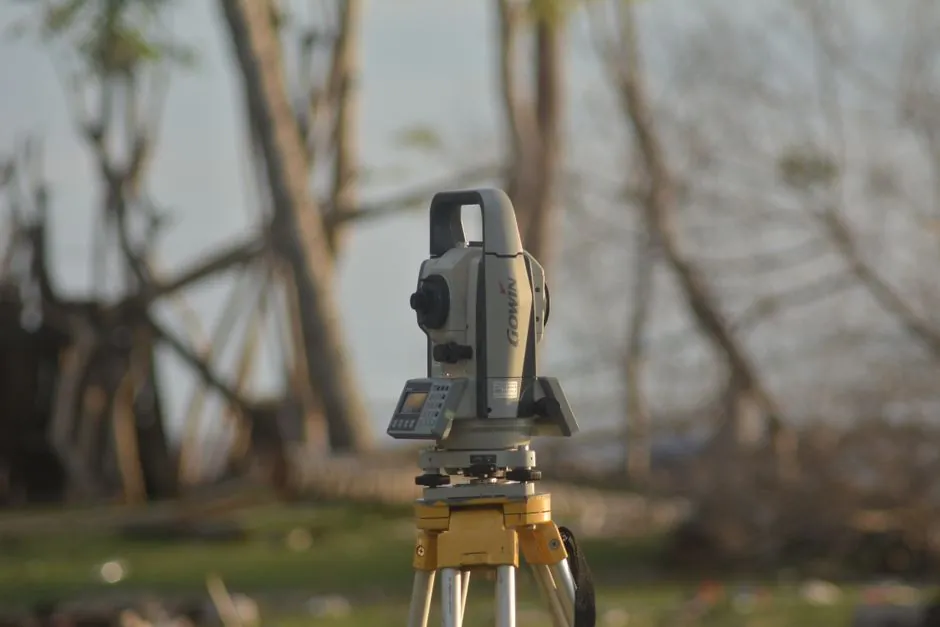
Steel erection work calls for a theodolite with 2" to 10" angular accuracy, IP54 dust and water resistance, and a 30x telescope with erect image, the same envelope defined for the Spectra Precision DET-2 and the Nikon NE-100/NE-101 construction theodolites [S3][S5].
Steel column plumbing, anchor-bolt alignment, and base-plate elevation checks are short-range, verticality-critical jobs, and the Nikon NE-100/NE-101 datasheet lists concrete form alignment, anchor bolt positioning, and steel column erection among the explicit use cases for the product line [S5]. theodolite instruments in this class weigh roughly 4.5 kg (9.8 to 9.9 lb), run on AA cells, and operate from -20 to +50 degrees Celsius [S3][S5].
Accuracy tiers that match the steel task
The Nikon NE-100 delivers 10" (3 mgon) accuracy to DIN 18723, while the NE-101 tightens that to 7" (2 mgon) using the same 79 mm circle diameter and photoelectric incremental encoder reading system [S5]. The Spectra Precision DET-2 raises the bar to 2" angular accuracy with 1" or 5" selectable minimum reading, suited to layout where the cost of a missed angle compounds across a welded frame [S3][S4].
For typical steel erection (column plumb, base-plate leveling, anchor-bolt template setting), 7" to 10" instruments are the workhorse tier and command a lower capital cost, while 2" digital theodolites earn their keep on high-rise steel cores, pre-fab module alignment, and QA checks against tight fabrication tolerances [S3][S5]. Minimum digital reading on the NE-100 is 10/20", 2/5 mgon, 0.05/0.1 mil, and on the NE-101 it steps to 5/10", 1/2 mgon, 0.02/0.05 mil, so crews can dial display resolution to the tolerance budget of the connection [S5].
Optics, magnification, and the erect-image question
Both reference theodolites ship 30x magnification with a 45 mm objective aperture, erect image, and a stadia ratio of 100 with additive constant 0 for distance estimation from a single sighting [S3][S5]. The DET-2 focuses from 1.35 m to infinity with a 1 degree 30 minute field of view, and its optical plummet is 3x erect with 0.5 m to infinity focusing [S3]. The NE-100/NE-101 minimum focus is 0.7 m and the optical plummet is 2.2x with a 1.3 m fixed focus range, a tighter near-focus that suits shop-floor layout [S5].
For steel crews, erect image is not a luxury. Inverted optics force the instrument operator to mentally flip the crosshair, which slows down when plumbing a 12 m column to a base-plate template. Both product lines deliver erect image as standard, and both back the reticle with illumination for low-light indoor erection or dawn shift work on outdoor decks [S3][S5]. Field of view on the Nikon pair is 1 degree 20 minutes (2.3 m at 100 m), a useful target acquisition figure when sighting across a bay to the far column line [S5].
Environmental rating and power budget for site conditions
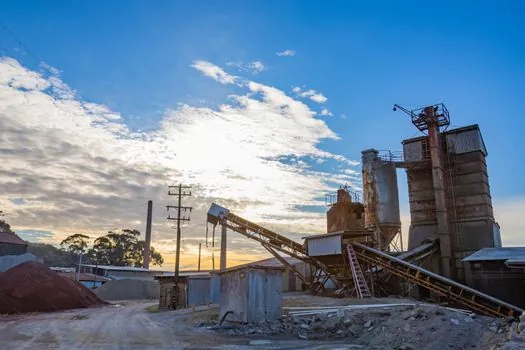
IP54 is the common floor for steel-construction theodolites: dust-protected and resistant to water splashes from any direction, matching the typical yard environment of rebar, crane wash-down, and intermittent rain [S3][S5]. Operating temperature spans -20 to +50 degrees Celsius (-4 to 122 degrees Fahrenheit) on both the DET-2 and the NE-100/NE-101, covering hot-rolled steel assembly in summer sun and cold-weather erection alike [S3][S5].
Power is a meaningful differentiator. The Nikon NE-100/NE-101 runs on six 1.5 V AA cells for 48 hours of continuous operation at 20 degrees Celsius, a field-friendly spec because site teams can source alkalines locally [S5]. The Spectra DET-2 ships with a NiMH rechargeable pack and charger plus an alkaline pack, at the cost of a longer recharge cycle but with the option of disposable backup [S3]. For multi-week steel campaigns without reliable charging, AA-powered units are often the pragmatic pick. Reference weight is 4.5 kg (9.9 lb) for the DET-2 and 4.5 kg (9.8 lb) for the NE-100/NE-101, within a 100 g band that any seasoned surveyor can hand-carry across decking [S3][S5].
Compensation, tilt sensors, and one-touch setup
The DET-2 includes a vertical-axis tilt sensor with ±3' automatic compensation, user-switchable, a feature absent from the NE-100/NE-101 datasheet, which lists no automatic vertical compensator [S3][S5]. On a vibrating steel deck adjacent to a pile driver, a switched-on compensator will reject low-frequency jitter and protect the angle reading; on a stable concrete slab, crews commonly turn it off to speed up the shot [S3].
One-touch button functions on the DET-2 cover HOLD for angle hold, R/L for clockwise or counterclockwise measurement, 0SET to zero the horizontal angle, and V% to convert vertical degrees to percent grade, a direct match for short-range grade work between bearing points on a steel mat [S3]. The NE-100/NE-101 uses a 5-button front keypad and a 20-character by 2-line dot-matrix LCD, simpler but adequate for angle, alignment, and 90-degree layout work [S5]. Both expose a tubular plate level and a circular bull's-eye level for coarse leveling, 30"/2 mm and 8'/2 mm on the DET-2, and 60"/2 mm (NE-100) or 40"/2 mm (NE-101) plate sensitivity with a 10'/2 mm circular vial on the Nikons [S3][S5].
Optical plummet versus plumb bob on a column line
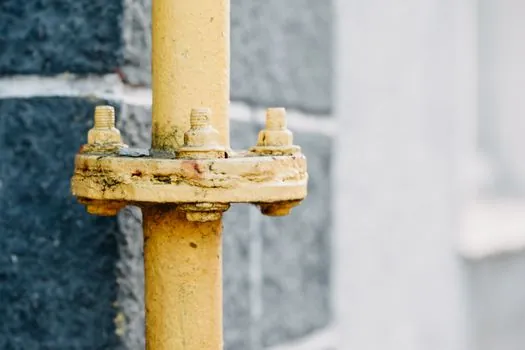
An optical plummet lets the operator set up directly over a control point without a plumb bob, which is exactly the workflow when plumbing a steel column to a survey monument or a base-plate anchor grid [S3]. The DET-2 optical plummet is 3x erect with 0.5 m to infinity focus, while the NE-100/NE-101 optical plummet is 2.2x with a fixed 1.3 m focus, meaning the Nikon must be set up at a fairly precise tripod height for the plummet to work sharply [S3][S5].
For indoor steel work on a slab where the instrument sits 1.3 m above the control point, the Nikon's fixed-focus plummet is convenient. For outdoor column line work where tripod height varies with terrain, the DET-2's variable-focus plummet is more forgiving. The DET-2 also ships with a hard-shell, o-ring sealed carrying case plus a rain hood, plumb bob, and adjustment tools, a kit that survives being thrown in the back of a site truck [S3].
Comparing the three reference options on steel-relevant criteria
On angular accuracy, the Spectra DET-2 leads at 2", the Nikon NE-101 sits at 7" (DIN 18723), and the Nikon NE-100 trails at 10" (DIN 18723) [S3][S5]. On power, the NE-100 and NE-101 run 48 hours on six AA cells, while the DET-2 uses NiMH plus alkaline backup with no published hours figure in the research material [S3][S5]. On weight and operating temperature, all three land at 4.5 kg and -20 to +50 degrees Celsius, effectively identical for site handling [S3][S5].
On vertical compensation, the DET-2 has a ±3' tilt sensor; the NE-100 and NE-101 have none, per their datasheets [S3][S5]. On optical plummet flexibility, the DET-2 focuses 0.5 m to infinity at 3x, the NE-100/NE-101 is fixed-focus at 1.3 m at 2.2x [S3][S5]. On environmental rating, all three are IP54 [S3][S5]. For steel crews, the practical question is whether the 2" accuracy and tilt compensation of the DET-2 justify the cost premium over an NE-100, or whether the NE-101 hits the 7" sweet spot for general erection at a mid-tier price.
Manual vernier theodolites and the heritage option
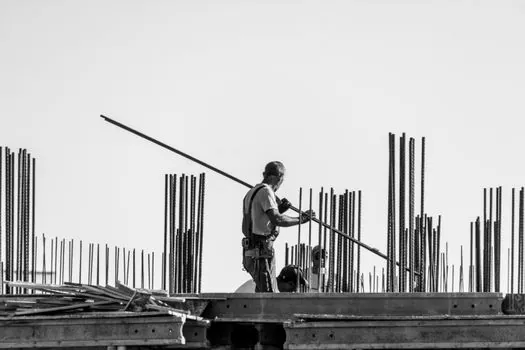
Beyond electronic models, manual vernier transit theodolites with 20-second reading and 24x to 30x magnification remain in circulation for low-budget site work, training environments, and tasks where digital dependency is a liability, and the relevant product category is covered under construction tools [S1]. These units are typically all-metal or aluminum-bodied, with optical plummets and both horizontal and vertical angle scales, but they require trained reading and offer no electronic data capture [S1].
For steel projects on remote sites, training academies, or developing-region supply chains, the vernier class still has a defensible role, but for any modern steel erection with QA documentation requirements, an electronic theodolite with display hold and vertical compensation is the realistic floor. A 10-second vernier instrument does not match the 2" to 10" digital envelope that the DET-2 and NE-100/NE-101 establish for steel work [S1][S3][S5].
Limitations and what theodolites cannot do in steel work
A theodolite measures angles and, via stadia, approximate distance; it does not output 3D coordinates, and it does not replace a total station when the steel layout demands coordinate-based stakeout with sub-centimeter positioning. For long-range steel erection, prefabricated module alignment, or as-built surveys on a complex steel frame, a construction machinery and equipment tier instrument such as a robotic total station is the more appropriate tool, and theodolite readings should be treated as a subset of a larger layout chain. [S5]
For plumb checks on tall steel columns, atmospheric refraction, heat shimmer off hot-rolled steel in direct sun, and crew-induced vibration can each add angular error, and the operator should average multiple direct and reverse face readings rather than trust a single shot. The 2" digital floor holds only when the instrument is correctly leveled, the compensator (if fitted) is on, and the tripod is stable on a surface that does not itself vibrate [S3][S5].
For a related angle-measurement and short-range layout discussion, see Automatic Level Selection for Bridge Construction: 2026 Spec Map, which covers the auto-level class used for elevation transfer on bridge steelwork where theodolite angle work is supplemented by optical leveling. For shop-floor and rebar placement considerations that overlap with column-line work, Automatic Level Selection for Masonry: 2026 Spec Map outlines similar short-range accuracy budgets in a different material context.
Watch the Spectra Precision, Nikon (Trimble), and Topcon positioning product lines for datasheet revisions in the second half of 2026.