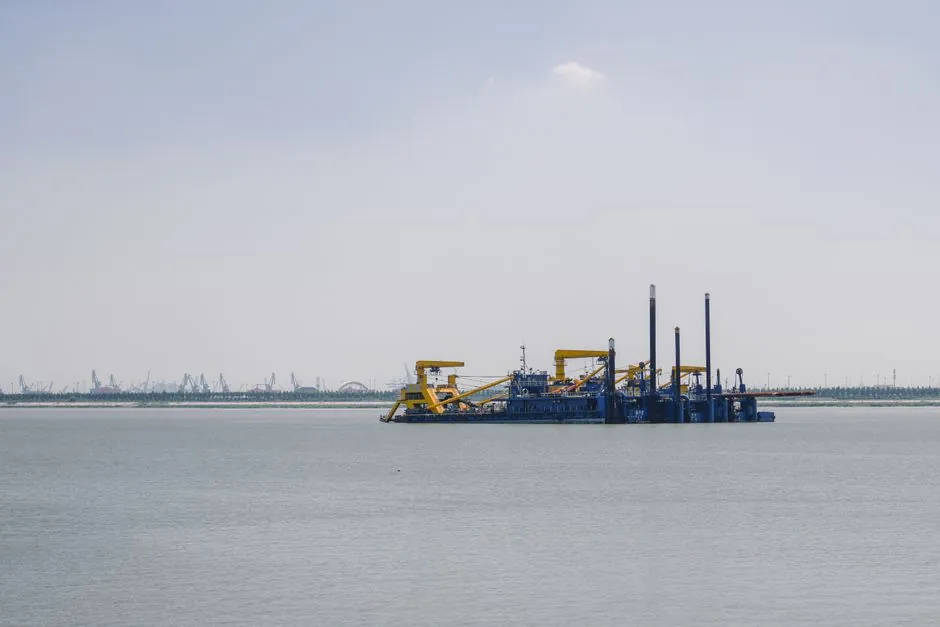
A single hydraulic diaphragm wall grab unit costs between USD 500,000 and USD 1.5 million, putting it in the same capital class as a mid-size crawler crane and forcing procurement teams to look past the invoice [S1][S3].
Market sizing varies by report scope, but three independent datasets triangulate the demand picture: the global grab market was USD 739 million in 2024, expanding to USD 772 million in 2025 [S3]; a wider diaphragm walling grabs segment was valued at USD 1.69 billion in 2025 with a 6.1% CAGR [S4]; and the broader diaphragm wall equipment market reached USD 4.8 billion in 2025, headed to USD 8.1 billion by 2034 at 6.0% CAGR, with the hydraulic grab product line holding 42.3% of the mix [S2].
Sticker price vs lifecycle cost: where the money actually goes
The unit price band of USD 500,000 to USD 1.5 million for a hydraulic grab is only the entry ticket; field economics shift heavily once logistics, slurry plant, and wear parts are loaded onto the same spreadsheet [S1][S3]. Operators also need extended training on the hydraulic clamp, Kelly-bar, and slurry circulation logic, which adds recurring cost across the ownership window [S3].
For cost benchmarking, the aerial work platform TCO breakdown shows the same pattern on lighter equipment: purchase price is roughly 50 to 60% of five-year lifecycle cost, with the rest split between consumables, energy, and downtime. The same ratio applies, with more weight on wear parts, for a diaphragm wall grab.
Main cost drivers ranked
1. Wear parts and bucket rebuilds. Grab teeth, cutting edges, hydraulic seals, and Kelly-bar bushings cycle hard in abrasive soil, and the research singles out reduced maintenance requirements as a competitive differentiator between premium and economy units [S3]. 2. Slurry and desanding plant. Bentonite consumption, desander pump hours, and polymer additives are proportional to panel length and trench depth, not to grab size, so they hit every TCO line proportionally [S2]. 3. Transport and rigging. Each mobilisation and demobilisation event is a flat six-figure cost on cross-border jobs, so projects with multiple short panels suffer [S1]. 4. Operator training and certification. Specialised crews are scarce, and the research flags training cost as a barrier to mid-tier contractors entering the segment [S3]. 5. Energy and hydraulics. Modern hydraulic grabs deliver 25 to 30% efficiency gains over older mechanical units, which translates directly into fuel and pump savings per cubic metre excavated [S3].
Hydraulic vs mechanical grab: criteria-based comparison
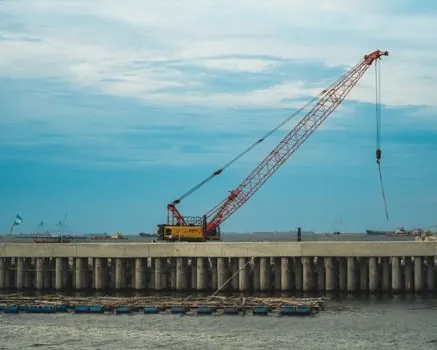
Hydraulic grabs already control 42.3% of the global equipment market and continue to take share because they offer higher clamping force, finer control, and compatibility with hard soil and rock that defeats mechanical units [S2][S4]. Mechanical grabs remain relevant for shallow, low-headroom, or budget-constrained jobs where the simpler rope-suspended design avoids the hydraulic power pack and its maintenance overhead. The trade matrix is straightforward:
Clamping force and depth capability: hydraulic wins, reaching 100 m panel depth on recent Chinese OEM units [S3].
Capital cost and simplicity: mechanical wins, with lower purchase price and a thinner spare-parts catalogue.
Precision and instrumentation: hydraulic wins, since telematics and IoT-based predictive maintenance are now standard on premium hydraulic units [S3].
Operating cost per cubic metre: roughly comparable on soft soil, but hydraulic pulls ahead in mixed or rocky ground where mechanical grabs stall and the operator burns hours waiting on clearing.
For projects at 50 m depth or below in uniform soft clay, mechanical grabs still earn their place; above 50 m, in layered soil, or on tight urban jobs where the panel must stay within a few millimetres of vertical, hydraulic is the only realistic answer [S4][S5].
Field performance: what changes the cost curve on real jobs
Independent field tests on 50 m and 70 m diaphragm walls show that grab-bucket trenching and grab-plus-hydromill trenching produce measurably different soil displacement signatures, with the hydromill step squeezing surrounding soil during milling [S5]. That matters for TCO because lateral squeeze increases the risk of panel deviation, which in turn drives rework, additional tremie concrete, and bentonite top-up, all of which sit on the cost side of the ledger. The same study found that pouring concrete as early as possible after trenching cuts the static-period displacement increment of 1 to 3 times, keeping single-panel ground settlement under 10 mm and protecting adjacent structures [S5].
The practical TCO takeaway is that the cheapest grab is rarely the cheapest job: cycle time, panel verticality, and adjacent-structure risk dominate the bottom line on urban panels deeper than 40 m. Contractors comparing bids should weight cycle-time data and verticality tolerance, not just the equipment line on the BOQ. For sites where the crane-spread competes with the grab, the crawler crane vs gantry crane spec map is a useful sister reference, because grab productivity is capped by the host crane's swing radius and pick capacity.
Who a hydraulic grab is for, and who should walk away
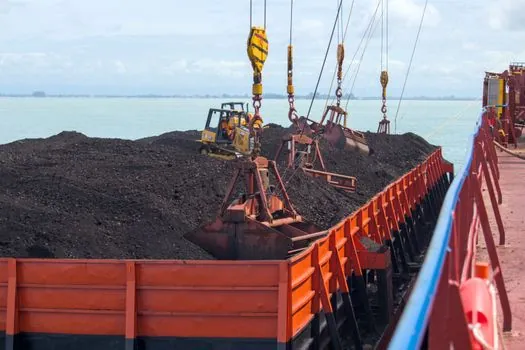
A hydraulic diaphragm wall grab fits a contractor that runs continuous urban foundation work, metro stations, deep basements, or cut-and-cover tunnel projects where panel depth exceeds 30 m and the schedule is tight enough to absorb the higher hourly rate. The unit also makes sense for rental fleet operators in Asia Pacific, which holds 41.2% of the equipment market and where municipal construction accounts for 58% of demand [S2][S3]. A mechanical grab still earns its place on shallow commercial building foundations, low-headroom pump-station work, and short rural bridge abutments where the rig is on site for a handful of panels.
Buyers who should walk away from the hydraulic segment are those with one-off projects below 30 m depth, tight mobilisation budgets, or no in-house slurry plant. In those cases, renting a grab with operator support from a regional fleet is almost always cheaper than buying, and it eliminates the 5 to 15% transport premium that inflates the first invoice [S1].
Standards, sourcing, and what to check at the quote stage
No single ISO or EN standard governs the grab itself; instead, performance is benchmarked against the panel specification set by the project geotechnical designer, typically referencing Eurocode 7 for retaining structures and project-specific verticality tolerances in the 1:200 to 1:300 range on deep panels. Buyers should confirm the grab's Kelly-bar straightness, clamp pressure rating, and instrumentation package (depth encoder, verticality sensor, telemetry) against the panel design before signing a purchase order. For material and slurry chemistry decisions, the hydraulic accumulator types reference is a useful adjacent read, since pulse-handling on the grab's hydraulic circuit is driven by the same accumulator logic that governs other heavy-mobile circuits. [S3]
Trackable signals to watch: Chinese OEM price competition, with XCMG and Sany introducing 100 m-class hydraulic units [S3]; rental penetration rates in tier-one Asia Pacific cities as metro pipelines convert; and any uptick in IoT-enabled predictive maintenance contracts bundled with new grab sales, since that is the clearest indicator that manufacturers are competing on TCO rather than on headline price [S2][S3].
The underlying component specifications are covered under total station, and diaphragm pump.