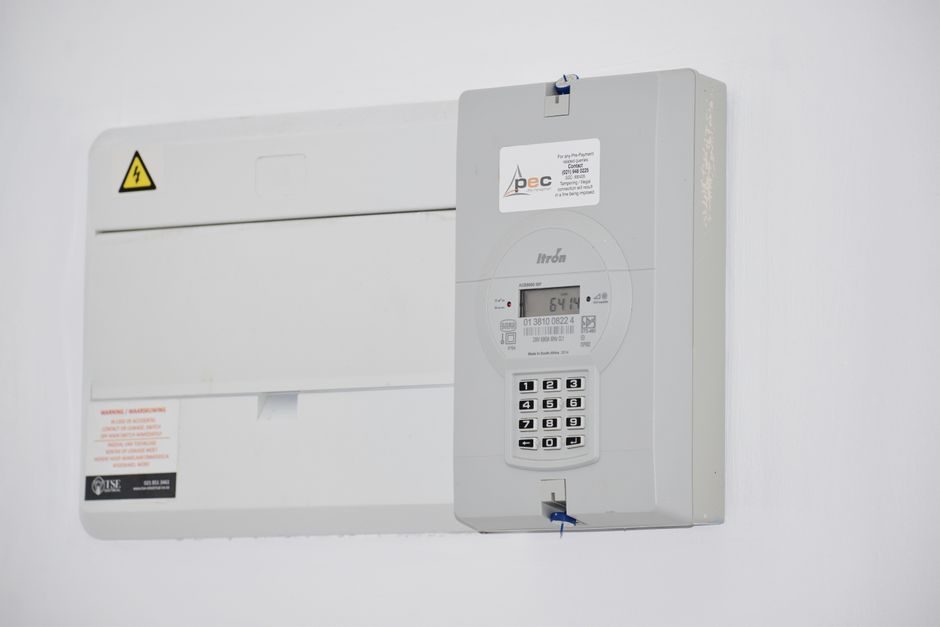
A digital panel meter is the lowest-cost way to put a process variable on an operator's panel: one input, one numeric readout, and optional trip relays for Hi/Go/Lo alarms [S2].
Specifying one in 2026 comes down to four hard gates — input signal type, DIN panel cutout, sampling/update speed, and alarm/relay output — because every other feature on the data sheet is downstream of those [S3][S4]. Wholesale tier pricing on Made-in-China starts near US$6.10 per piece at 5-piece MOQ, with the bulk band running up to roughly US$10.95 for branded-process-input units [S1].
Input Signal: Pick by Transducer, Not by Data Sheet Order
Process-input DPMs accept 4-20 mA, 0-5 V, 1-5 V as standard, with 0-10 V as an option on most DIN48×96 color-display models [S3].
Strain-gauge-input DPMs read ±4 mV/V directly from a load cell, with semiconductor-strain variants rated to ±130 mV/mA on dedicated F-series inputs [S3]. The 4-20 mA current loop is still the dominant field wiring in chemical and water plants because a single loop can run hundreds of metres without signal loss, which is why the digital multimeter on the bench will read the loop current but cannot replace the panel meter for a permanent installation [S2][S4].
DIN Cutout and Display: 48×96, 36×72, 24×48
Three cutout sizes cover roughly 90% of industrial orders: DIN48×96 (the classic 1/4-DIN process slot), DIN36×72 (compact machine-build), and DIN24×48 (miniature two-relay Hi/Go/Lo units) [S3].
Sampling speed separates the tiers: high-speed color units sample at 2000 times/sec for closed-loop display use, while general-purpose process meters run at 1000 times/sec [S3]. Two-color displays (red/green) are now standard on compact DIN36×72 and DIN48×96 builds, which lets one meter carry both normal and alarm states without a second instrument [S3]. For panel layout work, the same cutout discipline used for an HMI panel applies — a DPM is a single-loop text display, an HMI is a multi-loop graphic.
Alarms, Relays, and the Trip-Point Heritage
The defining patent lineage of the DPM is the user-preset comparator with a relay output and an optional audible alarm — the original 1989 US 4,853,619 filing built trip-point signalling directly into the meter so it could replace an analog meter without losing the alarm function [S2].
Modern compact meters still follow that template: a 24×48 VSM3B delivers 3 relay outputs (Hi/Go/Lo) from a 4-20 mA or 1-5 V input, while larger DIN48×96 multi-channel units support 2 or 4 setpoints per channel for differential or summed readings [S3]. Two-channel DPMs are commonly used to compute differential pressure or sum two flow signals, with 4 setpoints on the differential model and 2-per-channel on the summing model [S3].
Channel Count, Math, and When You Need More Than a DPM
Single-channel DPMs cover the bulk of field installations; 2-channel units are used for differential pressure, summed flow, or redundant display of one process variable [S3].
Once the requirement grows beyond two channels of math, or once colour graphics, trending, or recipe screens enter scope, the DPM hits its ceiling and a panel-mount HMI takes over. The practical cut-line: if the operator only needs to read one number and acknowledge one alarm, a DPM is the right tool; if they need to compare two values, log them, or react to sequences, escalate to an HMI or PLC + digital panel meter hybrid [S4].
Power, Wiring, and Field Reality

Power supply on a DPM is almost universally 100-240 V AC at the terminal strip, with DC loop-power variants available for 4-20 mA-only builds [S2][S3].
Calibration philosophy is a useful spec gate: the 1989-era patent description still applies — jumper-selectable input ranges and a user-set decimal point let a non-technical installer commission the meter in the field without a calibrator [S2]. Modern DPMs replace the physical jumpers with menu-driven range selection, but the principle (range set at the terminal or front panel, decimal point set by switch) is unchanged [S2][S3]. Watch the IP rating on the front fascia; DIN48×96 panels cut into a cabinet door expose the meter to washdown only if the fascia is rated IP65 or higher — a spec point buyers often miss on low-cost wholesale units [S4].
Comparison: DPM vs HMI vs Multimeter on a Panel
Three devices routinely compete for the same panel slot, and the decision falls out of four criteria: input count, display type, alarm handling, and unit cost. [S1]
A digital panel meter reads one (occasionally two) analog inputs, shows a numeric value, and trips relays; cost is in the US$6-11 wholesale band at 5-piece MOQ for process-input units [S1][S3]. A panel-mount HMI reads dozens of tags, shows colour graphics and trends, and handles alarms in software; cost is roughly an order of magnitude higher. A bench digital multimeter is more accurate but not panel-mountable, not loop-powered for permanent install, and not alarm-equipped. Across cost, channel count, alarm handling, and field-installability, the DPM wins on cost and simplicity, loses on channel count and graphics — which is why it stays in the spec for single-loop readouts even as HMIs dominate new builds [S1][S3][S4].
Limitations and Common Spec Traps
The first trap is reading accuracy: most low-cost process DPMs are specified at ±0.1% of full scale ±1 digit, which is fine for trend display but inadequate for custody-transfer or proving-curve work where a calibrator-grade instrument is mandatory [S4].
The second is the strain-gauge / process-input confusion: a process DPM will not read a load cell without a dedicated mV/V input stage, and a strain-gauge DPM will not accept 4-20 mA without an external shunt resistor — the data sheet's "multi-input" label usually means 1-5 V, ±5 V, ±10 V, 4-20 mA, and ±20 mA, NOT mV/V [S3]. The third is loop load: a 4-20 mA DPM drops 3-5 V across its sense resistor, which must be budgeted against the 24 VDC loop supply, especially on long cable runs where a linear guide of valve or sensor budgets leaves little headroom [S3][S4].
Sourcing Signals and Standards Anchor
Wholesale pricing in the May 2026 Made-in-China product feed for digital panel meters spans US$6.10 to US$10.95 per piece at 5-piece MOQ, with Diamond-tier Hubei Tianrui Electronic as a representative mainland supplier [S1].
Specialist Japanese OEM Valcom still lists DIN48×96 colour DPMs with 1000-2000 samples/sec and 2- or 4-channel input options, several of which are flagged as discontinued in 2026 — a tracking signal that the high-end process-DPM category is consolidating onto fewer, multi-input platforms [S3]. The same general-purpose process-display logic that drives a DPM is documented alongside PID loop controllers in our PID controller vs signal conditioner guide, which is the right next read for engineers moving from single-loop readouts to closed-loop control. Buyers should anchor any spec to the relevant panel-cutout standard (DIN 43700 for the 48×96 / 72×144 / 96×96 family) and to IEC 61010-1 for electrical safety on the supply side, and watch the Valcom product list for further discontinued-model churn through the second half of 2026 [S3].