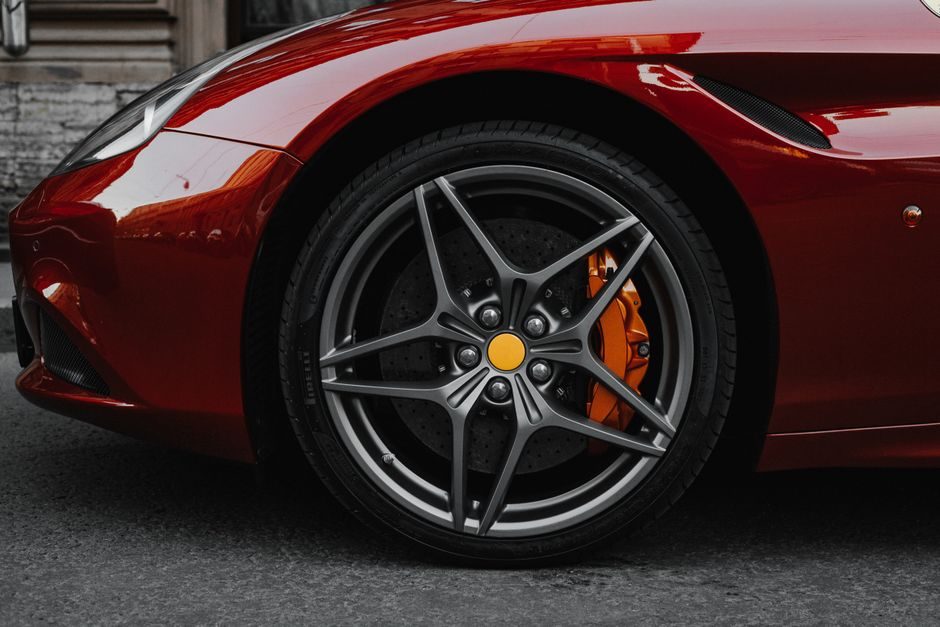
A disc coupling is a precision shaft-to-shaft connector whose laminated stainless-steel disc pack flexes to transmit torque while compensating for angular, parallel and axial misalignment between two rotating shafts [S1]. A shock absorber is a damping element — a hydraulic cylinder with a piston and controlled orifices — that converts sudden kinetic energy into heat through fluid throttling, suppressing oscillation in a sprung mass [S3][S5].
The two products share one engineering word ("shock"), but they sit in different physical domains: the disc coupling is part of the power-transmission train, the shock absorber is part of the suspension or vibration-control chain. Confusing the two in a spec sheet leads to wrong torque capacity, wrong life calculations, and in the worst case a sheared shaft or a resonance-fatigue crack within weeks of start-up.
Operating Principle and Energy Path
Disc couplings transmit torque from a driver to a driven machine. The disc pack is pre-loaded between two hubs; torsion is carried by shear in the thin discs while bending of the disc edges absorbs angular misalignment. No energy is dissipated in steady state — every watt that enters the coupling exits to the load. [S1]
Shock absorbers are deliberately dissipative. The piston forces hydraulic fluid through calibrated bleed orifices; kinetic energy of a moving mass is converted to heat, which is then radiated or convected away [S3]. A shock absorber that "transmits" energy instead of absorbing it is a failed component, and the opposite definition of what a coupling is supposed to do.
Torque, Speed and Misalignment Envelope
Industrial disc couplings cover a wide spec range: small single-disc units rated roughly 10–200 Nm at 3,000–10,000 rpm; multi-disc and high-torque series extend to 1,000,000 Nm and above on large mill, marine and test-stand drives. Typical misalignment budgets are 1–3° angular per disc pack, parallel offset on the order of a few millimetres, and axial end-float up to several millimetres, depending on the disc count and grade [S1]. The disc itself is usually 300-series stainless (301/302/304) cold-rolled to a thickness of 0.1–0.5 mm for high-cycle fatigue life.
Shock absorbers have no "torque rating" in the rotary sense. Their spec sheet reads in damping force (N), stroke (mm), cycle rate (cycles/min), energy per cycle (J) and equivalent viscous damping coefficient (N·s/m). Automotive dampers, for example, run at damping coefficients typically in the 1,000–3,000 N·s/m range, while heavy industrial or rail units push well above 10,000 N·s/m with strokes of 100–300 mm. Comparing a disc coupling's Nm figure directly to a shock absorber's N figure is a category error [S3].
Where Each One Actually Goes
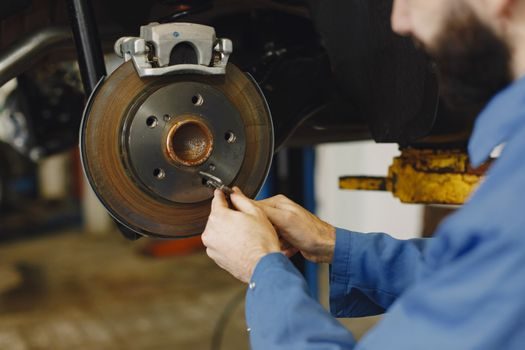
Disc couplings are specified between an electric motor or engine and the driven load — pumps, compressors, gearboxes, generators, mixers, paper-machine rolls. They protect the driveline from residual misalignment after mounting, absorb transient torque spikes through controlled wind-up, and provide a defined torsional stiffness that decouples motor and load vibration modes [S1]. For deeper spec coverage on torque, speed and sourcing, see the Disc Coupling Buying Guide 2026: Torque, Speed, Misalignment and Sourcing walk-through.
Shock absorbers sit between a sprung mass and an unsprung reference: vehicle wheel-to-chassis, cab mounts, off-highway equipment suspension, hydraulic press return cylinders, CNC axis end-dampers, and on packaging machinery where a moving carriage must not slam into the frame [S3]. In each case the absorber is downstream of the spring (or in parallel with it) and its job is to kill oscillation within one half-cycle, not to transmit continuous force.
Common Spec Confusion on RFQs
Three errors appear on request-for-quotation documents. (1) "I need a disc coupling rated for shock load" — the buyer usually means a coupling with a high peak-torque rating, not a damping device. The correct response is a high-torque disc pack (or a gear coupling with a higher service factor), not a shock absorber. (2) "I need a shock absorber to take up shaft misalignment" — misalignment is a positioning problem solved by a flexible coupling, not a damper. (3) "Use a fluid coupling as a shock absorber" — fluid couplings do smooth start-up torque, but they do not perform the linear-stroke damping of a hydraulic cylinder, and the energy-conversion paths are fundamentally different. [S2]
For general industrial shock-absorber sourcing, Chinese OEM pages list "Piggyback Coilover, Remote Reservoir, Emulsion, Triple Bypass, Smooth Body" as distinct damper architectures with separate damping curves and cooling envelopes [S4]. The taxonomy is internal to the shock-absorber family; none of those terms transfer to a disc-coupling spec.
Failure Modes and Maintenance
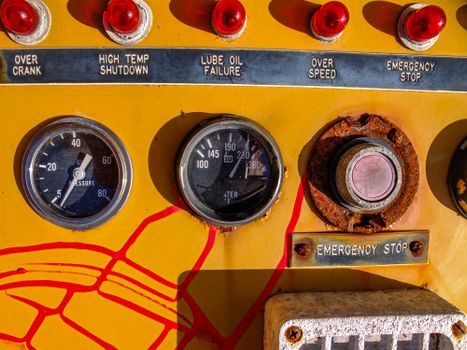
Disc coupling failures show up as fatigue cracking at the disc-pack inner or outer diameter, fretting at the hub-to-disc interface, and bolt loosening. Inspection is visual: a 10× loupe for early disc cracks, a feeler gauge for hub-to-shaft fit, and a torque wrench re-torque on the spacer bolts at the OEM interval. Typical service life is rated in millions of revolutions with a fully reversed bending cycle counted at the highest expected misalignment. [S3]
Shock absorber failure is a hydraulic problem first: oil leakage past the seal, aerated fluid (foam in the reservoir), blown seal from a rod-side impact exceeding the rated energy per cycle, and rod bending from a side load that exceeded the mount design. Automotive dampers are usually replaced as a sealed unit; industrial dampers on presses and machine tools can be re-sealed and re-gassed by the OEM. A shock absorber that has lost its gas charge is visibly distinguishable from a healthy one within the first 100 mm of stroke.
Selection Criteria Side-by-Side
Against four decision criteria, the two technologies diverge cleanly. (1) Energy path: disc coupling — stores and returns; shock absorber — dissipates as heat. (2) Primary spec: disc coupling — torque (Nm) and speed (rpm); shock absorber — damping force (N) and energy per cycle (J). (3) Misalignment handling: disc coupling — designed for it, up to a few degrees angular; shock absorber — tolerates none, must be aligned with the moving axis. (4) Service environment: disc coupling — enclosed gearbox or motor room, oil-bath tolerant; shock absorber — exposed, often outdoor, with rod seals exposed to dust and wash-down [S1][S3].
Selection rule of thumb: if the driveline must transmit continuous rotary torque across a gap, specify a disc coupling, possibly a jaw coupling for lower-cost low-torque service or a shaft coupling assembly when the design is multi-piece. If a moving mass must be decelerated without bouncing, specify a shock absorber matched to the moving-mass kinetic energy and the allowed stop distance.
Limits and Common Misuse
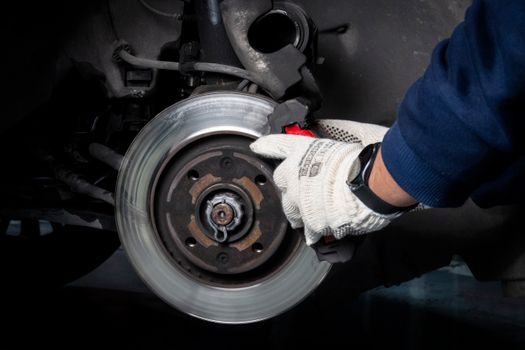
Disc couplings are not torque limiters. They transmit whatever torque the driver delivers up to the disc pack's fatigue limit; for overload protection a clutch or a shear pin sits upstream. Disc couplings also do not insulate against electrical current, so on VFD-driven motors with high shaft voltages an insulated hub or a grounding brush is added in series with the coupling. [S4]
Shock absorbers are not springs and not positioning devices. They cannot hold a load; they cannot centre a misaligned shaft; they cannot transmit rotary torque. Where a single component must damp and locate, a gas-spring + damper combination is needed, and the damper is sized for the energy that the gas spring does not absorb. A shock absorber installed without a parallel spring oscillates against the cylinder end-stop and is destroyed in a few cycles [S3].
Trackable signals: (a) the steady growth of remote-reservoir and triple-bypass damper SKUs on Chinese OEM catalogues in 2026, indicating demand for higher-cycle industrial damping [S4]; (b) the continued dominance of 301/304 stainless disc packs in export-grade disc couplings, with bolt-set spacer patterns standardised to ISO and DIN shaft-to-shaft lengths [S1].