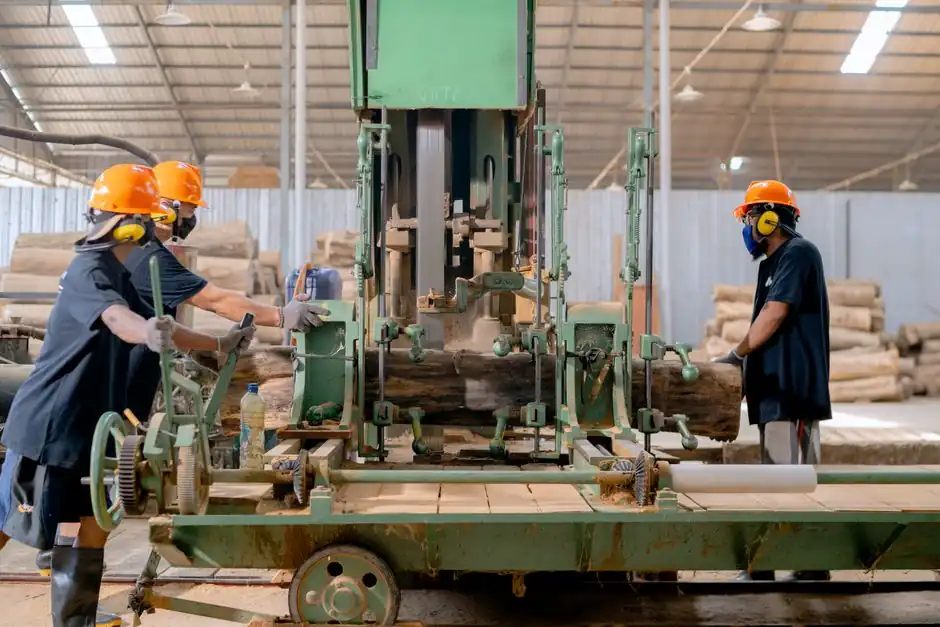
A dry-cut carbide saw and an abrasive chop saw look interchangeable from across the shop, but they differ in spindle speed, consumable cost, cut quality, and material compatibility. Carbide dry-cut saws typically operate in the 1000-1800 rpm range with toothed circular blades, while abrasive chop saws run 3500-5000 rpm with disposable grinding wheels [S1][S5][S6].
The first decision variable is what you are cutting and how clean the cut must be. Abrasive saws grind through material using a disposable disc, producing sparks, heat tint, and a roughly 5 mm to 10 mm wide kerf. Dry-cut saws shear the metal with carbide teeth, producing chip-form swarf, minimal heat, and a kerf closer to 2 mm to 3 mm [S3][S4].
Spindle speed and blade geometry: where the two designs diverge
The single mechanical difference that prevents swapping an abrasive wheel for a carbide blade on the same arbor is spindle RPM. Abrasive chop saws run 3500 rpm and up, while new carbide dry-cut saws run about 1400 rpm, with general industry references placing the dry-cut range at 1000-1500 rpm for 10-14 inch blades and up to 1800 rpm for smaller woodworking-style miter conversions [S1][S6]. Carbide teeth at abrasive-saw speeds would shatter from heat and centrifugal load; abrasive wheels at dry-cut speeds would glaze and stall [S1][S5].
Carbide dry-cut blades are typically tipped with C2/C-grade tungsten carbide or cermet teeth in a triple-chip or alternate-top-bevel grind, designed for ferrous and non-ferrous metal [S4]. Abrasive wheels are resin-bonded aluminium oxide for ferrous stock and silicon carbide for non-ferrous, and they wear continuously: a 14 inch abrasive disc that starts at 5 inch cutting depth can drop to 4 inch after only a few heavy cuts, whereas a carbide blade holds its full depth for its entire tooth life [S2][S4].
Cut quality, kerf, and downstream operations
A cold saw produces precise, clean, milled finish cuts, whereas an abrasive chop saw may wander mid-cut and produce a finish that usually necessitates a subsequent operation to de-burr and square-up after the item cools [S3][S4]. Blade deflection in abrasive wheels is the root cause: a thin, high-speed grinding disc bows under side load, leaving a cut that is neither square nor burr-free [S3].
For fabrication work where parts go straight to a welding table or assembly fixture, the abrasive cut often needs a second op, file, or grind, which adds labour cost the carbide dry-cut eliminates [S2][S3]. Field users report that carbide dry-cut chips come off as sawdust-like swarf, while abrasive cuts throw sparks and fine dust that settles on every surface in the shop [S2]. On materials suited to dry-cut cold sawing, low-alloy steel, medium and low carbon steel, cast iron, structural steel, and aluminium, the carbide blade cuts cool enough that the workpiece can be handled immediately [S4]. For a deeper look at how silicon carbide abrasive grains compare to tungsten carbide cutting edges in wear behaviour and temperature tolerance, the material science differs sharply between the two consumables.
Material compatibility: where abrasive saws fail

You cannot use an abrasive wheel on aluminium. The disc loads with soft, gummy metal, the abrasive glazes, and the cut either stalls or generates enough heat to ignite the chips [S5]. A carbide-tipped blade is the practical choice for non-ferrous stock, and most dry-cut saws are rated for steel up to roughly HRC 40 hardness when fitted with the correct tooth geometry [S4]. For stainless steel pipe, blade manufacturers typically require a dedicated stainless-grade tooth formulation to avoid work-hardening the cut face [S4].
On thick ferrous stock, the abrasive saw's higher surface speed lets it grind through faster, which is why many fabricators keep an abrasive cutoff on hand for heavy sections, rebar, and dirty or painted material where a carbide tooth would chip on the first pass [S5]. A practical shop layout uses both: abrasive for rough demolition-style cuts, carbide dry-cut for finish parts that go directly to weld or assembly. The circular saw encyclopedia entry covers the tooth-geometry distinctions that govern each application.
Cost: machine price, consumable life, and total economics
Entry-level abrasive chop saws sit in the $100-200 range, while dry-cut carbide saws start around $239 with a blade and climb past $3500 for production-grade 14 inch cold saws with 22 rpm and 88 rpm two-speed gearboxes and liquid-coolant blade lubrication [S2][S5][S6]. Abrasive discs cost about $5 each, carbide blades roughly $80-100 for 7-10 inch consumer sizes and proportionally more for industrial 14 inch blades [S5][S7].
The break-even calculation comes down to cuts per consumable. A shop owner reported recouping the $3500 per-machine cost of two 14 inch Scotchman cold-cut saws in roughly 2.5 years purely from abrasive-wheel savings, with the blades resharpenable for about $17 per grind [S2]. Users also report carbide blades still cutting acceptably after losing visible teeth, a service life abrasive wheels cannot match by design since they wear radially with every cut [S2]. For shops that cut stainless or non-ferrous, the carbide dry-cut is the only viable option regardless of consumable math.
Comparison matrix: dry-cut carbide vs abrasive chop saw
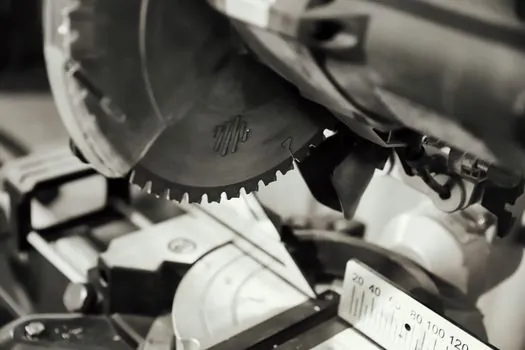
On four decision criteria drawn from the research, the two saw classes line up as follows. Spindle speed: dry-cut 1000-1800 rpm, abrasive 3500-5000 rpm. Cut quality: dry-cut burr-free milled finish, abrasive requires de-burr and squaring. Material range: dry-cut steel below HRC 40, stainless with dedicated blade, aluminium, copper; abrasive best on ferrous, will not cut aluminium. Consumable cost per cut: dry-cut $80-100 blade amortised over hundreds to thousands of cuts, abrasive $5 disc consumed in roughly a dozen heavy cuts [S1][S2][S3][S4][S5].
For buyers comparing the metal material categories each saw handles, the right rule of thumb is: pick the dry-cut carbide saw when cut quality, low heat input, and non-ferrous capability matter, and pick the abrasive chop saw when capital cost and raw material removal rate on dirty ferrous stock are the priorities.
Selection rule and operational notes
For a fabrication shop cutting mostly mild steel angle, channel, and square tube to length before welding, a 14 inch dry-cut carbide saw at 1000-1500 rpm is the standard recommendation and will replace both an abrasive chop saw and a downstream file station [S4][S6]. For a back-yard or field shop cutting painted structural steel, rebar, and occasional demolition work, the abrasive chop saw at 3500 rpm remains the cheaper, more forgiving tool and tolerates dirty stock that would chip a carbide tooth [S2][S5].
Two trackable signals for buyers watching the market: carbide-blade pricing has trended down enough that sub-$240 dry-cut saws with included 7-10 inch blades are widely available from consumer channels [S7], and abrasive discs remain a $5 commodity consumable, which keeps the abrasive saw economically rational for low-volume, high-speed steel cutting [S5].
For related coverage, see Drop Bottom vs Roller Hearth Furnace for Aluminum Solution Treatment.