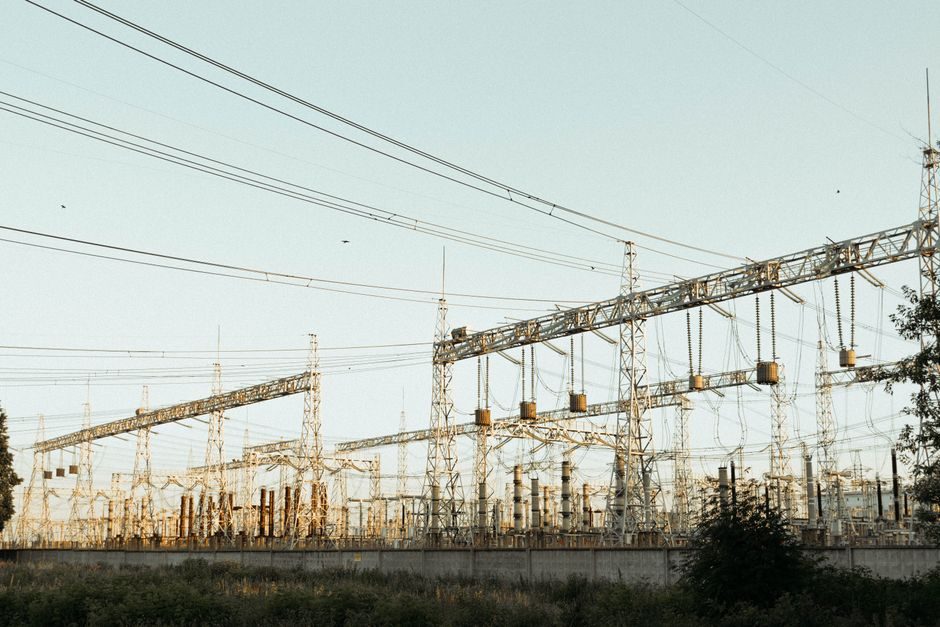
Two winding families sit at the centre of every dry-type transformer spec: epoxy cast-resin (CRDT) and vacuum-pressure impregnated / immersion-paint (VDT), with CRDT holding the European indoor market and VDT leading North American indoor builds [S7].
Selection is driven by kVA/MVA rating, primary-secondary voltage, impedance %IZ (typically 4–6% for distribution, 6–8% for rectifier duty), insulation thermal class (F = 155 °C, H = 180 °C), and short-circuit withstand verified to IEC 60076-11; reference designs in the 10 kV SCB9/SCB10 resin-insulated family target 20+ year service life with low partial discharge and flame-retardant epoxy coil casting [S5][S6].
CRDT vs VDT: winding construction and where each one fits
Cast-resin dry transformers (CRDT) encapsulate the LV or HV winding in a vacuum-cast epoxy body, giving high mechanical strength, low partial discharge, and a moisture- and corrosion-resistant barrier that suits indoor substations, hospitals, data-centre risers, and load-centre installations directly inside plant rooms [S5][S7]. Vacuum-pressure impregnated / immersion-paint dry transformers (VDT) rely on Class F or H varnish/polyester impregnation of glass or Nomex-wrapped windings, are lighter, easier to repair, and are the typical pick for North American indoor distribution and for high-kVA frames where total mass matters [S7].
Mechanically, CRDT coil short-circuit withstand is roughly 25–40× rated current for 2 s on a well-designed unit, while a VDT coil is closer to the IEC 60076-11 minimum of 25× for 2 s unless special bracing is added; for rectifier duty with high harmonic content (e.g. VFD lineups, DC drives) CRDT tends to handle the additional eddy-current heating in the windings more cleanly because the solid resin acts as a heat-spreader [S4][S6].
Insulation system: NOMEX, epoxy and the F vs H decision
High-quality insulation materials are the single biggest lever for loss, life and moisture resistance: DuPont NOMEX® paper for conductor wrapping, epoxy resin for casting, and glass-fibre or polyester tapes for outer banding are the typical stack [S4]. Class F (155 °C) systems are the workhorse for indoor CRDT and most VDT, while Class H (180 °C) systems are specified where ambient is elevated (tunnel substations, foundry auxiliaries) or where the spec writer wants extra thermal margin above the 120 °C average winding-temperature-rise limit typical of IEC 60076-11 Class F designs [S4].
Impregnating varnishes and epoxy systems also drive the fire-safety story: CRDT units are routinely listed as flame-retardant, self-extinguishing and explosion-proof because the resin locks the coil against arcing and absorbs the energy of an inter-turn short, while VDT units need an explicit fire-class enclosure (F0 / F1 per IEC 60076-11) to match CRDT on smoke and flammability [S5].
Losses, %IZ and the efficiency-vs-capex trade
No-load losses (core) and load losses (winding + stray) define both the EU Tier 2 / Tier 1 regulation compliance and the total cost of ownership: CRDT units with amorphous or step-lap silicon-steel cores can drop no-load loss by 30–70% versus a conventional CRGO core, but they push the kVA price up sharply; load losses are dominated by conductor size, so trading %IZ upward (e.g. 6% → 8%) reduces short-circuit current and also lowers stray loss, but it raises voltage regulation under load [S2][S6].
A distribution-class spec usually anchors on %IZ = 4% (≤ 1,000 kVA), 6% (1,000–2,500 kVA) and 6–8% (> 2,500 kVA) — for tighter voltage regulation or paralleling of two units, %IZ tolerance of ±10% is the industry default and must be locked in writing before bid, otherwise parallel sharing drifts and circulating current shows up at no-load [S6].
Short-circuit withstand, monitoring and protection
Short-circuit impedance and mechanical bracing are validated per IEC 60076-11, with the design routine to pass 25× rated current for 2 s without winding displacement; radial-deformation monitoring of the winding via magnetic sensors has become a credible add-on for high-kVA CRDT units feeding critical downstream buses, since undetected radial deformation progresses to inter-turn shorts and eventual over-firing [S3].
On the protection side, a CRDT/VDT spec is incomplete without: (1) PT100 or PTC thermistors embedded in each LV phase, (2) a forced-air-cooling (AF) fan pack on at least the LV winding for 130–150% temporary overload, (3) a temperature controller tripping at 130 °C (alarm) / 150 °C (trip) for Class F, and (4) a tap-changer on the HV side set to ±2×2.5% or ±5% to manage real LV voltage drift on long feeders [S5][S6].
Selection criteria matrix: CRDT vs VDT vs cast-resin rectifier
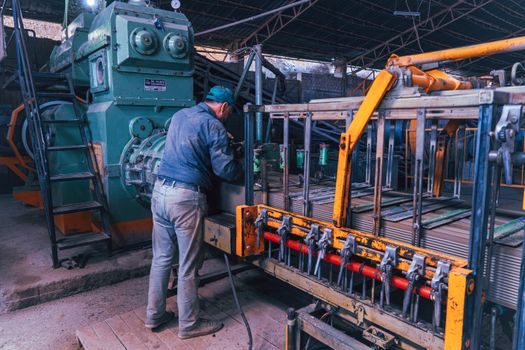
CRDT vs VDT vs cast-resin rectifier dry-type on the four spec gates that actually drive order placement: (1) Indoor fire safety — CRDT and cast-resin rectifier pass F1 / flammability class A easily, VDT needs an F0 enclosure to match; (2) Moisture / condensation resistance — CRDT wins (epoxy encapsulation), VDT acceptable in dry indoor rooms only; (3) Short-circuit withstand kA peak — CRDT typically 25–40× In, cast-resin rectifier similar with extra bracing, VDT ~25× In unless upgraded; (4) Weight and field-repairability — VDT is lightest and re-varnishable on site, CRDT is heaviest and essentially factory-only repair [S4][S5][S6][S7].
For a 10 kV / 0.4 kV, 1,000–2,500 kVA indoor substation in a European plant, a SCB10 / SCB11 cast-resin unit at 6% %IZ, Class F, 11 kV BIL 75 kV is the default; for the same spec in a North American plant, the equivalent is a VDT/encapsulated-winding dry type with the same %IZ and a UL-listed insulation system [S5][S6].
Standards, sourcing signals and 2026 capacity context
The governing spec stack is IEC 60076-11 for dry-type power transformers, with IEEE C57.12.01 / C57.12.91 as the North American mirror, ATEX 2014/34/EU for hazardous-area enclosures, and IEEE 1584 for arc-flash incident energy on the secondary side; the resin system is expected to be halogen-free and RoHS 2 / REACH compliant for European builds [S5][S6].
Shaote Electric Power Transformer Factory in Shaoguan, Guangdong lists dry-type and oil-immersed units as its core product mix, while Hitachi Energy's dry-type distribution line remains the OEM benchmark for global utility and industrial buyers [S1][S8]. Lead times for 10 kV CRDT units ≥ 1,500 kVA are running stretched into late 2026 on most OEM books, so locking the spec — kVA, kV, %IZ, insulation class, tap range, short-circuit level, and ambient — before vendor RFQ is the only way to keep delivery on the EPC critical path; for a deeper read on the transformer-capacity backdrop, see the global transformer shortage 2026 brief, and on the upstream oil-immersed side that the dry-type is often paired with, the power transformer buying guide 2026 covers kVA, kV, %IZ and efficiency choices side-by-side [S1][S8].
A trackable next node: monitor IEC SC 14 working-group outputs on the 60076-11 amendment track and Hitachi Energy / Siemens / Schneider dry-type product updates for 2026 Q3–Q4, since new frame sizes, low-voltage insulation kits and higher BIL ratings are the most likely place spec limits will move before the end of 2026 [S8].
For component-level specifications, see dry type transformer, dry mortar, and dry block temperature calibrator.