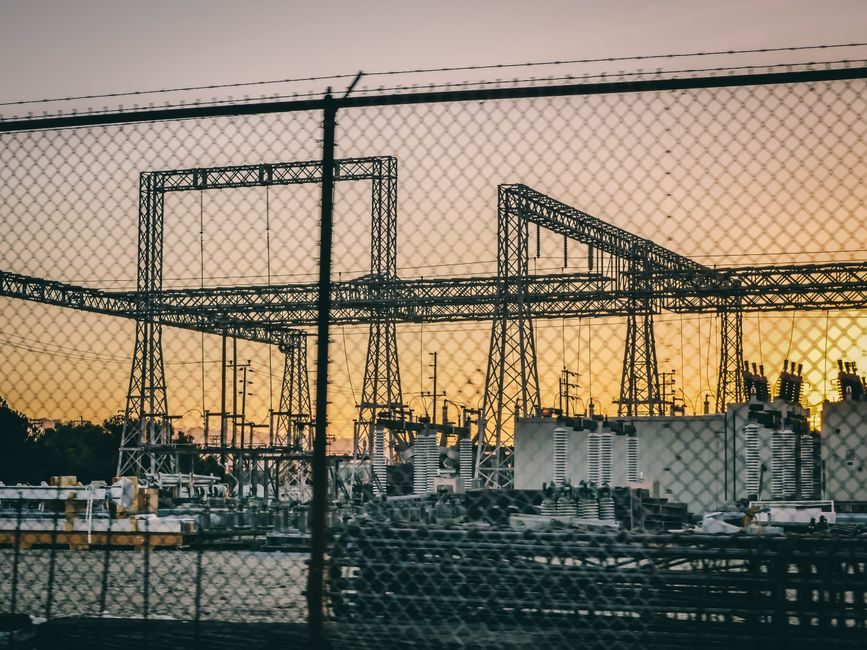
A power transformer changes voltage and current levels through magnetic induction on a steel or amorphous core, while a load break switch (LBS) is a mechanical switching device that can make, carry, and interrupt rated load current but is not designed to interrupt short-circuit fault current [S2]. The two are routinely found together in the same switchgear lineup, yet they answer entirely different design questions.
Specifying the wrong one is a recurring error. A dry-type power transformer with 0.005–2,500 kVA range, 380 V primary, 50/60 Hz frequency, and harmonic-cancellation winding published on the industrial market is a voltage-conversion asset [S1]. A manual load break switch rated 8–24 kV class, listed in parallel manufacturer catalogues, is a sectionalising and isolation device [S2][S5]. Picking between them is not a matter of brand preference; it is a question of function, kVA, kV class, % impedance, and the short-circuit duty the upstream breaker can supply.
Functional Boundary: What Each Device Actually Does
A power transformer's purpose is electromagnetic energy transfer between circuits at different voltages, governed by the turns ratio and core cross-section. Published dry-type units cover 0.005 kVA to 2,500 kVA with three-phase low-voltage configurations, 380 V primaries, 23 V secondaries on the smallest EAF-class units, and excitation harmonics cancellation built into the winding design [S1]. Compliance is typically declared against IEC, EN 61558, RoHS, and Tier 2 EU efficiency norms [S1].
A load break switch, by contrast, does not transform. It is a knife or vacuum-gap mechanism with a defined mechanical and short-time current withstand, used to de-energise a feeder under load for maintenance, source transfer, or RMU ring operation. Manufacturer catalogues in 2026 show LBS units grouped with ring main units and compact SF6-insulated switchgear at 11 kV, 24 kV, and 33 kV classes, often from the same Ningbo- or Shenzhen-based suppliers that build the KYN28 withdrawable panels [S5][S7]. The switch may be specified to make and break full load current several hundred times, but it relies on an upstream fuse or breaker to clear any fault beyond its rated making capacity.
Selection Criteria: kVA and kV Decide the Lineup
Selection of a power transformer is driven by connected load kVA, primary and secondary voltage class, vector group, % impedance (%IZ), insulation level, and losses. Recent catalogue data shows 11 kV/33 kV cast-resin dry-type combined CT-PT metering units priced at $400–800 per set, and indoor current transformers for 6 kV to 33 kV at $150–400 [S6]. These are the components that sit on the transformer's secondary side; the transformer itself is sized first, and the switch is then chosen to match the transformer's full-load current.
For load break switches, the dominant specs are rated voltage (typically 12 kV, 24 kV, 36 kV, or 40.5 kV), rated normal current (400 A, 630 A, 1,250 A), short-time withstand current (commonly 16 kA, 20 kA, or 25 kA for 1 s or 3 s), and mechanical endurance class (M1 or M2). 2026 sourcing records show SF6 gas-insulated compact switchgear at 24 kV and 11 kV modular units from Chinese RMU manufacturers, sold as a package with the LBS mechanism inside the same tank [S5][S7]. Outdoor vacuum circuit breakers at 33 kV–40.5 kV (ZW7-40.5 series) sit in a different category — they interrupt fault current, which an LBS is not required to do [S6].
Comparison Table: Power Transformer vs Load Break Switch on Four Decision Criteria
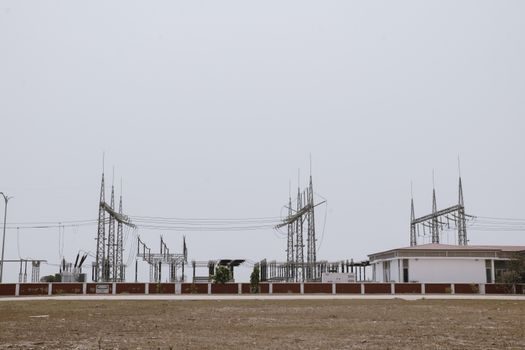
When procurement asks "do we need a transformer or a switch?" the answer is almost always both — but the decision matrix makes the boundary explicit. On kVA sizing, transformers scale from 0.005 kVA to 2,500 kVA published, while LBS units are not rated in kVA but in continuous current A. On voltage class, transformers span LV to 1100 kV bushings (porcelain and oil/SF6 types for 40.5 kV–1100 kV) [S4], whereas LBS units concentrate at 11 kV, 24 kV, and 33 kV, with some 40.5 kV outdoor models.
On fault duty, a transformer's %IZ (typically 4%–6% for distribution class, higher for impedance-matched units) limits the short-circuit current on its secondary; an LBS does not limit fault current and is instead rated by its short-time withstand and making capacity. On standards, transformers cite IEC 60076 series, EN 61558 for small units, and regional efficiency rules (Tier 2 EU) [S1]; load break switches cite IEC 62271-103 for high-voltage switching devices, with ATEX/IECEx only required when the enclosure sits in a classified zone. The 2026 wind-turbine transformer supply chain map shows similar pressure on both sides — a global transformer shortage is pushing buyers toward Chinese cast-resin and oil-immersed makers, while LBS buyers are consolidating around Ningbo and Shenzhen RMU suppliers with one-month peak-season lead time [S5].
Who It Is For — And Where the Wrong Choice Burns Money
Specifying a transformer is the correct move for any application that needs a voltage change: step-down from MV distribution to LV plant (typically 11 kV/33 kV to 400 V), isolation between two earthing systems, harmonic mitigation through K-rated or phase-shifting winding designs, or EAF duty with excitation-current cancellation [S1]. Specifying a load break switch is the correct move for feeder sectionalising, transformer no-load or on-load switching via a separate OLTC, ring-main loop break, and visible isolation for safe maintenance [S5][S7].
The wrong choice is using an LBS in place of a circuit breaker on a high-fault-current feeder, or using a transformer where a simple auto-transformer or voltage regulator would do. For LV assemblies, the upstream power transformer defines the available short-circuit current, which in turn dictates the load switch breaking and making ratings. A 1,250 A LBS with 25 kA short-time withstand is a safe pairing for a 1,000 kVA transformer at 6% impedance; the same LBS in front of a 2,500 kVA transformer at 4% impedance may exceed its rated peak making capacity.
Real Use Cases: 2026 Pumping, Renewables, and Industrial Plant Builds
Renewable plants are a major 2026 pull on both products. Wind turbine step-up transformers (typically 0.69 kV/35 kV or 0.69 kV/66 kV pad-mount dry-type or oil-immersed) pair with 33 kV or 40.5 kV vacuum LBS units at the feeder output, with upstream protection handled by a circuit breaker — the wind-turbine transformer supply map makes that pairing explicit. In industrial plant builds, dry-type cast-resin transformers for 11 kV/33 kV indoor switchgear rooms are the dominant indoor solution, and the LBS lives in the adjacent KYN28 panel or RMU. [S1]
Pumping stations and water-treatment plants add a second cluster. LV distribution cabinets and box-type substations are listed by Guangdong-based switchgear makers with 20+ years' experience in power distribution, alongside 10–35 kV ring main units and SF6 gas-insulated switchgear at 24 kV [S7]. The transformer is the heart of the box-type substation; the load break switch sits in the RMU ring and is what lets one feeder be de-energised without tripping the upstream breaker. Pumping skid builders are also exposed to the same global transformer lead-time pressure documented in the 2026 supply chain reviews.
Limitations, Failure Modes, and What the Spec Sheet Does Not Tell You
A load break switch cannot clear a bolted fault. Its making capacity is high (typically 2.5× rated peak) so it can close onto a fault and let the upstream fuse or breaker clear it, but opening onto a fault beyond its rating will weld the contacts. A power transformer, conversely, has no switching function at all — it will sit there happily while the secondary is overloaded, until the winding insulation fails or the oil (in oil-immersed types) overheats. Dry-type cast-resin units address part of that risk with class F or H insulation and embedded PT100 sensors, but they still depend on upstream protection and ventilation. [S2]
For transformer buyers, the power transformer buying guide covers the kVA/kV/%IZ/efficiency matrix in detail, while for switchgear buyers the key spec gates are voltage class, normal current, short-time withstand, mechanical endurance, and the applicable IEC 62271-103 or equivalent standard. Buyers should also check that the LBS enclosure is rated for the actual environment — coastal plants need C4 or C5 corrosion protection, and mining or EAF duty may require IP54 or higher.
Sourcing Map: 2026 Chinese Supplier Concentration
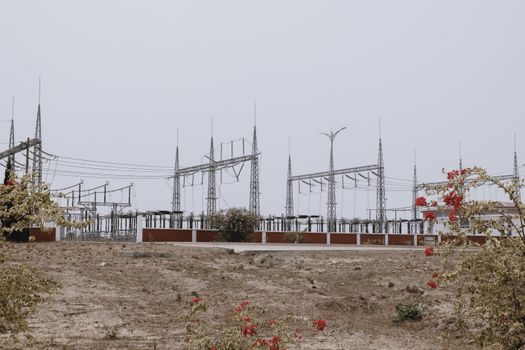
The 2026 supplier landscape shows clear regional concentration. For power transformers and bushings, Wuhan-based makers supply porcelain and oil/SF6 bushings from 40.5 kV to 1,100 kV, with ISO 45001:2018 and ISO 9001 certifications [S4]. For load break switches, Ningbo TENLEE lists RMU, switchgear, and transformer packages, with one-month peak-season lead time and primary markets across North America, Eastern Europe, Southeast Asia, and Western Europe [S5]. Shenzhen Dongshengyuan and similar Guangdong-based makers focus on 10–35 kV ring main units, KYN28 medium-voltage withdrawable switchgear, LV distribution cabinets, box-type substations, and cable distribution boxes [S7].
Cross-vendor procurement should still verify that the transformer and LBS are tested as a system, not as separate line items. A 1,000 kVA cast-resin transformer shipped from one factory and a 24 kV 630 A LBS shipped from another may each pass their own type tests, but the through-fault current on the transformer's secondary and the LBS's let-through energy need to be cross-checked. The power grid upstream and downstream industry map places these two products in adjacent — but not identical — supply chains, and the procurement cycle should reflect that.
Standards, Verification, and Sourcing Signals to Watch
Relevant standards include IEC 60076 for power transformers, EN 61558 for small dry-type units, and IEC 62271-103 for high-voltage load break switches above 1 kV. ATEX 2014/34/EU and IECEx apply when the equipment sits in a classified hazardous area, which is why some EAF-rated transformers are published with "for explosive atmospheres" in their feature lists [S1]. Efficiency tiers such as EU Tier 2 (and the forthcoming Tier 3 revisions) apply to distribution transformers in EU service. ATEX category and IECEx marking should be cross-checked against the actual zone classification at the installation site, not assumed from the supplier's marketing copy.
Trackable signals for 2026 sourcing: (1) lead time for 11 kV/33 kV cast-resin units, which has been extending due to grain-oriented electrical steel and copper supply tightness; (2) new RMU product launches from Ningbo and Shenzhen makers, particularly 24 kV SF6-free alternatives using dry air or vacuum interrupters; (3) Tier 2 EU efficiency compliance evidence on EU-bound shipments. power cable sizing on the secondary side should also be revisited — a 1,000 kVA transformer at 400 V delivers 1,443 A, which pushes the feeder into parallel-cable or large-single-cable territory regardless of which LBS sits upstream.