
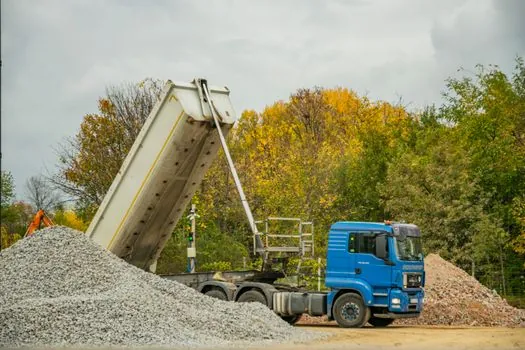
A conventional-cab dump truck in the 33,000 lb GVWR class is the working baseline for commercial lot and city-road snow removal, pairing a 16,000 to 23,000 lb front axle with rear ballast for traction on 2WD chassis [S3].
Most U.S. municipal and state DOT fleets run this body style year-round, mounting the front plow hardware directly to the frame so the truck can swap between hauling aggregate in summer and plowing in winter without re-tasking [S3].
Chassis Class and Front Axle Rating
Front-end rating is the single most spec-critical number: the plow mount, hydraulics, and blade together weigh 3 to 4 tons on medium- and heavy-duty chassis, which forces the front axle into the 16,000 to 23,000 lb band to keep steering and braking legal [S3].
Single-axle dumps in the 33K GVWR tier are repeatedly called out as the right tool for Home Depot-sized parking lots, where a half-ton pickup cannot move enough material per pass to be economical [S2]. A conventional cab (long hood) layout is preferred over a low cabover for plowing because the front axle sits further forward of the operator, which improves snow roll-off and lets the mount clear the bumper structure [S3].
Driveline and frame are reinforced beyond a standard dump: an additional wing or belly blade requires further frame reinforcement, and any truck expected to pull a tow plow (used widely in Missouri) needs higher gross combination weight rating and more torque than a summer-only dump [S3].
Ballast, Drivetrain, and 2WD Reality
A 2WD single-axle dump with no ballast is a plowing liability; the standard contractor workaround is 4 to 5 yards of sand in the bed, adding roughly 12,000 lb over the drive axles to restore grip on packed snow [S2].
Liquid de-icer is often preferred over dry salt at buildings with indoor foot-traffic concerns, but salt-brine loses effectiveness below roughly 15 °F, which is why many northern fleets run a sand/salt mix for sub-zero events [S2]. PTO-driven salters and pre-wired plow hydraulics are a common upfit on this chassis, since the dump body is already plumbed for hydraulic-driven equipment, removing the need for a separate auxiliary engine on the plow [S2].
For fleets running rear and front plows together ("gang plowing"), a tandem-axle chassis with a higher GCWR and a more robust driveshaft is the realistic option, because two 3-ton plow assemblies on one truck are at the structural edge of a 33K chassis [S3].
Blade Type by Surface and Use Case
On highways and city arterials, a 10 ft highway straight, reversible, or V-plow is the most common fit, paired with optional wing and underbody blades for wider single-pass coverage [S3].
For parking lots and decorative or sensitive surfaces (brick, new concrete, parking decks), a rubber cutting-edge system such as WinterFLEX® is the matched material, with 3-layer vulcanized rubber and curb guards to prevent spalling; steel and carbide edges cut faster but scar these surfaces [S1].
Expandable plows (for example the Western WIDE-OUT XL platform) double as a lot and corridor tool: in retracted mode they behave like a straight blade, fully extended they cover a wider swath for open-lot push, and the cutting-edge system is purpose-built with Xtendor universal guards for that geometry [S1].
Cutting Edge Material and Cost Bands
Cutting-edge wear life is the recurring cost line item: rubber edges are marketed at roughly 10× the life of steel on non-abrasive surfaces, while carbide-insert edges are the right call on high-wear asphalt and gravel-lot conditions [S1].
Reference list pricing on common medium-duty plow blade systems runs $1,322 to $1,493 for rubber WinterFLEX systems fit to Western PRO PLUS, $1,916 to $2,554 for the Razor Arrow carbide system, and about $2,523 for the Pegasus XL expandable-plow edge kit [S1]. These are the replacement-edge prices the fleet sees every 1 to 3 seasons depending on lane-miles plowed.
Carbide inserts dominate the highway/city-road catalog (9 of 17 catalog entries on the Winter Equipment medium-duty dump truck page), rubber edges dominate the parking-lot/sensitive-surface catalog (6 of 17), and steel is the budget baseline (3 of 17) [S1].
Plow Geometry Comparison: Straight vs V vs Expandable

Straight plows are the cheapest, simplest geometry, best where snow is pushed straight ahead with no need to cut a path through deep drifts; V-plows (for example the Blizzard 8611 Power Plow) cut through deeper drifts and throw snow to both sides, which is why veteran operators prefer them for big commercial lots [S2].
Expandable plows (Western WIDE-OUT XL, BOSS, Fisher) add a width variable to the V geometry, letting one truck work both narrow drive lanes and wide open lots without dismounting hardware; the trade-off is higher up-front cost and a heavier front-end load [S1][S2]. For most contractors running mixed residential, commercial, and municipal work, the expandable V is the most flexible single investment.
Use-Case Fit: Who the Dump Truck Plow Is For
A plowed dump truck is the right tool for property managers and contractors responsible for multiple Home Depot-sized lots, HOA and apartment complexes, and municipal arterials where the truck also hauls aggregate the rest of the year [S2][S3].
It is the wrong tool for residential driveways and small suburban lots, where a half-ton pickup (F-150, Ram 1500, Silverado 1500) is easier to maneuver, parks in tighter spaces, and has lower acquisition and operating cost [S4]. For very large open sites such as distribution yards, a road roller selection guide for snow removal covers the compactor-based alternative that some municipal yards deploy.
Where material handling on-site is the second duty (salt loading, aggregate haul, sweeper support), the dump truck platform pulls double duty that a dedicated pickup cannot match, which is the economic case municipal buyers make on bid [S3].
Standards, Sourcing, and Long-Term Reliability
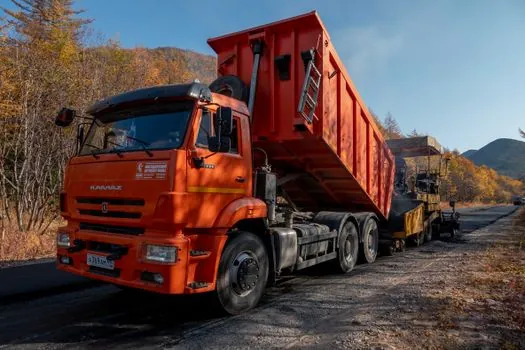
Fleet buyers specify ruggedness, reliability, long life, and competitive price on a bid basis, often through cooperative purchasing agreements that combine small-town orders for volume pricing; OEM engineers then review and sometimes modify the spec in conference with the buyer and chosen body builder before the truck is released for production [S3].
Brand fit on the plow side (Western, Fisher, BOSS, SnowEx, SnowDogg, Arctic, Pro-Tech, Metal Pless) is largely a regional and dealer-network decision, but Western PRO PLUS and WIDE-OUT XL platforms dominate the Winter Equipment medium-duty catalog with 14 of 17 listed blade systems engineered to that mount [S1].
Buyers who pair the chassis decision with a defined edge-replacement budget and a documented ballast plan avoid the two most common mid-life failures on this class: overloaded front axles from wing or belly blade additions, and under-ballasted 2WD chassis that cannot transmit torque to a packed-snow surface [S3]. For fleets scaling up capacity, the parallel spec work for truck-mounted crane selection in mining follows the same chassis-rating-first logic and is a useful cross-reference when the same fleet runs both plows and material handlers.
Detailed specification references: dump truck, mining dump truck, and reach truck.