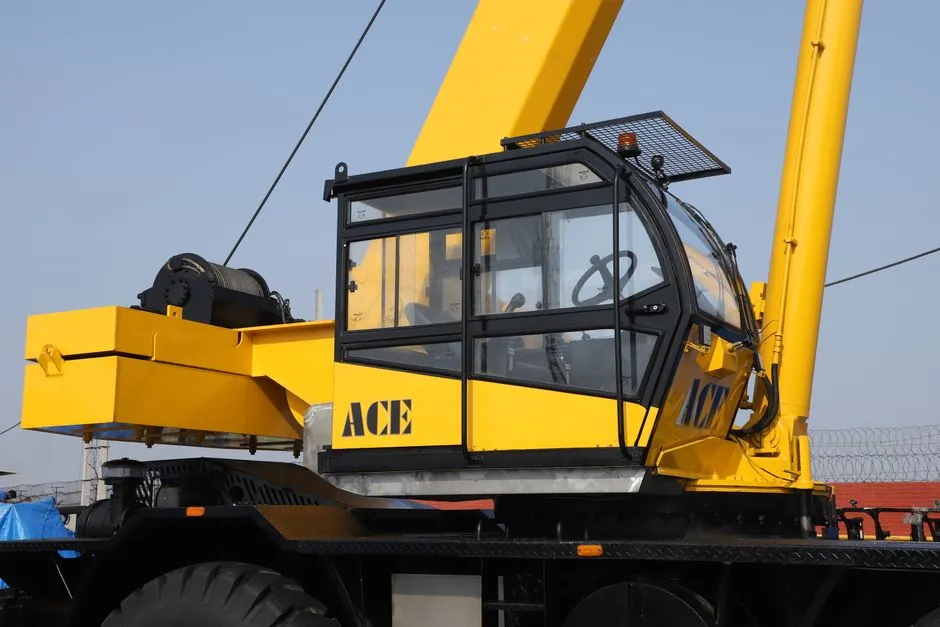
Mining-grade truck-mounted cranes typically deliver 25 to 130+ ton lifting capacity with telescopic booms extending 20 to 60+ meters, engineered for routine equipment installation, ore handling, and emergency recovery on unpaved haul roads and active benches [S2].
The segment covers everything from compact 25-ton units deployed for light maintenance to heavy 130+ ton machines tasked with motor, conveyor, and shovel component swaps. Because a truck-mounted crane is also the transport vehicle, the chassis itself is a primary spec axis, not an afterthought, and procurement teams must size crane, axle, and tire package as one system.
Capacity, Boom, and Chassis: The Three Coupled Spec Axes
Mining-grade lorry mounted cranes generally span 25 to 130+ tons, paired with telescopic boom configurations from roughly 20 meters up to more than 60 meters so the same machine can service both bench-level loads and elevated plant structures [S2]. Chassis packages at this scale are reinforced frames on upgraded suspension with heavy-duty axle configurations and enhanced ground clearance for unpaved surfaces, since the outriggers only matter if the carrier can reach the lift point in the first place.
For higher-tonnage picks, the same 60+ meter boom length lets a single unit stage motor changes on a primary crusher and also place wear-plate bundles at truck-bed height on a haul dump truck, which is why most large open-pit operations standardize on one platform class instead of running a fleet of mixed-capacity units. The 25-ton lower bound is the practical floor for moving pumps, motors, and conveyor components without exceeding road-transport axle limits in jurisdictions with strict bridge-formula rules [S2].
Truck Crane Types: All-Terrain, Rough-Terrain, and Telescopic
All-terrain cranes are built for varied ground conditions including dirt and rock, using larger wheels and a more powerful engine to reach hard-to-access mining locations, while rough-terrain crane models are typically smaller than all-terrain units but still lift heavy equipment or heavy boxes on bumpy ground [S4]. Telescopic truck cranes with long extending arms are commonly used where the lift target sits high, such as on a bench face or into a tall haul truck body [S4].
Selection between these three types maps directly to haul-road profile and bench geometry. All-terrain units dominate on mixed surfaces where the machine must travel long inter-pit distances at speed. Rough-terrain units win inside the pit where travel is short, ground is soft or broken, and the priority is short setup time and high lift capacity relative to carrier weight. Telescopic configurations add reach radius and are often paired with a luffing jib for shaft-sinking or crusher maintenance work above the machine's footprint.
Duty Class, IP Rating, and Hazardous-Environment Certification
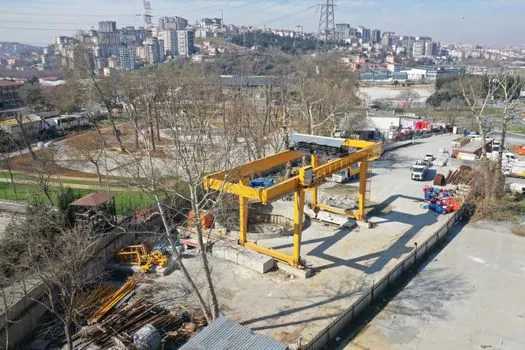
For mineral processing, smelting, and ore-handling applications, a double girder overhead crane in duty class M5 to M7 is the stated starting point, with mine-grade pricing typically between 25,000 and 350,000 USD+ depending on capacity, span, and environmental protection level [S5]. While that reference is for overhead cranes, the same duty-class logic (FEM/ISO classification by number of operating cycles and load spectrum) governs how a mobile crane is specified for continuous shift work in a mine.
IP rating and explosion-proof classification are not interchangeable, and both are procurement gates for any crane entering a dust-laden or gassy zone: the IP code covers dust and water ingress to the electrical enclosure, while ATEX or IECEx classification governs the surface temperature, gas group, and zone rating. Operators must confirm the zone classification of every work location, then match the crane's certification to the worst-case zone, not the average. Buyers should also require evidence of valid factory audit, batch testing, and recent re-certification rather than relying on a CE or ATEX mark alone, because counterfeit documentation is a known failure mode in this segment [S5].
Operating Use Cases Across the Mining Value Chain
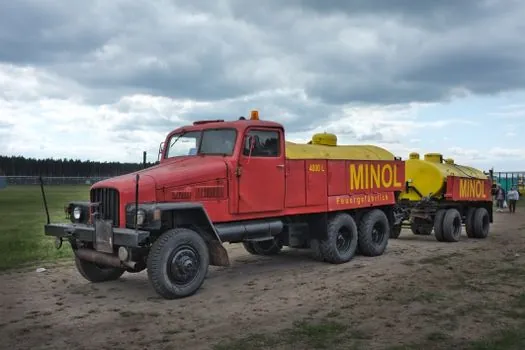
Crane trucks are used to load and unload mining machinery, install and remove components such as pumps, motors, and conveyors, and lift parts during repair and maintenance cycles, with the same machines also supporting material movement by transporting ore and waste, handling construction materials like steel beams, concrete blocks, and piping, and assisting excavators and loaders on shared tasks [S3].
Emergency response and rescue is the third workload, and it is the one that drives minimum-spec decisions: the same crane that lifts a gearbox on a planned shutdown is the asset that has to recover a fallen mining dump truck from a pit floor or hoist an injured worker to safety. This dual-role reality is why a single 80 to 130-ton platform often replaces what would otherwise be a larger fleet of smaller specialized units, since recovery duty favors reach and lifting margin over cycle speed.
Common Failure Modes: Ground, Weather, and Operator Skill
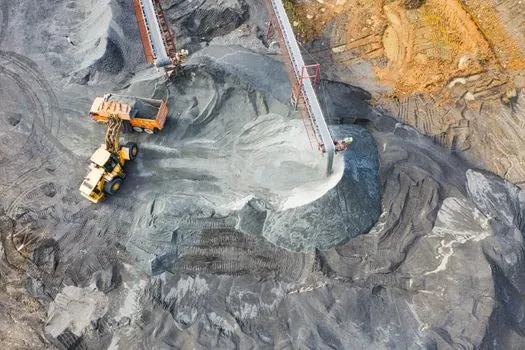
Rough ground is a leading cause of instability: if the surface is too bumpy or soft, the crane can lose level and tip, with risk of severe accidents or equipment damage, so operators must verify ground stability before every setup [S4]. Heavy rain and snow make the crane slippery and unsafe, can damage uncovered components, and accelerate corrosion of boom sections and outrigger pads if the machine is not properly stored between shifts [S4].
Operator training is the third documented failure vector: an untrained operator can cause mishandling that a well-trained crew would avoid, which is why most large operators mandate documented hours-on-platform, periodic re-certification, and supervised first-lift protocols. Regular inspection intervals are the cheap mitigation, since small issues that go unfixed escalate into structural or hydraulic failures that force unplanned outages on a working face. For comparison, similar logic applies when sizing a reach truck for a dusty aggregate warehouse, where the same duty-class, ingress, and operator-certification axes dominate the spec sheet.
Selection Criteria Matrix for Engineering Buyers
For a side-by-side decision, the four axes that consistently separate candidate units are: (1) max lifting capacity in the working radius required, with 25-50 ton units covering light maintenance and 80-130+ ton units covering motor and shovel component work [S2]; (2) terrain package, where all-terrain dominates on long mixed-surface runs, rough-terrain wins on soft or broken pit floors, and telescopic reach adds height/radius at the cost of carrier weight [S4]; (3) hazardous-environment certification, where IP65+ electrical enclosures and ATEX/IECEx zone-rated engines and electricals are procurement gates for any dusty or gassy location [S5]; and (4) total operating cost, where the gap between a competitive quote and actual landed cost can exceed 40 percent once freight, rigging, certification re-validation, and spares are included [S5].
Buyers should write each of these four criteria into the RFQ as a pass/fail line item rather than as a discussion topic, then score every bidder on the same matrix. This forces a like-for-like comparison and prevents low-capacity or non-certified units from winning on headline price.
Procurement Signals and Next Decision Nodes
Trackable procurement signals for the next buying cycle include: (a) whether suppliers can produce current ATEX or IECEx certificates with batch numbers traceable to a notified body, since documentation gaps are a leading disqualifier in mine tenders; (b) the availability of 80-130+ ton telescopic units with verified 20-60+ meter boom reach on short lead time, which has been a constraint through the 2025-2026 build cycle for several OEMs; and (c) total-cost-of-ownership bids that itemize freight, rigging, commissioning, and the first two-year spares package, rather than a single chassis-plus-crane price. For operations weighing a mobile unit against a fixed overhead solution, the same spec axes (duty class, IP/explosion rating, span or reach) drive the truck scale and weighbridge decisions on the same site, and they intersect with parallel equipment choices covered in adjacent selection maps for cold milling machines in heavy civil work and excavators for port and terminal work. [S2]