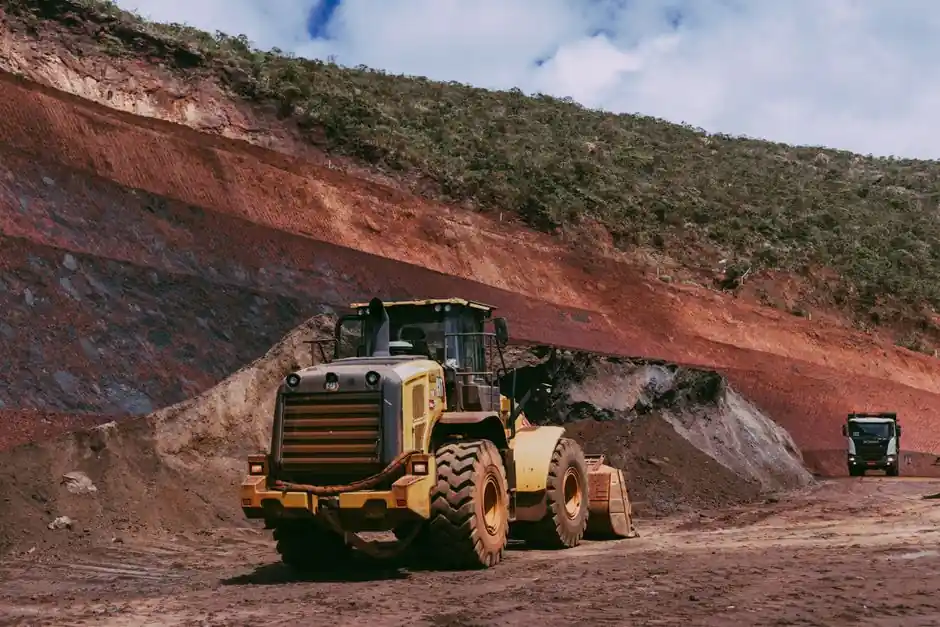
Crawler dynamic compactors drop a 10-40 t weight from 25 m to deliver 100-1000 t.m per blow, reaching 5-40 m treatment depth in quarry overburden and loose saturated fills [S3][S4][S7].
Selection on a quarry site pivots on three independent variables: machine class (impact roller vs. single-drum soil compactor vs. crawler impact-rammer rig), drop energy (12-35 kJ for HEIC rollers versus 100-1000 t.m for crawler rigs), and soil response (saturated loose sand tolerates the highest impact energy, stiff clay requires controlled lift height) [S2][S5].
Machine Class and How It Maps to Quarry Tasks
Three machine classes dominate quarry ground-improvement work, and each has a distinct duty envelope [S2][S5][S7]. High Energy Impact Compactors (HEIC) are tractor-pulled non-circular drums with 3- or 5-sided profiles; Dynamic Compaction Solutions lists 3-sided heavy units at 33,070 lb module weight with 9 in drop height delivering 297,621 lb.in energy factor and 35 kJ potential energy, while 5-sided light units weigh 24,250 lb at 6 in drop, 119,052 lb.in, and 12 kJ potential energy [S5]. HEIC treats depths of 20 in to 16 ft, fitting haul-road reinstatement and capping-layer work [S5].
Single-drum soil compactors like the JCB VM118D, powered by a 55 kW JCB 430 diesel engine, are the standard pick for thin-lift quarry-platform compaction and were a notable launch at Hillhead 2026 [S1]. Crawler impact-rammer dynamic compactors, exemplified by the XGH1000K (1000 t.m tamping energy, 40 t max rammer, 25 m max drop) and the Real Friend unit (400 kN.m max impact, 85,000 kg operating weight, 5-12 m treatment depth, 8-12 impacts/min), take over where HEIC stops: deep fills, loose saturated sands, mine tailings, and port reclamation [S3][S4][S7].
Energy, Lift Height, and Depth-of-Influence Numbers
Impact energy, drop height, and contact stress set the depth-of-influence, and the published numbers are tight enough to size from [S2][S3][S4][S5]. The Soil Solutions HEIC envelope sits at 10-25 kJ energy, 300 kN to 3000 kN compaction load (up to 300 t), and 300-1200 kPa contact stress across the drum face [S2].
For crawler rigs the XGH1000K datasheet gives 1000 t.m tamping energy, 40 t max rammer weight, 25 m max drop, 247 kW Weichai WP10.336NCT engine, 28 mm hoist rope, 16 t single-rope tension, 0.48 km/h travel, 0.07-0.1 MPa ground pressure, and 86-84 degree working angles [S3]. The Real Friend unit reads 400 kN.m max impact energy, 10-30 t hammer weight, 25 m max lifting height, 4-8 m adjustable impact-point spacing, 5-12 m treatment depth, 32 mm wire rope, 200 m wire rope capacity, 200 kN main winch single-rope pull, 0-25 m/min winch speed, and <= 0.09 MPa ground pressure at 85,000 kg operating weight [S4]. Within the heavy end, the trade-off is weight-per-drop versus drop height: heavier weights at lower drop give controlled deep densification, lighter weights at higher drop spread energy across a wider footprint [S7].
Soil Response and Moisture Window
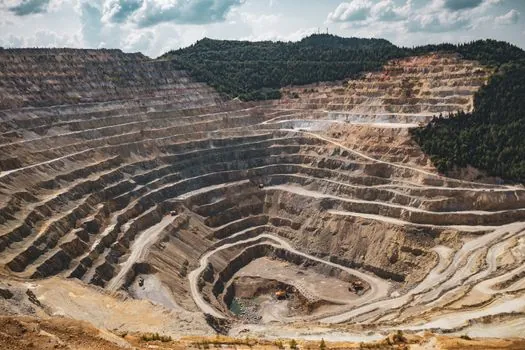
Higher drop energy widens the workable moisture window and pushes Maximum Dry Density above what conventional rollers can reach, but the wrong combination just shatters the matrix [S2]. HEIC energy at 10-25 kJ produces contact stresses of 300-1200 kPa and a near-uniform density profile to roughly 3d depth, whereas impact rollers (load duration ~0.02 s) sit well below vibratory rollers (~0.12 s) on the load-duration axis, which is why impact energy is converted into depth rather than surface finish [S2].
Crawler rigs at 8-12 impacts/min with 4-8 m point spacing target loose saturated sands, miscellaneous fill, and low-saturation clay at 5-12 m, while deeper 5-40 m work is reserved for heavier 1000 t.m-class units [S4][S7]. For wet material and unrestrained sands a 5-sided HEIC is more forgiving than a 3-sided unit; for deeper fills over 6 ft the 3-sided heavy unit is the standard pick [S5].
Productivity, Footprint, and Sourcing Window
HEIC runs up to 5x faster and compacts up to 10x the daily volume of conventional rollers, which is why a single 5-sided impact drum replaces a fleet of smooth-drum units on large quarry platforms [S2]. The dynamic compactor class as a whole relies on a crawler chassis, a lifting arm, a falling weight, and a power system; on the XGH1000K that breaks down to a 100 t basic arm, 30 t counterweight, and 60 t host, giving the rig a total mass in the 190-230 t working range before the tamper is added [S3][S4].
Sourcing is split: heavy crawler impact-rammer rigs sit in the USD 1,000,000-1,500,000 class from Jiangsu and Henan OEMs, and a buyer should confirm tamper weight, max drop, hoist-rope diameter, and engine emissions tier (the XGH1000K ships to Euro 3) before signing [S3][S7]. For a different but adjacent site-prep workflow, the diaphragm wall grab selection map follows the same duty-cycle-then-spec logic for deep foundation work. Daily-volume claims and OEM productivity numbers should always be cross-checked against the quarry's own trial-pad CPT data, since soil response drives the real answer more than the brochure.
Selection Criteria and Who Each Class Is For
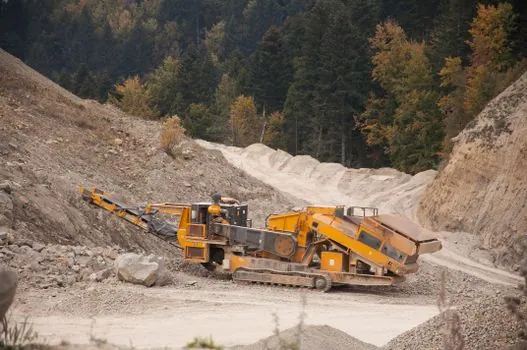
Match the rig to lift height, soil, and site scale, and the rest of the spec falls out [S5][S7]. HEIC 5-sided light (12 kJ, 19,842 lb drum) is for thin lifts and wet sand; HEIC 5-sided heavy (20 kJ, 28,660 lb) covers 3 ft lifts and uncontrolled fill to 6 ft; HEIC 3-sided standard (25 kJ, 33,070 lb) and 3-sided heavy (35 kJ) are for deeper fills over 6 ft and sand with capping [S5]. Single-drum soil compactors such as the JCB VM118D are the answer for surface finish, dust-control integration, and thin-lift haul-road work where impact energy would over-process the layer [S1].
Crawler impact-rammer rigs are not the answer for finishing layers or for sites where a 190-230 t machine cannot stage, and HEIC is not the answer for deep saturated sand or mine tailings below 5 m [S3][S4][S5]. For adjacent site-prep decisions on equipment platforming, the planetary reducer selection map covers the torque and ratio window that the compactor's own hoist drive depends on. A compact comparison reads: HEIC 3-sided heavy delivers 35 kJ potential and 175 kJ kinetic at 33,070 lb module weight for fills over 6 ft; HEIC 5-sided light delivers 12 kJ potential and 50 kJ kinetic at 24,250 lb for wet sand and 3 ft lifts; the crawler XGH1000K delivers 1000 t.m tamping energy at 247 kW for 5-40 m treatment of loose saturated ground [S3][S5].
Failure Modes, Limits, and Specification Discipline
Dynamic compaction fails in predictable ways, and the spec sheet has to address each one up front [S2][S6][S7]. Over-energy on a saturated clay or silt layer pumps pore pressure instead of densifying, so the moisture-content window and lift height must match the soil class rather than the brochure number [S2]. On crawler rigs the hoist rope, single-rope tension, and ground pressure are the life-limited wear items: the XGH1000K specifies 28 mm rope at 16 t single-rope tension, and the Real Friend unit specifies 32 mm rope at 200 kN pull, so a buyer should standardize the rope spec across the fleet for spares commonality [S3][S4][S6].
Ground pressure below 0.1 MPa is the standard crawler-class figure (0.07-0.1 MPa on the XGH1000K, <= 0.09 MPa on the Real Friend), which keeps the rig stable on prepared platforms but means soft natural ground needs a working mat [S3][S4]. Documentation discipline matters: the ground-improvement report, the OEM warranty, and the next-site baseline all hinge on the installation records being signed off, which is the same five-phase logic used across adjacent heavy-equipment commissioning [S6]. For environmental and safety boundaries the engine tier (Euro 3 on the XGH1000K) and the operator-vibration chain (the Dromone D80 Ball & Spoon hitch shown at Hillhead 2026 reduces whole-body-vibration exposure on towing fleets) are the practical levers a quarry can pull in 2026 [S1][S3].
Track the next two signals: the Hillhead 2026 live-demo data on the JCB VM118D and Dromone D80 hitch, and any 2026 OEM datasheet refresh that pushes crawler rigs above 1000 t.m or below 0.07 MPa ground pressure, since both numbers reset the quarry floor-stability envelope.
The underlying component specifications are covered under dynamic compactor, dynamic balancing machine, and pressure transmitter.