Graphite electrodes are the largest controllable consumable in EAF steelmaking after scrap, typically running $3–$8 per ton of liquid steel, while a 610 mm (24 in) ultra-high-power electrode costs $6,000–$10,000 and lasts 8–14 heats [S2]. A single poorly controlled campaign can spike electrode cost 30–50% above baseline, turning a $40–$60/ton cost center into an $80–$110/ton overrun [S1].
Modern AC and DC EAFs operating at 80–90 MVA transformer rating with optimized slag foaming now achieve 1.5–2.2 kg of electrode per ton of liquid steel, down from 4–5 kg/t in the 1990s, but the remaining 30–40% of consumption driven by oxidation and process variability is still recoverable [S2]. On a 300,000 t/yr shop, every 0.1 kg/t reduction saves $90,000–$150,000 in electrode procurement alone [S2].
Where Electrode Cost Actually Goes: Tip, Sidewall, and Breakage
Electrode consumption decomposes into three mechanism-driven buckets that respond to different process levers, and operators who track only tonnage never see the split. Tip sublimation in the arc attachment zone above 3,000°C accounts for 35–45% of total wear and scales with current density squared, so any uncontrolled current spike is paid for twice [S2][S3]. Sidewall oxidation between 600–700°C in the furnace atmosphere drives 30–40% of loss, with electrode surface area and smelting time as the two main factors, meaning longer tap-to-tap directly inflates oxidation cost [S2][S3]. Mechanical breakage from thermal shock, scrap cave-ins, and column resonance adds another 10–20%, and is the bucket most sensitive to scrap quality and handling discipline [S2].
The four documented wear mechanisms in classical EAF practice are tip consumption, sidewall oxidation, stub loss, and top joint breakage, and the most expensive of these in modern UHP shops is rarely the arc itself but the sidewall reaction during standby [S3]. Refractory health is mechanically coupled to the same inputs: a destabilized arc that drives 18–24 months off a refractory campaign is, in effect, an electrode-control problem wearing a different budget line [S1].
Refractory: The Hidden Twin of Electrode Cost
Refractory campaign life and electrode consumption are not independent line items, they share the same root cause. Long-arc operation early in a heat is desirable because higher voltage lowers arc current and cuts electrode sublimation, but the same long arc will damage sidewall refractory once the protective scrap cover melts away [S3]. Real-time control that shortens the arc and lowers voltage as unmelted scrap is consumed has been shown to reduce electrode consumption by roughly 10% while also reducing refractory wear, combining the two savings into the largest single cost line a mill can move without capex [S3].
Excessive electrode consumption correlates directly with shorter refractory campaigns: a 30% electrode spike typically signals tap-to-tap drift from 36 to 42 minutes, scrap bridging events, and oxidation loss during a 15-minute cool-down, each of which also forces thermal shock into the lining [S1]. Mills that integrate arc voltage, current, and electrode position monitoring into their EAF module report 12–18 months of additional refractory campaign life alongside electrode savings, a leverage point often missed in shops that treat the two budgets separately [S1].
Selection Criteria: Which Levers Move the Most Ton-Dollars
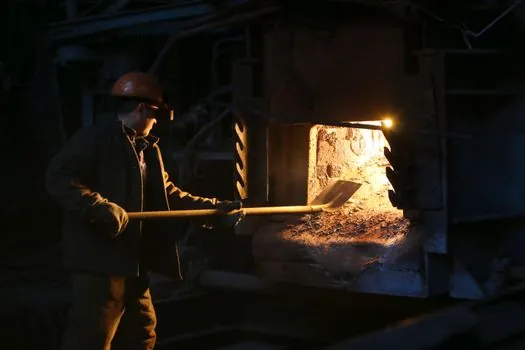
Not every published EAF cost lever carries equal weight, and the four that reliably move the budget are tap-to-tap time, arc stability, scrap charge quality, and electrode positioning. Tap-to-tap target is 35–38 minutes; every minute above that baseline costs roughly $800–$1,200 in extra electrode oxidation and inefficient arc time, so a shop drifting to 45 minutes is paying for the delay three times over [S1]. Arc stability monitoring prevents collapse and re-strike cycles that fracture electrodes, and optimized electrode positioning holds a 1.5–2.0 m operating distance to prevent thermal shock while enabling smooth melt progression [S1].
The cost drivers, ranked by typical 2026 impact on a 300,000 t/yr AC EAF, line up as: tap-to-tap discipline (largest single move), arc stability control (close second), scrap charge quality (controls bridging-driven breakage), and standby oxidation management (smallest per-event but constant). AI platforms trained on arc signatures, thermal camera data, and electrode column vibration report 8–18% net electrode reduction without compromising tap-to-tap or metallurgical quality, putting the realistic ceiling near the upper end of that range for furnaces with stable scrap supply [S2].
Option Comparison: Manual Tuning, Sensors Only, and AI Overlay
Manual operator tuning of voltage and current profiles still works at low production rates but cannot optimize across multiple heats and scrap grades simultaneously, which is exactly where modern EAFs leak cost. Sensor-only retrofits that add arc voltage, current, and electrode position monitoring give the operator visibility but leave the decision loop human, and humans cannot run 300+ heats per month at sub-second resolution [S1][S2].
AI overlay platforms integrate arc stability, thermal profiles, oxidation conditions, and mechanical stress into a closed-loop recommendation that adjusts power input, oxygen injection, and slag foaming practice in real time, typically deployed on an on-premise edge server with read-only PLC connectivity so the existing electrode regulation system is not modified [S2]. On a 200+ heats/month operation, the published savings band of $1.5–$3M annually reflects a realistic 20–35% electrode reduction, with the wider 8–18% AI-specific band applying to shops already disciplined on tap-to-tap [S1][S2]. For mills that also run fast-track capex, the procurement timeline issue covered in early equipment procurement strategy overlaps with electrode and refractory lead times on long graphite electrode contracts.
Who This Is For, and Where It Is Not
This cost playbook is built for AC and DC EAF operators in the 60–150 t charge range producing 200,000–500,000 t/yr of long or flat product, where electrode and refractory combined exceed $5M/yr and the marginal heat is a meaningful EBITDA driver. It is also a fit for engineering teams evaluating AI overlays, CMMS-integrated arc monitoring, or a move from manual to closed-loop electrode regulation, with a realistic payback window of 12–18 months at the upper end of the savings band [S1][S2].
It is not a fit for integrated blast furnace shops where electrodes are a rounding error, for very small EAFs under 30 t/heat where instrumentation ROI is poor, or for foundries running induction furnaces rather than arc furnaces. Mills buying on lowest-first-cost electrodes at $500/mt or relying on poor scrap preparation will not see the same savings, because the control band is dominated by input quality before AI is even switched on [S1][S3].
Limitations, Failure Modes, and Standards Anchors
The published AI savings of 8–18% assume the furnace is already disciplined on tap-to-tap and slag foaming; on a poorly tuned furnace the same platform will surface problems faster but will not by itself fix scrap bridging or transformer instability [S2]. The 20–35% elite-mill range cited for fully integrated electrode and refractory programs assumes 200+ heats/month, stable scrap supply, and a 12-month operational data baseline to train on [S1].
Failure modes that defeat every program are well known: small fractures from electrode handling that propagate under thermal load, clamps applied on the electrode joint rather than the column, oxidation during long standby, and arc length allowed to run long after the protective scrap cover has melted [S3]. None of these are exotic, and all of them show up as refractory wear in the same campaign, which is why joint electrode-refractory tracking is the cheapest diagnostic a mill can deploy. Adjacent process engineering on the steel side, including digital twins cutting CNC chatter and tool-wear errors, runs on the same closed-loop instrumentation philosophy that EAF AI overlays use for arc control.
Trackable signals over the next two quarters: the 1.5–2.2 kg/t industry consumption band as reported in 2026 EAF guides, the 8–18% AI-overlay savings band as more North American shops publish post-installation data, and the $500–$1,500/mt graphite electrode price band that still defines the boundary of the optimization problem [S1][S2]. Refractory campaign life gains of 12–18 months from arc-stability programs are the second data point to watch, because they are reported less frequently than electrode kg/t and are the easiest proxy for whether a mill has actually closed the loop on joint control.
Spec-level background on the components involved: checking and testing apparatus, construction machinery and equipment, and lamps and light fittings.