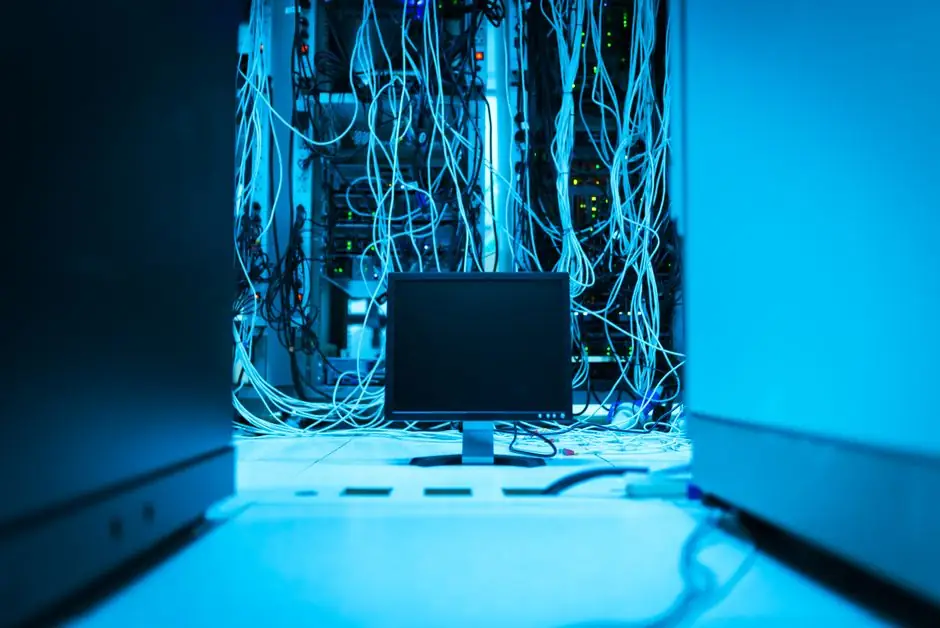
Edge AI inference server revenue reached $8.4B in 2025, and 2025 was the first year industrial automation deployments exceeded enterprise IT deployments, per a 286-page market study covering the 2025 to 2034 window [S3].
Supply now sits across three distinct hardware classes: industrial-edge software appliances that virtualise inference on existing PLCs, rugged x86 edge servers with discrete accelerators, and fanless Jetson-class compact nodes sized for kiosks and machine-vision cells [S1][S2][S4][S6].
Industrial-Edge Software Appliances: Siemens AI Inference Server
Siemens released its AI Inference Server as a downloadable industrial-edge application in February 2026, designed to standardise model execution on the Industrial Edge runtime [S1]. The app embeds Python-based inference functions directly onto edge devices, exposing them as callable services to the broader SCADA and PLC stack, which sidesteps the need for a separate inference box on the shop floor [S5].
This category is the right fit for brownfield plants with installed Industrial Edge devices, where the limiting factor is software packaging and model-lifecycle tooling, not new silicon. Plants with no Siemens Edge footprint should not specify it, since the runtime is tied to the Industrial Operations X ecosystem and does not deploy as a generic container on third-party hardware [S1][S5].
Rugged x86 Edge Servers: Lanner, Advantech AIR, and the Hybrid Backbone
Lanner positions its edge inference server family around CPU plus network I/O plus storage plus AI accelerator modules, with mechanical and thermal design targeted at 24/7 industrial cabinets rather than datacom racks [S2]. Advantech's AIR series takes the same approach but bundles CPU, AI compute, thermal management, and I/O into a single validated chassis, which is what most system integrators actually need when they bill a cell as one line item [S4].
For plant architects the choice is mostly a vendor-tools question: Lanner leans into white-box flexibility for VARs, while Advantech locks the bill of materials to ease UL/CE paperwork on integrated cells. An Equinix analysis from December 2025 makes a useful counterpoint: edge inference is not architecturally standalone, it needs a hybrid multicloud backbone for model retraining, telemetry offload, and remote ops [S8]. A line-side box with no uplink to a model registry is a stranded asset within two refresh cycles.
Compact Jetson Nodes for Sub-10 ms Workloads
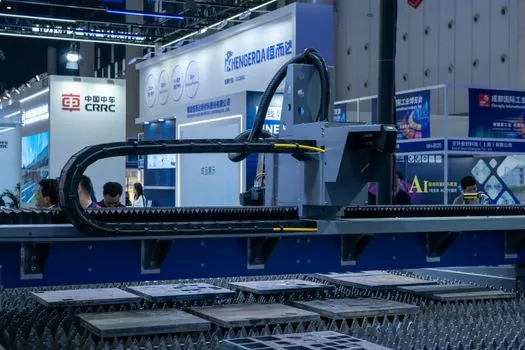
An embedded Jetson edge device is a compact, often fanless compute node that runs AI inference inside kiosks, enclosures, and industrial cells, with the Jetson module handling both the CPU host and the GPU/NPU accelerator in a single SoC, per a February 2026 Supermicro/Edge Electronics comparison [S6]. These nodes are the right call when the latency budget is sub-10 ms, the model is a vision transformer or object-detection pipeline, and the enclosure is sealed.
The hardware limit is the memory pool: large language model sub-tasks and multi-stream 4K inference will not fit on a single Jetson module and need to step up to a discrete-GPU edge server. The Mirantis August 2025 edge inference guide reaches the same conclusion from a different angle, real-time AI at the device level only works when the model footprint matches the accelerator's memory bandwidth, otherwise the latency advantage over cloud round-trip evaporates [S7].
Selection Criteria: Four Decision Axes
Four axes separate the three classes cleanly enough to use as a comparison matrix on a single page of an RFQ: [S4]
Deployment surface: Industrial-edge software appliance targets existing Siemens Edge devices; rugged x86 servers target new cabinet builds; Jetson nodes target retrofit cells and sealed enclosures. Power budget: software appliance rides on existing Edge device power, typically 30 to 60 W; rugged x86 edge servers draw 300 to 800 W with a discrete accelerator; Jetson nodes run 15 to 40 W with passive cooling in most SKUs [S1][S2][S4][S6]. Model fit: software appliance handles small CNN/MLP scoring on telemetry; rugged x86 handles vision transformers and LLM sub-tasks; Jetson handles single-stream vision at 1080p to 4K [S3][S6][S7]. Backbone dependency: every option above still needs hybrid multicloud connectivity for retraining and observability, treat that uplink as a hard requirement, not an option [S8].
Supply Constraints and Standards to Watch
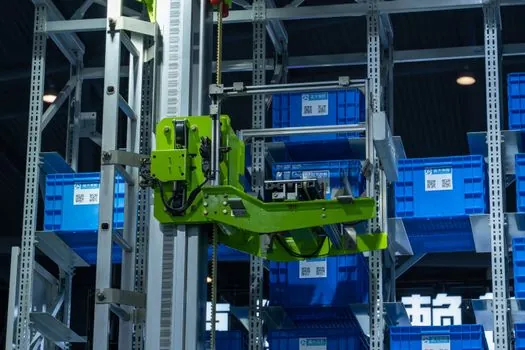
The market study flags data sovereignty rules, EU AI Act and US Executive Order on AI residency clauses, as a binding constraint that pushes inference on-premises even when cloud TCO is lower, which is the structural reason hardware captured 58.3% of 2025 revenue rather than software or services [S3]. North America took 36.2% of 2025 revenue, but industrial automation is now the largest vertical by deployment count, so EMEA and APAC plant projects are where the next 24 months of unit volume will actually ship.
For sourcing teams the practical risk is silicon allocation, not demand: NVIDIA led the competitive landscape in 2025 with the broadest edge AI silicon portfolio, and Hopper-based edge GPUs plus Intel Gaudi plus ARM NPUs are all in the running, so single-vendor lock-in is the bigger exposure than aggregate supply [S3]. The most useful signals to track through Q1 2027 are NVIDIA's edge-GPU lead-time, Siemens AI Inference Server adoption in non-Siemens brownfield retrofits, and the first UL/CE listings for Jetson-based cells sold as integrated vision stations rather than as bare modules.
For procurement teams weighing cabinet-level integration against standalone boxes, the comparison surface is similar to other industrial capital buys such as fluid coupling selection for automotive production lines and universal joint selection for automotive production lines, where the spec, not the brand, drives lifecycle cost. The same logic applies to power and backup sizing for edge cabinets; reference guidance on industrial UPS and DC power supply units is worth pulling into the cabinet Bill of Materials before the accelerator wattage is finalised, since a 600 W inference node with N+1 redundancy will rewrite the upstream power supply spec. For control rooms running the inference orchestration layer alongside legacy I/O, the serial server tier still handles fieldbus aggregation, and a dedicated switching power supply rail typically feeds the edge node separately from the PLC backplane.