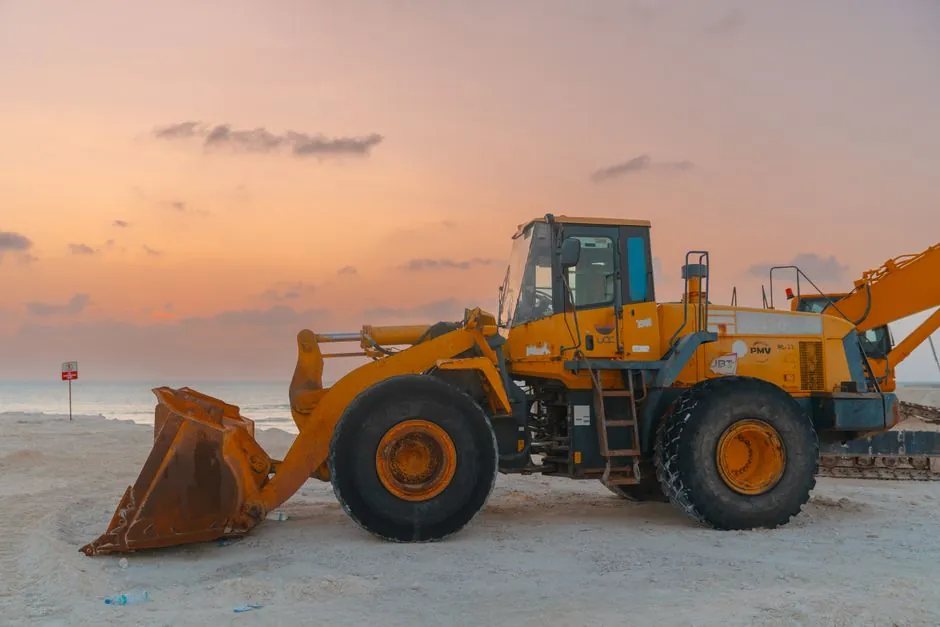
U.S. importers of industrial equipment can recover up to 99% of customs duties, taxes, and certain fees when the imported merchandise, or finished goods made from it, is subsequently exported or destroyed under CBP supervision, with the program codified at 19 U.S.C. §1313 [S1][S2].
The mechanism, in place since 1789 and modernized by the Trade Facilitation and Trade Enforcement Act of 2015, applies to a wide range of capital goods, including motors, machine tools, and lighting fixtures and electric lamps that move through U.S. ports and then leave the country in their original or processed form [S5].
Three Statutory Drawback Categories and How Each Maps to Equipment Flows
Manufacturing drawback refunds duties on imported components consumed in a U.S. article that is then exported, for example imported steel coils stamped into automotive brackets shipped to a Mexican assembly plant [S3]. Unused merchandise drawback, governed by 19 U.S.C. §1313(j), covers goods imported into the U.S. and exported in the same condition without having been put to their intended domestic use, with refunds of up to 99% including the merchandise processing fee and, depending on claim type, harbor maintenance tax [S4]. Rejected merchandise drawback addresses defective or non-conforming goods returned to the foreign supplier or destroyed under CBP watch [S2].
Industrial buyers most often encounter the unused merchandise path when imported spares, replacement drives, or surplus industrial adhesive stocks leave the country unused, and the manufacturing path when imported subassemblies are built into a higher-level machine that is then exported [S4][S5].
Substitution Drawback: The 8-Digit HTSUS Lever Most Plants Miss
Substitution drawback lets the claimant match duty-paid imports against commercially interchangeable exported goods classified under the same 8-digit (or 10-digit) HTSUS code, so a Chinese-imported aluminum extrusion paying 25% Section 301 duty can support a drawback claim even when the actual exported article contains domestically sourced aluminum of the same classification [S3]. TFTEA 2015 broadened matching from part-number granularity to the 8-digit HTSUS level, which is what made substitution practical for high-mix industrial importers [S3][S5].
Two restrictions trip up most first-time filers: substitution is unavailable when the 8-digit classification ends in the catch-all "other" category, and the commercially interchangeable standard must be defensible against CBP review [S4]. Direct identification, by contrast, requires serial, lot, batch, or VIN-style traceable markers tying each exported unit back to the original entry, and it places no HTS classification constraint on the export destination [S4].
2026 Tariff Landscape: What Is and Is Not Refundable on Industrial Cargo
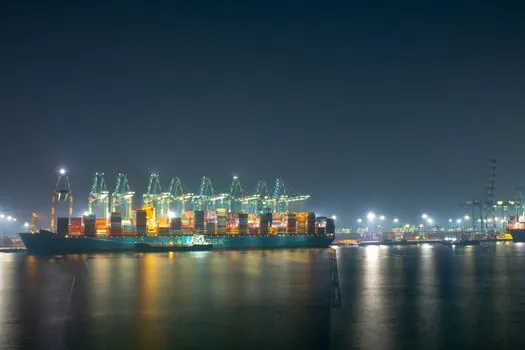
Section 301 tariffs on Chinese goods, ranging from 7.5% to over 100% depending on the product list, are drawback-eligible and represent the single largest refund pool for industrial OEMs importing from China and exporting finished equipment [S3]. The 10% Section 122 surcharge imposed on 2026-02-24 was confirmed by CBP through CSMS guidance as recoverable under drawback, and reciprocal tariffs are also eligible [S3]. Section 232 tariffs on steel, aluminum, copper, and automobiles, by contrast, are explicitly NOT drawback-eligible, which removes a meaningful slice of refund value for plants importing heavy fabricated subassemblies [S3].
Canada's CBSA confirmed in September 2026 that the new counter-tariff surtaxes are eligible under its Duties Relief and Duty Drawback Programs, an important point for cross-border industrial-equipment flows between the U.S., Canada, and Mexico [S3].
Filing Mechanics: Five-Year Window, Required Documents, Audit Risk
Drawback claims must be filed within five years of the date of importation, with missing that window meaning the refund is forfeited outright [S2][S5]. Required evidence includes import entry records, export bills of lading, and manufacturing or inventory records that link the specific imported lot to the specific exported article, with CBP reviewing the chain of custody closely on every claim [S2].
CBP estimates that roughly 80% of eligible drawback refunds go unclaimed every year, totaling approximately $15 billion left on the table, and most of that gap sits inside mid-market industrial importers who treat drawback as an accounting chore rather than a working-capital program [S3]. For high-tariff product lines such as steel, textiles, and electronics, annual refunds can reach millions of dollars per claimant, and the program also permits selling unused drawback credits to other importers that lack direct claim eligibility [S2][S5].
Bonded Warehousing and the Cash-Flow Angle on Equipment Inventory
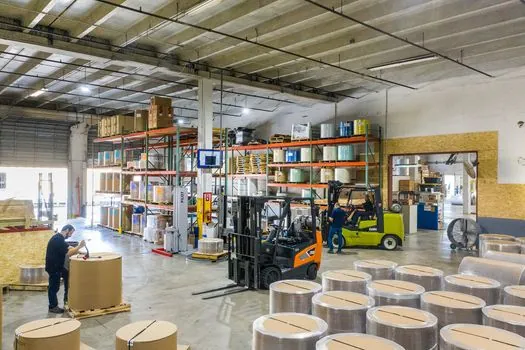
Goods destined for re-export are frequently routed into bonded warehouses, where duty is not immediately due and the merchandise can be stored, modified, or partially manufactured before export, which materially improves cash flow on capital equipment held for overseas projects [S5]. This is particularly relevant for staged construction machinery and equipment shipments that arrive months ahead of an overseas jobsite mobilization, since the duty deferral alone can fund several months of carrying cost before the eventual re-export triggers the drawback refund.
For process engineers sourcing VFD-duty motors and similar long-lead spares, the combination of bonded warehousing plus unused merchandise drawback converts an imported inventory position into a near-zero net duty cost once the goods leave U.S. soil.
Who Should and Should Not File: A Decision Matrix
FILE if you (a) import industrial components or finished equipment into the U.S. and re-export any portion within five years, (b) manufacture a U.S. article from imported inputs and ship the finished good abroad, or (c) regularly return defective imported capital equipment to the OEM [S1][S2]. DO NOT FILE on Section 232-only transactions, on HTS classifications ending in "other" if you intend to use substitution, or on goods already consumed in U.S. domestic use beyond incidental handling, since those fail the statutory tests [S3][S4].
For plants whose import book is dominated by Chinese-origin components feeding an export-heavy product line, the realistic payback on a structured drawback program is measured in months, not years, given the 7.5% to 100%+ Section 301 bands now in force [S3]. For plants whose imports are primarily Section 232 steel and aluminum with no export tail, the program is largely a non-starter and effort is better spent on NDT equipment qualification and supplier negotiation instead.
2026 Watch Items and Trackable Signals

Three signals are worth monitoring over the next two quarters: any CBP CSMS update narrowing or expanding the Section 122 surcharge drawback treatment beyond its 2026-02-24 confirmation, the outcome of the Canada Border Services Agency Duties Relief Program guidance issued September 2026, and any congressional action that would either extend drawback eligibility to Section 232 categories or codify the current exclusions [S3]. Industrial-equipment procurement teams should also track the U.S. Large Power Transformer import pipeline, since transformer duty treatment directly affects drawback economics for substations built with imported cores, as covered in U.S. Large Power Transformer Import Dependence and Domestic Winding Capacity in 2026.
Cross-border equipment flows into Mexico-bound manufacturing also intersect with the Section 232 carve-outs, so plants running steel strapping and cord strapping for export crating should confirm whether the underlying steel duties were paid on Section 232 (non-drawback) or Section 301 (drawback) entries before assuming any refund.