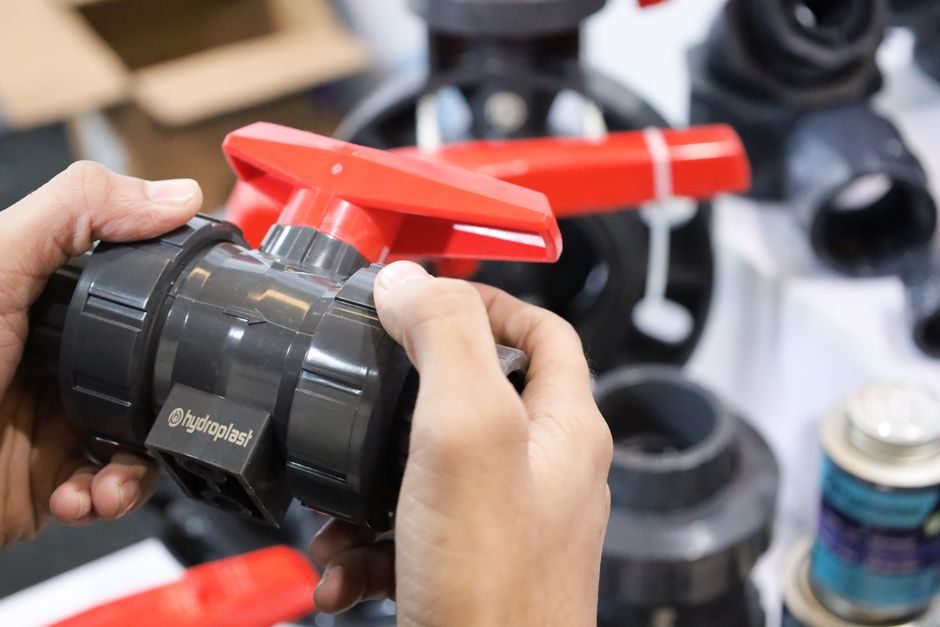
Specifying an electric ball valve in 2026 comes down to five numbers: line size (DN15–DN150 typical for the commodity tier), body and ball material, seat/seal class, supply voltage of the integrated actuator, and the control signal — on-off, 3-point floating, or proportional 0–10 VDC / 4–20 mA. Stainless-steel electric-actuated units from Chinese OEM lines were quoted on 2026-06-03 at USD 10.00–1,500.00 per piece at MOQ 10, DN100/DN150 PN16, ANSI/ISO/CE-marked [S2].
Voltage options on 2026 retail SKUs are a practical tell of duty class: 12 VDC / 24 VDC for low-power building-automation and battery-backed loops; 24 VAC for HVAC zoning; 230 VAC for industrial panels. The 8S/35S EVO WRA-22 series covers 230 VAC, 24 VAC, 24 VDC, 12 VDC, 3 VDC and 9–24 VDC inputs with on-off, 3-point and 0–10 VDC/4–20 mA control — a one-stop modular line [S3]. For sanitary and OEM skid builds, electric ball valve assemblies pair a 2-, 3- or 4-way stainless ball with a multi-role actuator functional as EXV, SOV or CV [S6].
Body, ball and seat material — what to lock first
Brass bodies (CW617N, leaded or DZR grades) dominate DN15–DN50 commodity water and air service, with sub-USD 1 pricing at 1,000-piece MOQ for 2-inch PPR full-bore brass valves [S2]. Stainless 304/316 bodies take over from DN50 upward and wherever wetted compatibility, clean-in-place or outdoor exposure is on the line. The 1-inch DN25 brass/engineering-plastic 12 VDC / 24 VDC zone-valve SKU on retail channels is rated IP54, sized for HVAC and light-industrial isolation rather than wash-down [S4].
Seat and seal selection sets the temperature ceiling more than the body does — PTFE seats cap near 180 °C continuous, PEEK pushes 200–260 °C, metal-to-metal (stellite or 17-4PH on the ball) reaches 400 °C and above. Cement-silo and dry-bulk pneumatic conveying duty explicitly calls for an electric ball valve on strict-sealing service with gas, liquid and steam [S5]. For a deeper dive into the trim layer and how it interacts with seat leakage classes, the ball valve reference page lays out the geometry.
Actuator pairing: torque, voltage, control signal
The most common buying error in 2026 is sizing the actuator on nominal DN, not on break-torque at the working differential pressure. Resilient-seated DN50 floating-ball valves at 16 bar typically need 8–15 N·m; DN100 climbs to 35–60 N·m; metal-seated DN150 at PN40 can demand 150 N·m or more. Modulating service (0–10 VDC or 4–20 mA proportional) further requires an actuator with position feedback, typically a 1 kΩ potentiometer or 4–20 mA retransmit, and slower running speeds (10–30 s for 90°) so the loop does not oscillate. [S1]
The 8S/35S series is a useful benchmark because it covers the full voltage matrix (12/24 VDC, 24 VAC, 230 VAC, plus 3 VDC and 9–24 VDC variants) and ships as on-off, 3-point floating and 0–10 VDC / 4–20 mA modulating on the same mechanical platform [S3]. IP54 is the entry rating for indoor panels; IP65/IP67 should be specified the moment the valve lives outdoors, in a wash-down zone, or in a pit subject to condensation. For process skids where 4–20 mA loops, Foundation Fieldbus or PROFIBUS PA are already running, a separately specified electric actuator with the matching protocol card is the cleaner path than forcing a HART-only device onto a non-HART segment.
Sanitary, OEM and HVAC zone-valve variants

Sanitary electric ball valves diverge from the process line in three ways: 316L or higher wetted surfaces with documented Ra finish, tri-clamp or weld-end connections instead of flanged, and a 2-way EXV / 3-way CV / 4-way SOV functional envelope — multi-role valves that one SKU can drop into an electronic expansion-valve, shut-off or control port depending on the harness [S6]. The Made-in-China sanitary index lists dedicated sanitary ball-valve manufacturers as a separate category, which matters because sanitary OEMs carry 3-A / EHEDG documentation that general industrial suppliers do not [S2].
For HVAC zoning, the IP54 brass DN15/DN25 12 VDC or 24 VDC zone valve is the commodity pick, sold at low single-digit-USD prices through retail channels with 100-piece stock and limited torque output [S4]. The same physical envelope in a 230 VAC on-off package typically costs more but pulls less current per cycle from the building controller. Sanhua-style multi-role valves are aimed at HVAC&R OEMs rather than end-users, and minimum order quantities, harness pinouts and firmware revisions are negotiated per platform — not something to spec from a catalogue image alone [S6].
Spec comparison: brass zone vs stainless process vs sanitary OEM
Three decision criteria separate the three families. Cost per piece: brass zone DN15–DN25 lands under USD 5 at MOQ 1,000, stainless process DN100/DN150 PN16 lands USD 10–1,500 at MOQ 10, and sanitary OEM SKUs are typically quoted per drawing [S2][S4]. Temperature and media ceiling: brass + PTFE sits at PN16/180 °C, stainless + PTFE/PEEK at PN16–PN40 and 200–260 °C, sanitary 316L + EPDM/PTFE follows the clean-in-place envelope of the skid. Control signal: HVAC zone valves are on-off only, stainless process units cover on-off/3-point/modulating, and the multi-role OEM family adds EXV stepper or PWM proportional control [S6][S3].
Match the family to duty: a closed-loop hydronic balancing role with continuous modulation belongs on a stainless PN16/PN25 unit with a 4–20 mA proportional actuator and feedback, not on a 2-wire on-off zone valve. Conversely, a domestic-water isolation duty at DN25 does not need a 4–20 mA modulating actuator — an on-off brass zone valve is the correct economic and functional pick. The boundaries between valve families, especially on a multi-line skid, are exactly where the plug valve vs balancing valve spec cut helps when flow characterisation and tight shut-off are both required.
Certifications, sourcing and what to verify before PO
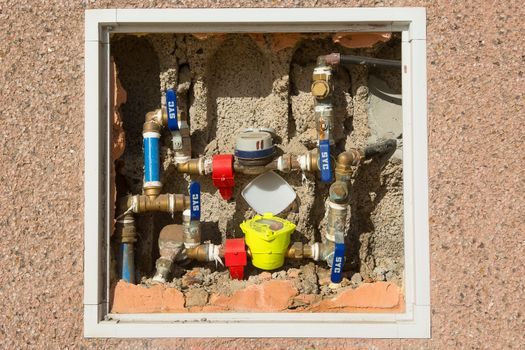
Three documentation items should be on every 2026 PO. First, body-and-ball traceability: mill certificates for 304/316, plus a positive-material-identification statement for sour or chloride service. Second, pressure-rated evidence: hydrostatic test certificate to the seat and shell pressure per the body rating — typically 1.5× and 1.1× the cold working pressure respectively. Third, electrical compliance: CE-EMC and CE-LVD for 230 VAC units shipped into the EU, UKCA for Great Britain, UL 429 / CSA for North America on electrically operated valves, and ATEX category 2 or IECEx for hazardous-area builds. The Made-in-China listings on 2026-06-03 explicitly tagged DN100/DN150 PN16 electric units as ANSI / ISO / CE [S2]; verify those three marks against the actual nameplate, because listings often outrun paperwork.
For OEM sanitary skids, the supplier base in China clusters around Shanghai, Wenzhou and the Yangtze delta — Shanghai Chuanhu Valve, for example, runs electric-control, pneumatic-control, ball and butterfly lines out of one site [S1]. The general lesson from the 2026-06 sourcing snapshot is that the price band is wide because the spec band is wide: USD 0.95 brass water valves at 1,000-piece MOQ and USD 1,500 stainless PN16 electric units at 10-piece MOQ can both be listed on the same index page [S2]. For a structured reading of how size, certification and material stack up on adjacent hardware, the knife gate valve 2026 buying guide is a useful parallel reference on body/seat/actuator selection logic.
Limits, failure modes and buying pitfalls
Electric ball valves fail in three predictable ways. Seat cold-flow: PTFE creeps under continuous throttling and high differential pressure — a modulating service specified on a resilient-seated ball will lose shut-off class within months. Actuator overrun: undersized torque stalls the gear train, trips the thermal cut-out, and burns out the motor. Electrical mis-spec: 230 VAC shipped where the panel is 24 VDC, or IP54 installed outdoors and water-fouled within a season. Each of these is a paperwork problem at quote time, not a field problem — the 2026 spec sheet must show torque at working ΔP, voltage at the terminals, and IP rating against the installed environment, not the catalogue headline [S3][S4].
A second pitfall is seat leakage class confusion. Class VI (bubble-tight) is the resilient-seated default; Class IV is typical for metal-seated; Class V is the upgrade target for critical service. There is no industry-wide rule that ties leakage class to a single standard revision, so the right move is to write the class on the PO and ask for a hydrostatic test report. On long-fibre and abrasive slurry service, even a 2026-spec electric ball valve is the wrong tool — a knife-gate or pinch valve is engineered for that duty, and the knife gate valve 2026 price & cost guide walks through the alternative.
Two trackable signals close the loop. First, watch whether the actuator supplier you are buying from has published a 2026 firmware/ECN list for the proportional line — anything 2 years without an ECN on a modulating platform is a support risk. Second, check that the 8S/35S EVO WRA-22 voltage variants you ordered match the panel drawings wire-for-wire; the 3 VDC and 9–24 VDC SKUs in the same family are visually identical to 24 VDC and are the most common 2026 RMA root cause [S3].