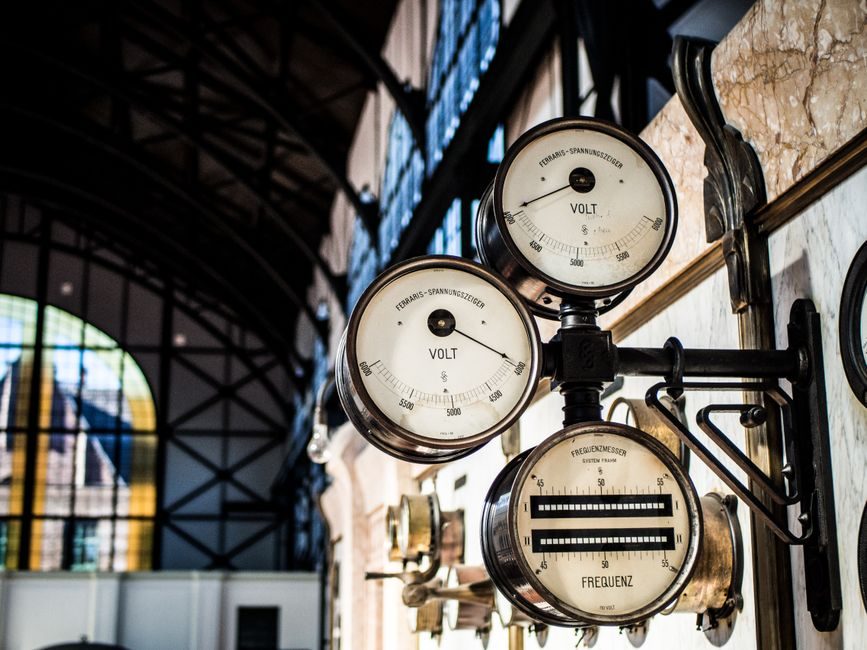
Selection of an electricity meter is driven by four binding numbers — phase configuration, accuracy class under IEC 62053-21 / IEC 62053-22, base current (Ib or Iref or In), and maximum current (Imax) — together with the meter's energy-registering principle and its communication interface for billing.
Mis-specifying any one of these four parameters is the most common cause of field failure: an undersized Imax trips on motor inrush, an oversized base current kills accuracy at low load, and the wrong accuracy class fails utility audit regardless of brand. The buyer journey has effectively four gates — duty match, accuracy class, current-window, and protocol — that must close before price and brand are even discussed.
Duty match: which meter type fits which load
Single-phase electromechanical induction meters at 5(30)A remain the workhorse of legacy residential service, with a Class 2 index driven by an aluminium disc whose rotation speed is proportional to instantaneous power [S1][S7]. The disc mechanically drives a register whose two readings, taken across a billing period, yield energy in watt-hours [S1].
Electronic — solid-state — meters replace the disc with a shunt or current-transformer input feeding an ADC and a metrology microcontroller; the MAXQ3120 reference design, for example, targets Class 1 multirate multifunction metering on a single chip [S3]. For three-phase commercial and light-industrial sites, CT-operated meters step down to a 5A secondary, which lets a single meter cover everything from a 100A panel to a 2500A busbar by changing only the CT ratio.
Specialised variants — IC-card prepaid, time-of-use (TOU), and AMI smart meters with PLC, RF, or cellular backhaul — add tariff slots and remote disconnect but otherwise sit on the same accuracy-class and current-window rules [S5]. Industrial revenue metering at 0.2S or 0.5S class is reserved for substation billing, inter-tie metering, and utility-to-customer transfer points.
Accuracy class: the IEC 62053 ladder and what each rung buys you
IEC 62053-21 / IEC 62052-11 governs active-energy Class 1 and Class 2 meters at 50/60 Hz, and these are the two accuracy classes a buyer will see quoted on 90% of single-phase data sheets [S5]. IEC 62053-22 covers Class 0.2S and 0.5S for industrial CT-operated revenue meters; IEC 62053-23 governs reactive-energy (var-hour) meters, and BS EN 62053-61 separately caps the internal power consumption and voltage burden of the meter itself [S8].
Class selection is a trade against load size and billing value: Class 2 at 5(30)A is the cheapest and is acceptable for sub-100A residential feeders, Class 1 at 5(60)A or 5(100)A is the mainstream commercial default, and Class 0.5S is the floor for any feeder above 100A where revenue is metered. Class 0.2S is reserved for inter-utility transfer metering where a single 0.1% error can move six-figure annual settlement money.
For CT-operated meters, the class statement alone is insufficient: the system accuracy is the meter class plus the CT class, and a Class 0.5S meter paired with a 1.0-class CT yields a system that is, in practice, Class 1.0. Pairing rules are spelled out in CT IEC 61869-2 and revenue-metering standards; this is one of the most common hidden cost sources in retrofits, because a 0.5S CT can be 3–5× the price of a 1.0 CT at the same ratio.
Current window: Ib/Iref/In and Imax, and why oversizing is a real failure mode
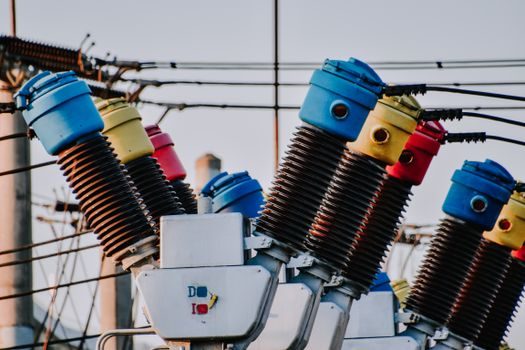
The notation "5(60)A" carries two distinct numbers: 5A is the base current (Ib) at which accuracy is guaranteed, and 60A is the maximum continuous current (Imax). Most published data sheets define accuracy from 0.05·Ib up to Imax, with a permitted but wider error band at the very low end (0.02·Ib to 0.05·Ib). [S1]
Specifying a 5(100)A meter on a 5(30)A load does not give "more headroom for free" — the meter's burden, shunt dissipation, and CT core losses are sized for the higher rating, and minimum detectable current rises proportionally. The practical effect is that an oversized meter reads less accurately at the small standby loads (TV, router, fridge on interlock) that dominate modern residential consumption profiles.
Conversely, undersizing Imax is the classic motor-starting failure: a 5(30)A meter on a 25A continuous load with a 6× motor inrush will saturate the current sensor and the meter either latches an overcurrent fault or simply clips the waveform, undercounting energy and tripping the disconnect. The Yongtailong engineering note that frames this exact decision tree — "is a larger current specification better?" — concludes the right answer is to match the meter's 1.2× continuous current rating to the load's 1.5× peak, not to over-rate as a hedge [S6].
Protocol and register: from electromechanical dials to AMI backhaul
Electromechanical meters expose a single cumulative kWh register through a mechanical odometer, which is read by a field operator walking the route [S1]. Electronic meters expose a configurable multi-tariff register set — typically total active, total reactive, peak/shoulder/off-peak, and per-time-block — over a wired M-bus or RS-485 link, with optional pulse output for legacy SCADA tie-in.
Smart / AMI meters add two-way communication: PLC over the LV distribution wiring, RF mesh (Wireless M-Bus, LoRaWAN, or proprietary 433/868/915 MHz), or cellular LTE-M / NB-IoT for direct-to-cloud backhaul. Selection between these is a utility-procurement decision more than a buyer decision; what a buyer can verify is the open-protocol guarantee — DLMS/COSEM over HDLC or TCP, with IEC 62056-21 OBIS code compliance — so the meter is not locked to a single vendor's head-end system.
For a single site — one factory, one commercial building — the protocol question collapses to "does the meter speak Modbus TCP or DLMS/COSEM to the BMS?" Anything else is over-spec. For utility-scale deployment, the protocol question is the project: it is the single largest line item after the meter hardware itself.
Side-by-side comparison: which meter fits which duty
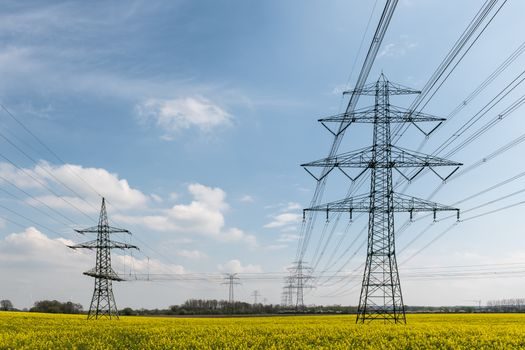
Four common variants ranked against three decision criteria — accuracy class, typical current window, and target duty — give a usable first-cut shortlist. The numbers below reflect the values that appear on actual procurement RFQs in 2026: a UAE buyer of 1000 units specifying IEC 62053-21 / IEC 62052-11 single-phase IC-card prepaid at 50/60 Hz, and the standard residential / commercial / industrial triad [S5].
Single-phase electromechanical, Class 2, 5(30)A, residential — cheapest, no comms, manual read, no TOU. Single-phase electronic prepaid, Class 1, 5(60)A or 5(100)A, residential / light commercial — keypad or IC-card, M-bus or RF optional, TOU register. Three-phase electronic CT-operated, Class 0.5S, /5A secondary, commercial / light industrial — Modbus or DLMS/COSEM, multi-tariff, load profiling. Three-phase electronic CT-operated, Class 0.2S, /5A secondary, utility inter-tie / substation billing — IEC 61850, redundant comms, sealed by revenue authority.
The crossover rule of thumb: below 100A feeder, direct-connect electronic meter; 100–1000A feeder, CT-operated 0.5S meter; above 1000A or any inter-utility settlement, 0.2S with redundant CTs and IEC 61850 reporting.
Who should NOT pick the cheapest option
A Class 2 electromechanical 5(30)A meter is the wrong choice when any of the following applies: the load is three-phase (electromechanical three-phase meters exist but lose accuracy faster than electronic on unbalanced phases); the site is commercial and the tariff structure is TOU (an electromechanical meter cannot register multiple time bands); or the local utility operates a prepayment scheme that requires electronic token/IC-card interaction [S5]. The same meter is also the wrong choice if the buyer plans to use the meter for sub-billing — measuring a tenant's energy use for invoicing — because the resolution and tampering-detection of Class 2 electromechanical meters is below what most property managers can audit.
For prepaid residential sites, the failure mode of choosing the wrong meter is economic: a Class 2 electromechanical 5(30)A meter installed on a feeder that occasionally sees 35–40A (winter heating kick-in, AC compressor start) will either trip the overcurrent flag or, more insidiously, the disc will slip and the meter will undercount, with the loss absorbed by the utility or the landlord [S6].
Standards, sourcing, and the 2026 procurement picture
The binding standards for active-energy meters at 50/60 Hz are IEC 62053-21 (Class 1/2 electronic) and IEC 62053-22 (Class 0.2S/0.5S electronic for CT operation), with IEC 62052-11 covering general requirements and IEC 62053-23 covering reactive energy [S5][S8]. BS EN 62053-61 separately limits the meter's own internal power consumption and voltage burden so the meter does not itself become a measurable load on the consumer's bill [S8].
Open tender traffic in the 2025–2026 window shows single-phase IC-card prepaid at IEC 62053-21 + IEC 62052-11 compliance moving in 1,000-piece lots to UAE and similar duty markets, with CIF Dubai as the most common shipping term [S5]. This is the most reliable demand signal for residential and light-commercial procurement through the second half of 2026: prepaid, 50/60 Hz, Class 1 minimum, with M-bus or RF as the optional comms layer.
For buyers comparing mechanical and electronic enclosures, the energy meter ecosystem also includes dedicated enclosures, brass terminal blocks, and current windings sized to match the meter's current window — and these are commonly sourced alongside the meter itself rather than as a separate BOM line, which is why many meter vendors also list enclosure and shunt accessories on the same product page [S4]. Adjacent metrology — flow meter and counter meter selection — follows the same spec-first logic when a building manager is consolidating sub-billing instrumentation.
Two trackable signals for the rest of 2026: (1) any tightening of the IEC 62053-22 0.2S / 0.5S boundary for CT-operated revenue meters, since utility inter-tie settlement values are pushing more sites into 0.2S specification; (2) any AMI procurement at single-phase Class 1 with DLMS/COSEM and LTE-M backhaul moving in 10,000+ unit lots, since that volume would reset the residential cost curve. Buyers in the market today should anchor the RFQ on accuracy class, current window, and protocol — in that order — and treat price as a downstream function of the shortlist those three gates produce.
See also our earlier report, Dynamometer Selection Criteria: Spec-Driven Map for Engine, Motor, and Brake Test Stands.