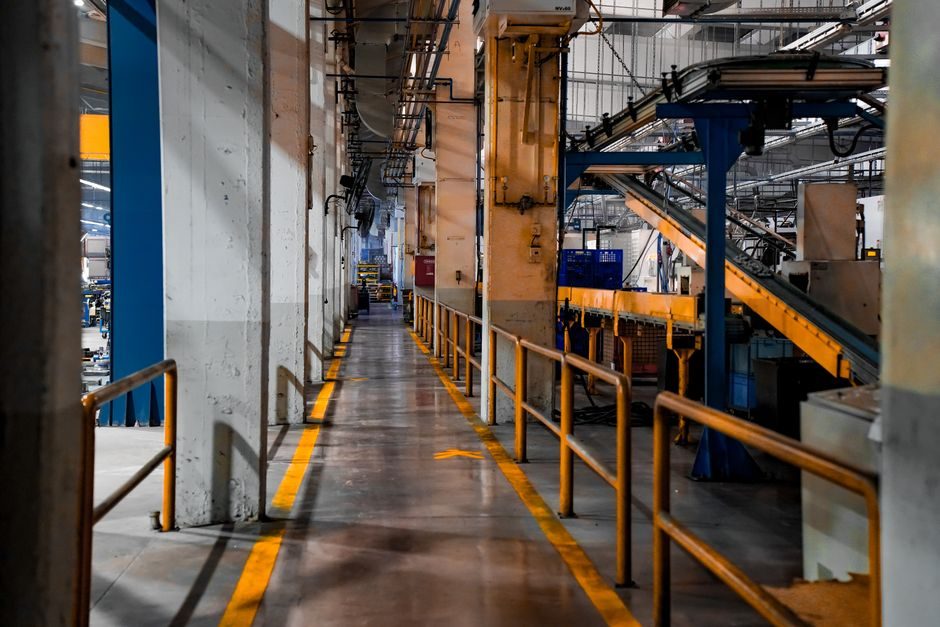
Agile electrolyte lines sized at 40–400 kg per batch and 500+ tons of annual capacity are the new U.S. benchmark for Li-ion formulation throughput, per Automat Solutions' commissioned San Leandro, CA line [S1]. Smart-manufacturing scope now covers the full stack: raw-material moisture sensing, closed-loop LiPF6 salt dosing, MES-traceable batch records and AI-driven recipe selection on a per-cell-chemistry basis.
The reference architecture in 2026 is no longer a single dosing skid — it is a layered cell where flow meters, pressure transmitters and smart valves feed an MES that streams to a digital-twin cell-line model. Danl's 15-year track record on smart LiFePO4 / Li-ion / SLA / AGM chargers, founded 2008, shows how the same closed-loop philosophy is extending upstream from chargers to electrolyte kitchens [S2].
Definition and Scope: What Counts as "Smart" Electrolyte Manufacturing
Electrolyte smart manufacturing is a closed-loop, recipe-driven production cell for Li-ion conductive formulations (LiPF6 in EC/EMC/DMC carbonate blends, with VC/FEC additives) where every valve stroke, dosing pulse and water-content reading is logged, time-stamped and reconcilable to a battery cell serial number. Automat Solutions' agile line, commissioned 2024-08-05, formalises this by producing variable-formulation batches from 40 kg (R&D) to 400 kg (pilot) on a single shared skid, eliminating line changeover between products [S1].
Per LEAD Intelligent's 2025 ESG and digital-infrastructure briefings, the four functional layers are: (1) raw-material inbound with barcode/RFID hand-off to ERP, (2) inline sensing including Karl Fischer moisture (<20 ppm target) and HF acidity, (3) recipe execution with mass-flow controllers and smart valves on a Profinet/EtherCAT backplane, and (4) MES-LIMS integration that pushes batch records to cell-formatting lines via OPC-UA [S4]. A cleanroom envelope of ISO Class 7 or better around the dosing head is treated as the default in 2026 audits.
Selection Criteria: Spec Bands Buyers Should Write Into RFQs
Buyers specifying an electrolyte smart line in 2026 should pin four numerical bands: (a) batch-size range 40–400 kg with recipe changeover under 30 min, (b) dosing accuracy ±0.1 % of setpoint on mass-flow controllers, (c) water-content spec ≤20 ppm verified by inline Karl Fischer, and (d) HF-acidity ceiling 50 ppm with auto-dump to waste on excursion. LEAD Intelligent's published claim of "1 s/pcs × ±0.1 mm" precision on its fuel-cell stack line is the type of throughput-vs-accuracy figure that electrolyte buyers should now expect as a benchmark [S4].
Instrumentation-side, every dosing point carries a flow meter (Coriolis preferred for LiPF6 slurries, magmeter for carbonate solvents) and a pressure transmitter on the dispense head for anti-cavitation interlock. Closed-loop recipe selection is the differentiator: Rockwell's 11th Annual State of Smart Manufacturing report (2026) tracks a shift "from automation to autonomy," with 2026 investment trends concentrated on AI-driven recipe tuning, predictive maintenance and energy-per-batch dashboards [S6].
Who This Is For — And Who It Is Not For
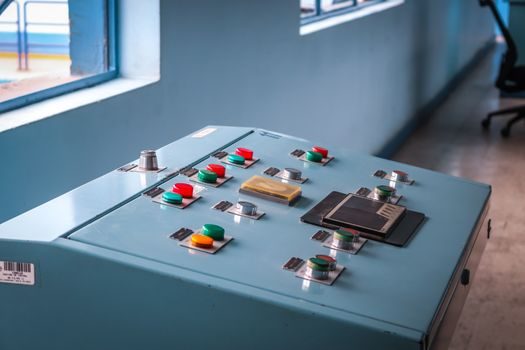
This stack fits Tier-1 cell makers running ≥2 GWh/yr, captive electrolyte production at OEM gigafactories, and specialty shops (solid-state pilots, sodium-ion lines) that need 8–12 SKUs per month on a single skid. Automat Solutions' "50+ customers" U.S. base illustrates the mid-cap end of the addressable market — companies too small for in-house kitchens but too big for toll-blending [S1].
It is NOT for hand-mixed R&D batches under 10 kg (a glove-box workflow is cheaper), for cylindrical 4680 lines that consume electrolyte in continuous in-line mixing rather than batch (different topology), or for ESS stationary projects where the bill-of-materials cost of electrolyte is too small to justify the MES integration. For a 100 MWh pack line, contract-blended supply with full COA traceability is usually more cost-effective than a captive agile line.
Comparison: Automation Stack Options on Four Buyer Criteria
On a 4-criterion comparison the 2026 menu sorts cleanly. (1) Throughput: LEAD Intelligent's gigafactory-class MES > Rockwell's plant-wide platform > Automat Solutions' 40–400 kg agile line > Danl's custom charger-side cell [S1][S2][S4][S6]. (2) Recipe flexibility: Automat Solutions' agile skid (single line, multi-SKU) > LEAD Intelligent (configurable cell, longer changeover) > Rockwell platform (governance layer, agnostic to skid) > Danl (charger recipe, not electrolyte) [S1][S2][S4][S6]. (3) Sensor density: all four use Coriolis/pressure transmitter pairs, but only LEAD and Rockwell publish Profinet/EtherCAT + OPC-UA stacks as standard [S4][S6]. (4) AI/ML scope: Rockwell (predictive maintenance, autonomy roadmap) > LEAD (PHM system named on its homepage) > Automat (LLM and AI Robotic Platform access offered as services) > Danl (charger-side diagnostics) [S1][S2][S4][S6].
For buyers who already run a smart camera-based cell-inspection cell, the same OPC-UA bus can carry electrolyte batch IDs forward into the formation cycle, which is the integration point Rose Electronics' 60-year battery-pack engineering practice assumes for its 500+ customer base and 6M+ shipped packs [S3].
Real Use Cases: From R&D Kitchen to Gigafactory
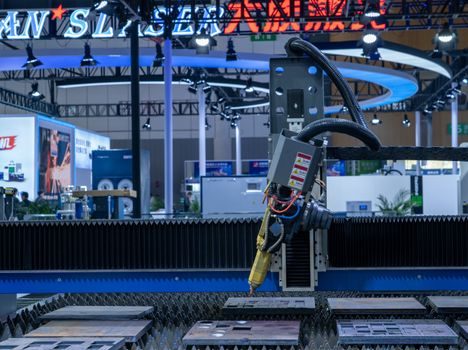
Use case 1 — R&D-to-pilot scaling: Automat Solutions' agile line produces a 40 kg qualification batch, ramps to 400 kg for A-sample cells, and ships the same recipe to a gigafactory partner without re-validation, cutting tech-transfer from months to weeks [S1]. Use case 2 — Gigafactory electrolyte kitchen: LEAD Intelligent deploys a PHM-monitored, ±0.1 mm-precision dosing cell alongside stack-assembly lines, with the MES pushing batch genealogy to each cell's barcode [S4]. Use case 3 — Smart-pack assembly: Danl custom-programs chargers to the cell's formation recipe, ensuring the electrolyte-filling step and the first-cycle charge curve are co-optimised [S2].
Use case 4 — Smart-meter + smart-cell convergence: utility-scale storage projects increasingly spec the battery's DC string with a smart meter for state-of-health tracking, and the underlying cells are pulled from MES-traceable electrolyte batches so that any cell can be traced back to the LiPF6 drum, the dosing shift, and the inline water reading at fill. Use case 5 — Drone/UAS cells: Rose Electronics notes its packs were on the first UAV to enter FAA Type Certification, a regulator-grade audit trail that 2026 buyers should treat as the floor for documentation [S3].
Limitations, Failure Modes and Compliance Constraints
The dominant failure modes in 2026 field data are: (1) LiPF6 hydrolysis from residual moisture >20 ppm causing HF spikes and cell swelling, (2) additive mis-dose on shared lines when recipe changeover is not validated against the new formulation's viscosity curve, and (3) MES-to-ERP sync loss that breaks cell-level traceability after a network drop. TRU Group's battery-engineering practice emphasises that pilot-line throughput does not linear-scale to gigafactory volume without re-engineering the dosing pumps and the inline moisture loop [S5].
Compliance constraints to write into the RFQ: UN 38.3 transport testing for any cells leaving the line (Rose Electronics' published "250+ UN 38.3 certified" figure is a useful proxy for what a qualified pack assembler should already hold) [S3], ISO 9001 quality system certification (Rose cites 25+ years ISO 9001 certified) [S3], and the EU Battery Regulation's due-diligence and recycled-content clauses that LEAD Intelligent flags as a 2026 strategic priority for any European-bound shipment [S4].
Sourcing Signals and 2026 Trackable Indicators
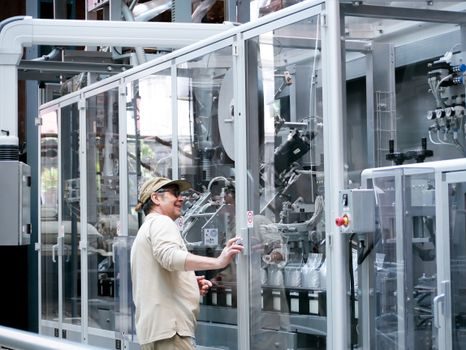
Three signals worth tracking into the second half of 2026: (1) the 12th Annual State of Smart Manufacturing report from Rockwell, which will set the 2027 investment-trend baseline for AI recipe-tuning adoption rates [S6]; (2) the EU Battery Regulation's secondary acts landing in 2026, which will reshape electrolyte passport-data requirements for any cell imported into the EU [S4]; (3) U.S. Department of Energy funding rounds for agile electrolyte kitchens, where Automat Solutions' 500+ ton/yr U.S.-based capacity is positioned as a qualifying domestic-content asset [S1].
For pack-level buyers reading the spec stack from outside, the practical 2026 stance is: anchor the electrolyte RFQ on Automat-class agility (40–400 kg batches, multi-SKU, MES-traced) [S1], adopt LEAD/Rockwell-class automation governance for any line above 2 GWh [S4][S6], and require charger-side smart-cycling per Danl's 15-year reference base [S2]. Cross-reference the sourcing logic in Lithium Production Capacity Planning: 2026 Cell, Pack and Hydroxide Spec Bands and the QA stack in Lithium Battery QA Stack 2026 before locking the bill-of-materials.