
Estimates of the 2026 edge computing market span roughly USD 25.63 billion to USD 709.91 billion, with the spread driven almost entirely by whether services, carrier co-location, and managed-cloud revenue are counted inside the boundary [S1][S2][S5][S7].
On a hardware-and-software-only perimeter, the global market is sized at USD 25.63 billion in 2026 and projected to reach USD 267.42 billion by 2034 at a 34.10% CAGR, with North America holding 35.70% share in 2025 [S7]. On the broader definition that bundles in carrier edge, micro data centers, and managed services, MarketsandMarkets sizes 2026 at USD 111.34 billion rising to USD 317.39 billion by 2031 (23.3% CAGR) [S1][S4], and Precedence Research sizes 2026 at USD 709.91 billion climbing to USD 6,092.42 billion by 2035 (27.09% CAGR) [S5].
Definition, scope, and where a "gateway" actually sits inside the stack
An edge computing gateway is a hardened node that aggregates southbound sensor and fieldbus traffic, runs localized inference or protocol translation, and exposes a northbound API or MQTT/HTTPS stream to cloud or control-room systems, distinct from a generic server-class edge appliance that terminates no field protocols [S1][S2].
The scope question matters because most analysts bundle gateways into the "hardware" line, which captured 47.13% of edge computing revenue in 2025 and remains the largest single component bucket through the forecast window [S2]. Mordor Intelligence's 2025 cut of edge spend by deployment mode shows cloud models at 58.19% share and on-premises growing 13.61% CAGR to 2031, a split that pushes hybrid gateway appliances into the fast lane for industrial buyers [S2].
For specification purposes, the gateway sits one tier below a full micro data center and one tier above a pressure transmitter or flow meter on the OT pyramid, translating native sensor protocols into OPC UA, MQTT, or REST before any cloud workload touches the data.
Hardware composition, OS support, and protocol gateway requirements
Fieldbus-style edge gateways typically expose 4-20 mA/HART, Modbus RTU/TCP, PROFIBUS, EtherNet/IP, and PROFINET on the southbound side, and OPC UA over MQTT, REST, or AMQP on the northbound side, with native support for IEC 62541 OPC UA and the MQTT 3.1.1/5.0 publish-subscribe model. [S1]
Hardware platforms split into three operating grades: ARM Cortex-A class SoCs (typically 4-8 cores, 1-4 GB RAM, fanless, 0-60°C) for protocol translation and small-scale inference; x86 industrial PCs (Intel Atom through Core i7, 8-32 GB RAM, -25 to +70°C) for heavier analytics; and ruggedized servers with GPU/NPU accelerators for vision and predictive-maintenance workloads, with the wider market reporting a 47.13% hardware share in 2025 [S2].
Selection factors that consistently differentiate a protocol gateway from a raw edge server include deterministic cycle time (sub-10 ms for closed-loop work), pre-instantiated device description files (DDLs, EDS, GSDML, FDT/DTM), and certification coverage such as IEC 60079 for hazardous areas, ATEX 2014/34/EU for explosive atmospheres, and UL Class I Division 2 for North American hazardous locations.
Five-year forecast: three credible trajectories, with industrial demand as the lead driver

The 2026-2031 forecast bands published in mid-2026 sit in three clusters: a conservative cluster at USD 317.39 billion by 2031 (23.3% CAGR) [S1][S4]; a mid-band cluster at USD 479.97 billion by 2031 (13.24% CAGR) that includes services and carrier edge [S2]; and a high-band cluster at USD 273.73 billion by 2030 (43.2% CAGR, Research and Markets) and USD 6,092.42 billion by 2035 (27.09% CAGR) when ICT spend, telecom infrastructure, and managed services are aggregated [S3][S5].
The 23.3% CAGR band from MarketsandMarkets is the most commonly cited consensus, with the services sub-segment accelerating fastest at 26.5% CAGR as enterprises lean on managed-service partners to deploy and orchestrate edge nodes [S1][S4]. Mordor's 13.24% CAGR is materially lower because its base is already USD 257.76 billion in 2026, more than double MarketsandMarkets' USD 111.34 billion starting point, and its segmentation credits 22.58% of 2025 spend to manufacturing [S1][S2].
By application, Mordor attributes 28.71% of 2025 edge spend to video analytics and projects autonomous vehicles as the fastest-growing application at 14.11% CAGR through 2031, while Manufacturing leads end-user share at 22.58% in 2025 and Healthcare posts the highest end-user CAGR at 14.66% [S2]. Drivers are quantified in Mordor's impact table: 5G roll-out adds 2.8% to CAGR, IoT endpoint proliferation 3.1%, data-sovereignty mandates 1.9%, declining ASIC/SoC costs 2.3%, energy-efficiency/ESG targets 1.4%, and RISC-V plus chiplet architectures 1.7% [S2].
Regional distribution: where the spending actually lands
North America held 33.91% of 2025 edge spend, while Asia-Pacific is the fastest-growing region with MarketsandMarkets flagging it as the top-growth geography and Mordor quantifying the regional CAGR at 14.21% through 2031 [S1][S2][S7].
Asia-Pacific growth is anchored on smart-city investment in China, India, and Singapore plus 5G build-outs, while Europe is pulled by data-sovereignty regulation tied to the EU Data Act, a driver worth 1.9% to CAGR on a short-term (≤ 2 years) timeline [S2]. North America's lead reflects hyperscaler extension of public-cloud control planes into carrier and enterprise facilities, and the Fortune Business Insights estimate of 35.70% regional share for 2025 [S7].
For industrial buyers, this regional split is operationally important: gateways shipped into EU sites increasingly need on-board data-residency enforcement (processing inside the plant boundary rather than round-tripping to a non-EU cloud region) before commissioning, and gateways shipped into APAC manufacturing hubs need PROFINET and CC-Link IE support out of the box rather than as an aftermarket license.
Selection criteria for an industrial-grade edge computing gateway
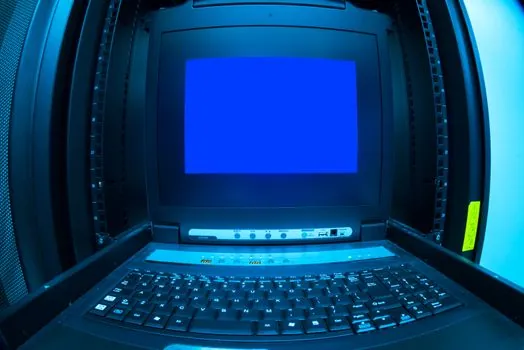
Eight criteria consistently separate a spec-compliant industrial edge gateway from a consumer-grade mini-PC: ingress protocol coverage, ingress port density, deterministic latency, environmental rating, cybersecurity stack, orchestration compatibility, hazardous-area certification, and total cost of ownership over a 7-10 year service life. [S1]
Ingress protocol coverage should be confirmed against the live device count on site: legacy plants running HART, Modbus, and PROFIBUS need a fieldbus gateway that supports all three natively rather than through external converters. Ingress port density of 4-16 serial ports plus 2-4 Ethernet ports is typical for skid-level aggregation, with managed Ethernet switches integrated on higher-tier units. Deterministic latency under 10 ms round-trip is the practical threshold for closed-loop control; gateway platforms that run general-purpose Linux without a real-time patch typically sit at 50-200 ms and are unsuitable for motion or safety work.
Environmental ratings worth pinning on the datasheet: -40 to +75°C operating temperature, 5-95% non-condensing humidity, IEC 60068-2-6 vibration (sinusoidal), IEC 60068-2-27 shock, and IP30 minimum for cabinet mounting, with IP67 variants for direct field mounting. Cybersecurity stack expectations map to IEC 62443-4-2 SL2 or SL3 for industrial zones, with secure boot, signed firmware, and role-based access control as table stakes. Orchestration compatibility with Kubernetes (K3s, KubeEdge), Docker, or vendor-specific Zero-Touch Provisioning reduces on-site commissioning cost and aligns with hyperscaler control-plane extensions. Hazardous-area certification is governed by ATEX 2014/34/EU and IECEx for global projects, with UL listed for North America, and IEC 60079 series covering the underlying protection concepts. Total cost of ownership is dominated by configuration and integration labor in years 1-3, then by cybersecurity patching and hardware refresh in years 4-10, a pattern that pushes the higher upfront cost of a hardened industrial gateway below the TCO of a consumer-grade unit over a typical 7-year life.
Limitations, failure modes, and what the data does not say
No published 2026 forecast in the source set reconciles the 28x gap between Fortune Business Insights' USD 25.63 billion 2026 figure and Precedence Research's USD 709.91 billion figure, a divergence that signals there is no industry-agreed definition of the edge computing market boundary, and buyers should pin the perimeter (hardware only, hardware plus software, or hardware plus services plus carrier edge) before reading any single headline number as a benchmark [S5][S7].
Three failure modes recur in edge gateway deployments that are independent of vendor: protocol mis-mapping between DDL/EDS revisions, fan failure on passively cooled units in ambient temperatures above 50°C, and certificate rotation gaps on OT networks that run for years between planned shutdowns. The market data does not quantify failure rates by gateway class, and adoption-rate percentages for specific industrial verticals (other than the 22.58% manufacturing share [S2]) are not in the source set and should not be inferred.
A second caveat: the cited CAGRs assume current regulatory and trade frameworks, with the EU Data Act referenced as a 1.9% CAGR contributor, and do not price in a step-change in export controls on advanced edge accelerators (GPUs, NPUs) that could lift unit costs materially for vision and inference gateways in 2027-2028 [S2].
Trackable signals for the next 12 months

[S1]
For industrial buyers, the practical near-term check is the SCADA platform selection criteria cycle: most greenfield plant-edge builds in 2026 are tendered as a single SCADA-plus-gateway-plus-protocol-translator package, and the gateway line item is where the data-sovereignty, hazardous-area, and cybersecurity requirements are first locked in, then propagated up to the SCADA and down to the industrial valve and pressure sensor specification sheets.