Specifying a variable speed drive starts with four hard numbers: motor nameplate kW, full-load current at the actual supply voltage, the worst-case overload current for the load, and the shaft-speed envelope. A 0.18–0.6 kVA-class unit such as the Altivar ATV312 covers the 200–240 V single-phase sub-frame, and the same family scales through hundreds of kVA for industrial LV drives [S6].
Modern drives convert 380 V three-phase 50 Hz mains into a variable-frequency, variable-voltage output to control AC induction and permanent-magnet motors [S5]. That conversion is where the real engineering decisions sit: which topology, which overload rating, which enclosure, and which control protocol will survive the plant's environment.
Define the Load Before the Drive
Constant-torque loads — conveyors, extruders, positive-displacement pumps — demand 100% rated current across the whole speed range, so a 150% overload for 60 s is the standard sizing reserve. Quadratic-torque loads — centrifugal fans and pumps — only need roughly 25–30% torque at 25% speed, which is why a fan/pump-rated drive with a 110% overload envelope is usually the cheaper, smaller choice. [S1]
Start by capturing three vectors: the load's torque-vs-speed curve, the duty cycle (number of starts/stops per hour, peak run time), and the inertia ratio between motor and load. A high-inertia load, such as a large centrifuge, can trip a drive on DC-bus overvoltage during decel; the fix is a properly sized dynamic braking resistor, not a larger drive. The 1.5–2× service factor commonly applied to conveyors reflects real shock loading, not pessimism [S2].
Topology Choice: Electronic, Mechanical or Hybrid
Electronic VFDs (VSDs/VFDs/frequency inverters) dominate below 500 kW because they offer the best part-load efficiency and the cleanest integration with fieldbus. For hazardous zones, electronic units must carry ATEX/IECEx certification matched to the gas or dust group; the Motovario S-TXF range illustrates the parallel mechanical approach, with cast-iron housings, flange or foot mounting, and seven frame sizes from 003 to 100 for input or motorised builds [S3].
Mechanical adjustable-speed drives — disc, traction, and gear-reducer types — remain useful where the environment is hostile, the load is slow, or the operator needs tactile, repeatable set-points. ZERO-MAX Europe's unidirectional adjustable-speed line ships in five series (E, JK, Y, QX, ZX) with selectable input/output shaft rotation, covering the typical 0.18–7.5 kW mechanical-drive window [S1]. The trade-off: electronic drives hit roughly 95–98% efficiency across most of their range, while mechanical units drift lower as the ratio moves away from the design point.
Comparison: Electronic vs Mechanical vs Soft-Starter

Four criteria separate the three options for most buyers: energy saving, speed accuracy, starting torque, and capital cost. An electronic VFD wins energy saving on variable-torque loads (often 20–50% kWh reduction) and gives ±0.5% speed accuracy with closed-loop feedback; a mechanical adjustable drive wins simplicity, accepts operator-side mechanical set-point, and tolerates dirty/hot environments that kill electronics; a soft-starter like the ABB PSTX only controls the start/stop ramp and is the cheapest path when the run speed is fixed. [S2]
Cost scales the opposite way — a soft-starter at the same kW rating is typically 30–40% of an equivalent VFD, and a mechanical unit is again cheaper on first cost but adds a maintenance burden.
Envelope, Cooling and Electrical Spec Bands
IP rating and ambient define the enclosure. IP21 / UL Type 1 is fine inside a control room, IP54 covers most plant floors, and IP66 plus a thermal management plan is required for outdoor or washdown locations.
Electrical specs that always get checked: input voltage tolerance (±10% is common), input harmonic current (THDi 35–45% on a 6-pulse rectifier, dropping to under 5% with an active front-end or line filter), DC-bus voltage (≈ 1.41 × line-to-line RMS for a 400 V unit, or ≈ 565 V), and braking transistor rating. ABB-class industrial drives support fieldbus protocols (PROFINET, EtherNet/IP, Modbus TCP) and embed PLC functions that cut the bill-of-materials in machine-builder cabinets [S2].
Application Mapping: Pump, Fan, Conveyor, Compressor
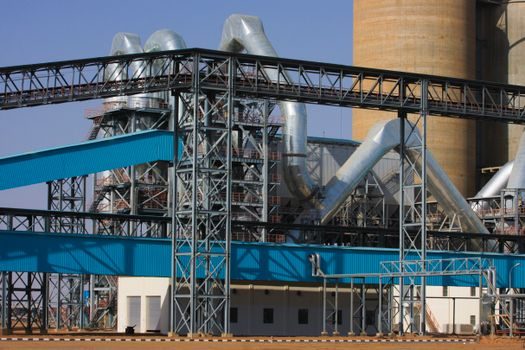
Centrifugal pumps and fans are the textbook VFD play. Affinity laws cut power by the cube of speed reduction, so a 20% turndown saves roughly 49% of the energy on a fan curve. The drive's PID controller closes the loop on pressure or flow without an external controller in most cases. Conveyors need the constant-torque profile and a 150% overload for 60 s to absorb starting shock and stalled-belt transients. [S3]
Compressors sit between the two: most modern screw compressors are inverter-ready, and a 1:10 turndown from a VFD lets the plant drop the inlet guide-vane stage entirely. For washdown or food-grade lines, the VFD enclosure must carry a corrosion-resistant coating and the cabinet must reach at least IP66 — a spec pattern that also shows up in reducer selection for the same lines, as covered in RV Reducer Picks for Food and Beverage Washdown Duty.
Limitations, Failure Modes and Standards
VFDs introduce three real issues that must be engineered around. First, motor insulation: long cable runs cause reflected-wave voltage spikes that can exceed 1,600 V peak on a 480 V drive; the fix is a sine-wave filter or an inverter-duty motor with NEMA MG-1 Part 31 winding. Second, bearing currents: common-mode voltage discharges through the bearing race; an insulated bearing or shaft-grounding ring resolves it. Third, harmonics: a 6-pulse rectifier adds line distortion that can trip other equipment; a line reactor or active harmonic filter is the standard mitigation. [S4]
On the sourcing side, key reference standards include IEC 61800 for adjustable-speed drive systems, IEC 60079 for hazardous-area drives (the ATEX 2014/34/EU directive applies in Europe), and IEEE 519 for harmonic limits at the PCC. Soft-starter and VFD product lines from ABB and Schneider are commonly accepted as evidence of compliance when correctly specified and installed [S2][S6].
Sourcing and Selection Workflow
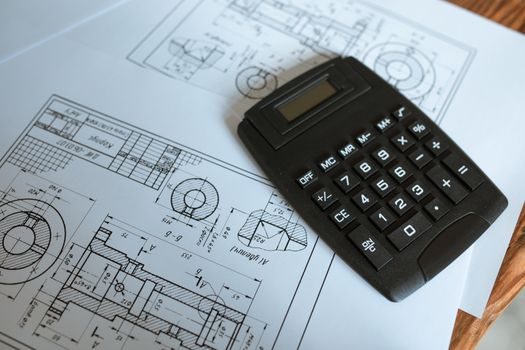
A practical workflow runs in six steps: (1) capture motor nameplate and load curve; (2) decide torque class (constant vs variable); (3) add 10–20% headroom for service factor; (4) pick overload (110% for VT, 150% for CT); (5) match enclosure IP, cooling, and ambient derating; (6) verify fieldbus, I/O count, and braking. A 0.18–0.6 kVA-class unit like the ATV312 is the typical sub-1 kW bench-build choice, with the same control firmware scaling to 250 kW+ industrial frames [S6].
For plant-wide retrofits, prioritise drives with built-in EMC filters, STO (safe torque off, SIL3/PL e) inputs, and a known firmware roadmap — these three features drive 80% of the long-term installed cost. The same spec discipline that governs drive sizing — load curve, headroom, overload, environment — applies to adjacent equipment such as servo drives and the linear-motion hardware that they feed, like linear guides and crossed-roller guides on precision axes. Tracking the next 90 days: confirm local harmonics compliance under IEEE 519 once the harmonic filter is commissioned, and re-check motor bearing temperatures at the 1,000-hour mark to verify reflected-wave mitigation is holding.