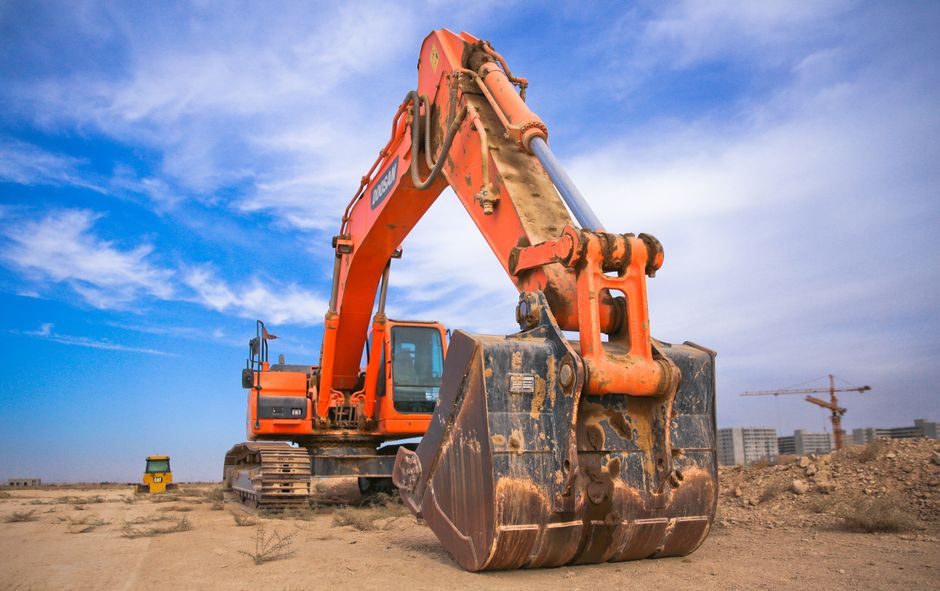
Pipeline right-of-way work splits the machine fleet cleanly into two roles: a 30–40 t crawler excavator for ditch cutting and backfill, and a dedicated pipelayer (PL-class) for stringing, bending, and lowering pipe [S2]. The excavator's reach, bucket tooth pattern, and undercarriage pressure drive productivity; the pipelayer's rated lift, counterweight, and boom geometry drive pipe-handling safety.
PLM Cat currently lists five pipelayer models (PL61, 71H, 572R2, PL72, PL83, PL87) and five hydraulic excavators (330, 336, 349, 352, 374) on its pipeline-construction equipment roster, with D6/D7/D8 dozers and 14M/16M motor graders filling the support spread [S2]. The size split between PL87-class and 374-class machines maps directly to mainline diameter and lift capacity at the job site.
Why two machines, not one
A standard hydraulic excavator cannot safely lift and lower a joint of line pipe in one motion — its boom geometry, swing priority, and lack of a dedicated load-moment indicator violate pipeline-handling practice [S2]. Pipelayers carry a sideboom boom, hydraulic load-moment system, and counterweight package sized to a single pipe-handling duty cycle.
Spreading the ditching and pipe-handling work across two purpose-built machines cuts cycle time and removes the practice of improvised sling-on-bucket lifts, which is the most common root cause of dropped-pipe incidents on cross-country spreads [S2]. Crews that try to use a 336-sized excavator for both trenching and lowering typically lose 15–25 minutes per joint during the handoff between stringing and lowering-in.
Excavator class: 30–40 t is the trenching sweet spot
For typical 900–1200 mm (36–48 in) mainline trenching, the 330 (≈30 t), 336 (≈36 t), and 349 (≈40 t) cover the bulk of the ditching work on PLM Cat's published pipeline list [S2]. Bucket choices in the 1.0–1.9 m³ range match ditch widths without forcing a second pass, and the undercarriage ground-bearing pressure of a 30–40 t crawler stays within the 35–55 kPa band typical of right-of-way soils.
Step up to the 352 or 374 only when the spread includes large-diameter (≥48 in) mainline, hard-rock trenching with hydraulic breakers, or deep ditch work beyond ~4 m where a longer boom and heavier counterweight pay back in fewer passes [S2]. Below 30 t (e.g. mini-excavators from the small-site segment such as Connecticut residential septic work [S1]), reach and bucket breakout force drop below what ditch geometry demands, and the undercarriage is too light for pipe-bedding compaction duty.
For a side-by-side comparison of machine classes against pipeline right-of-way duties:
• 20–25 t (mini / mid-excavator): residential trench, septic, and utility taps — see excavator selection for landfill operations: 2026 spec map for the lower-weight selection logic. Not rated for mainline ditching [S1].<br/>• 30–40 t (330 / 336 / 349 class): mainline ditching, backfill, bedding placement — the default pipeline spread [S2].<br/>• 40–70 t (352 / 374 class): large-diameter mainline, rock trench, deep ditch. Higher mobilization cost; only justified on ≥48 in spreads [S2].<br/>• 90 t+ mining class: out of scope for typical cross-country pipeline; reference How to Select a Mining-Class Excavator: Weight, Bucket, and Truck Match for the heavier weight class.
Pipelayer selection: PL61 → PL87 mapped to pipe diameter
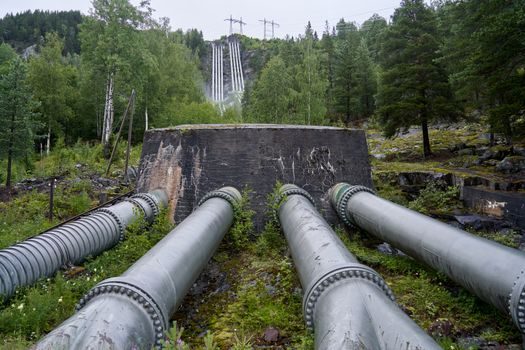
PLM Cat's pipelayer range ladders in five steps — PL61, 71H, 572R2, PL72, PL83, PL87 — with rated lift capacity and counterweight scaling up the line [S2]. Selecting a pipelayer starts from the heaviest single lift the spread will handle (a joint of pipe, a bend, or a valve assembly) and works backward to the smallest machine that still has 25% margin over that lift at the working radius.
Field convention on cross-country spreads: PL61 / 71H for 16–24 in gathering and distribution work; PL72 / PL83 for 30–42 in mainline; PL87 for 48 in and above, or for any spread that handles thick-wall bends and heavy-wall fittings [S2]. The 572R2 sits in the middle of the range as a legacy model still supported on used-equipment rosters.
Pipelayer choice is governed less by engine horsepower and more by three numbers: rated lift at the hook, counterweight mass, and boom length. Those three together define the lift chart that the operator reads every cycle, and a load-moment system with a real-time readout is part of the safety baseline [S2].
Supporting spread: dozers, graders, and bedding discipline
Right-of-way preparation, pad building, and fine grading sit with the D6, D7, and D8 (including D8T and D8T LGP low-ground-pressure variants) on the published pipeline equipment list [S2]. The D8T LGP is the standard answer for soft-soil right-of-way where a standard D8T would exceed 55 kPa ground pressure and bog down.
Motor graders (14M, 16M) handle the final pad finish before pipe is strung and the re-grade after backfill, which directly controls how cleanly the excavator can track along the ditch line. A poorly graded pad slows the 336-class excavator because the operator spends cycle time repositioning instead of digging, and uneven pad grade is the most common cause of pipelayer tip-overs on side slopes [S2].
Backfill and bedding compaction is the excavator's secondary job, not the dozer's. A 30–40 t excavator with a compaction-plate attachment or a smooth-wheel roller towed behind the dozer closes the trench in lifts matched to the pipe-spec compaction curve.
Safety systems that drive specification
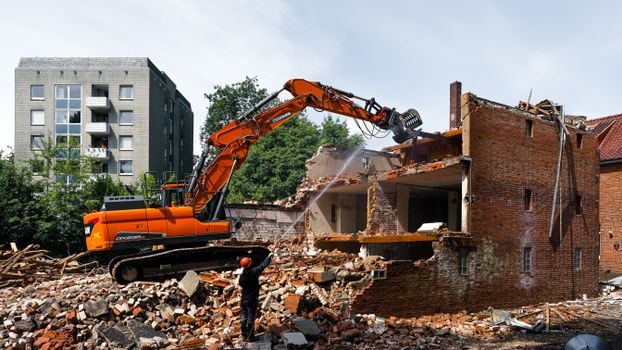
Powerline proximity, load monitoring, and operator training are listed as distinct line items on PLM Cat's pipeline-safety roster, alongside pipeline-safety leadership training [S2]. The powerline-proximity system warns the operator before any part of the boom or load swings within the regulated clearance distance of an energized line, and the load-moment system on the pipelayer cuts hydraulic motion if the lift chart is exceeded.
For excavator-side safety, the relevant additions are a height-and-swing limiter (so the bucket cannot strike an overhead line during trenching), a rear-view camera with radar, and a roll-over protective structure rated to the same ROPS/FOPS standard as the carrier. Crews that skip these systems typically pay for them in the first near-miss, not in the spec stage [S2].
Where the standard 30–40 t choice breaks
Three failure modes push a pipeline spread off the 30–40 t default: rock trench, soft-soil right-of-way, and large-diameter heavy-wall pipe. Rock trench needs a hydraulic breaker sized to the carrier (breaker-to-carrier weight ratio in the 1:10 band is the working range), which forces a step up to the 349 or 352 [S2]. Soft-soil right-of-way demands a wider track, which is where the LGP dozer and a long-undercarriage excavator come in.
Large-diameter heavy-wall pipe forces the pipelayer up the PL ladder to PL83 or PL87, but the excavator side usually stays at 336 / 349 because ditch geometry — not pipe weight — sets the excavator class. The disconnect between excavator class and pipelayer class is a common mistake; the two machines are sized independently and should not be picked from the same model number.
Field signals to watch in the next planning cycle
Track two markers on the equipment side: any update to the published PL and 330-series model counts on PLM Cat's equipment list [S2], and any change in the emissions-reduction technology tier that the same vendor bundles with new pipelayer deliveries. On the demand side, residential and small-commercial excavator demand in regional markets such as Connecticut septic and driveway work [S1] sets the baseline price of used 20–25 t machines that occasionally feed into the lower end of pipeline utility crews.
A third signal is the roll-out of grade-control and payload-monitoring telemetry on the 330/336/349 class; when that becomes a no-cost option on the pipeline-spec sheet rather than an add-on, ditching productivity in m³/h typically moves up by a measurable step [S2].
Spec-level background on the components involved: excavator, pipeline pump, and pressure transmitter.