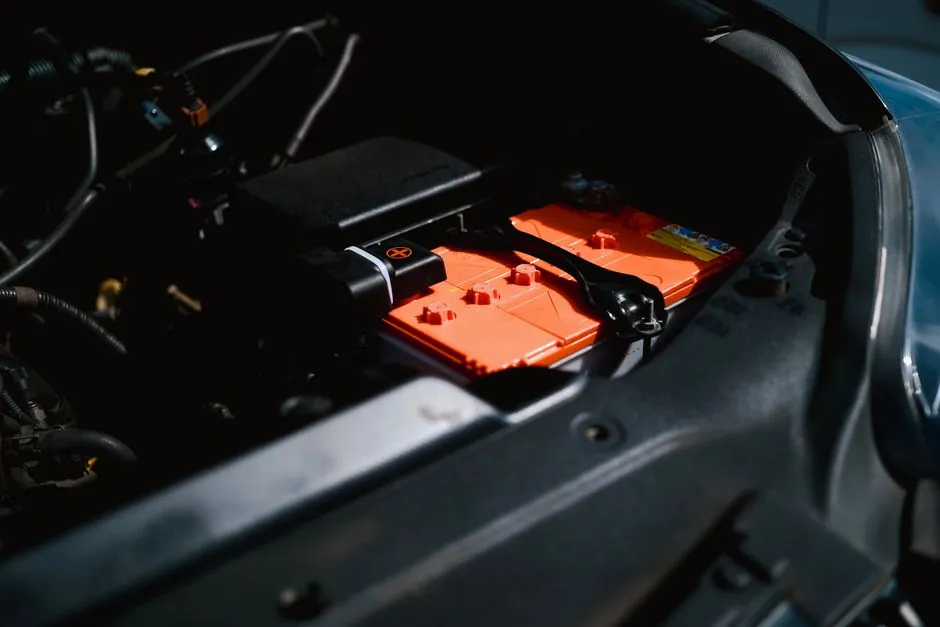
DOE's Battery Materials Processing and Manufacturing grant program, authorized under section 40207 of the IIJA, applies the Foreign Entity of Concern interpretive guidance directly to applicants and sub-recipients, with the same 25% control test used across Treasury's section 30D credit [S1].
Treasury Notice 2026-15, released February 12, 2026, set the first compliance template for the One Big Beautiful Bill Act's prohibited foreign entity provisions, applying them to section 45Y PTC, section 48E ITC, and section 45X manufacturing credits used by advanced battery material producers [S5].
What FEOC Actually Means and Which Nations Are Covered
DOE's final interpretive rule (May 2024) defines a FEOC as a foreign entity that is either subject to the jurisdiction of a covered nation, or owned, controlled, or subject to the direction of a government of a covered nation; covered nations are the People's Republic of China, the Russian Federation, the Democratic People's Republic of North Korea, and the Islamic Republic of Iran [S4].
Control is measured independently against three metrics (board seats, voting rights, and equity interests) at a 25% threshold, and the highest single metric is used, so 20% voting rights plus 10% equity plus 15% board seats still yields a 20% FEOC determination [S3].
Senior political figures in the PRC context were broadened to include current and former members of the National People's Congress and Provincial Party Congresses, plus current local and provincial Chinese People's Political Consultative Conference members, and "senior" now requires the official to be or have been in a position of substantial authority over policy, operations, or government-owned resources [S3].
Due Diligence on Components, Minerals, and Impracticable-to-Trace Materials
A battery is not considered FEOC-compliant unless the qualified manufacturer conducts due diligence on all relevant components and minerals, and the final regulations identify a specific subset of battery materials as "impracticable-to-trace," which Treasury treats as automatically compliant when a maker still performs the required certification [S2][S3].
FEOC rules limit supply chain dependence tied to China and Russia specifically, and for battery energy storage developers that link is the hardest to break because cell, cathode active material, and anode graphite capacity is concentrated in those jurisdictions [S7].
The Material Assistance Cost Ratio (MACR) requires clean energy project owners seeking the 45Y PTC or 48E ITC to assess two steps up their supply chains, counting manufactured products and manufactured product components against Total Direct Costs to compute the PFE share [S5].
MACR Mechanics: The Four-Step Calculation

Treasury's Notice 2026-15 lays out the MACR in four steps: identify relevant inputs, determine how to track costs and PFE status, total the costs attributable to PFEs, and apply the final calculation, with a separate certification safe harbor available for inputs whose producers sign qualifying attestations [S5].
For 45Y and 48E taxpayers the denominator is Total Direct Costs, and for 45X manufacturing credit claimants the denominator is Total Direct Material Costs of the eligible component, with the PFE-attributable share measured at the time the producer's status is determined, not at the time of contract signing [S5].
Contract manufacturing arrangements and the 80/20 retrofit safe harbor receive specific MACR treatment in Notice 2026-15, and qualified interconnection property is addressed under its own rule set, so a project cannot simply exclude balance-of-system costs from the denominator [S5].
What Failure Costs: ITC Stacking and the 30% to 40% Credit Loss
Projects that fail the Material Assistance Cost Ratio lose the entire 30% to 40% ITC, because the prohibited foreign entity rules are not partial-credit tests; they are pass/fail at the project level for 48E storage, with the same logic applied to 45Y production for facilities placed in service after the relevant effective dates [S6][S8].
Treasury's first round of PFE guidance applies to section 45Y PTC and section 48E ITC for clean electricity facilities and energy storage beginning with placements in service after December 31, 2025, subject to transition rules described in the Notice [S5].
For BESS specifically, the 48E storage credit sits on top of MACR, so a 100 MWh DC block using cells from a FEOC-jurisdiction producer above the threshold forfeits the full credit, not a prorated share, and a developer that recertifies with a new supplier can re-enter the credit queue only on the next placed-in-service event [S6][S8].
Comparison: Section 30D Vehicle Credit vs Section 48E Storage Credit vs DOE Battery Grants

Section 30D clean vehicle credit applies FEOC as a battery-by-battery attribute test on qualified manufacturers, and the credit is denied if any covered battery component or critical mineral is sourced from a FEOC without meeting the impracticable-to-trace carve-out [S2][S3].
Section 48E energy storage ITC applies FEOC as a project-level MACR test on Total Direct Costs, and the credit is denied entirely if the PFE share of manufactured products plus components exceeds the statutory threshold [S5][S6].
DOE section 40207 battery processing and manufacturing grants apply FEOC directly to the grant applicant and any sub-recipient, using the same 25% control test, so a domestic cathode plant with a 24% PRC equity stake is fine, and a 25.1% stake disqualifies the entire award [S1][S3].
Who This Hits and Who Should Walk Away
Developers building utility-scale BESS in the US using LFP prismatic or NMC cylindrical cells from a covered-nation gigafactory need a documented MACR workbook before commissioning, otherwise the 48E storage ITC is forfeit on the entire project, not just the affected container [S6][S8].
Vehicle OEMs selling into the US consumer market need a per-VIN FEOC chain-of-custody file showing covered component and mineral status, with the impracticable-to-trace list used only as a carve-out, not as a default, and the file must be retained through the credit-claim period [S3][S4].
Small cell assemblers using exclusively US or ally-nation active material and a transparent contract-manufacturing flow can ignore MACR and rely on the certification safe harbor, and they should focus engineering effort on cell-format yield and checking and testing apparatus calibration instead of supply-chain mapping [S5].
Limits, Open Questions, and Trackable Signals
Notice 2026-15 does not resolve the debt-issuance provision that can pull an otherwise clean US special-purpose vehicle into PFE status if a covered-nation lender holds a controlling position, and Treasury has signalled a future notice for that gap [S5].
Effective control through licensing and contracting remains a separate test layered on top of the 25% equity test, and the final DOE rule treats licensing agreements as a control vector independent of equity, so a US cell IP licensor with a covered-nation licensee can be tagged FEOC even at zero equity [S3].
Two trackable signals to watch: a second Treasury PFE notice addressing the debt and licensing-control questions, and a DOE update clarifying how the section 40207 grant program reconciles MACR-style project tests with its per-applicant 25% rule, both of which will reshape procurement specifications for construction machinery and equipment used in domestic battery-material plants and BESS sites [S5][S1].
Background reading: VFD Parameter Backup and Replacement: A 2026 Field Procedure.