
Transformer expedite fees from U.S. manufacturers now range from 15% to 30% above list price, and even at the top of that band availability remains uncommitted, according to a 2026-04-21 procurement analysis [S1]. The surcharge buys a faster queue position, not a contractual delivery date, because the underlying constraint sits two-to-three years upstream in raw material and winding capacity.
Distribution-class units averaged 8-12 weeks of lead time pre-pandemic; in 2026, the same order runs 30-50 weeks, and large power transformers above 100 MVA stretch to 100-128 weeks, with generator step-up units averaging 144 weeks [S2][S4]. Electrical infrastructure now represents 40-50% of the $11.3M/MW average data center build cost, so schedule slip in a power transformer cascades across switchgear idle time, commissioning labor, and revenue deferral on a multi-megawatt site [S1].
What the expedite premium actually pays for
The 15-30% expedite surcharge is a queue-jump fee, not a guaranteed-slot fee. At the lower end of the band, the OEM re-sequences your order ahead of standard-priority work, which typically trims 2-6 weeks off a dry-type transformer order and 4-10 weeks off a large oil-filled unit, provided the production slot is genuinely open [S1]. At the upper end (around 30% over list), the manufacturer diverts raw materials from a later order to yours, which is where the political friction starts: you are effectively buying someone else's delay.
Three components determine whether the premium pays back. First, shop throughput: if the line is already booked solid, expediting only moves your position in a queue that everyone else is also paying to climb. Second, raw material: copper and grain-oriented electrical steel (GOES) are the gating inputs, and once a coil is allocated to a build sequence it cannot be redirected without breaking another customer's schedule. Third, transformer testing and quality hold: even an expedited unit must pass ANSI / IEEE C57.12.00 routine tests including ratio, polarity, insulation resistance, and oil dielectric, and these are calendar-time-locked, not labor-time-locked [S2].
For a 2,500 kVA padmount priced near the low six figures, a 20% expedite premium is meaningful real money; for a 100 MVA substation transformer at seven figures, the absolute premium is large enough to fund a remanufactured unit outright, which is why the procurement calculus splits by class size.
Three procurement strategies that beat paying the premium
Three procurement strategies are documented in 2026 utility and industrial buying patterns, and each shifts the trade-off in a different direction [S2].
Remanufactured distribution units ship in 4-6 weeks at 50-70% of new-build cost, disassembled, rewound, retanked, oil-filled, and ANSI tested with a 2-year warranty. The catch is kVA and voltage availability: you take what the remanufacturer has in queue, so this works for standard padmount replacements and routine utility specs, not for one-off substation builds with non-standard impedances or sound levels.
Buffer stock of common kVA/voltage combinations now runs 3-6 months of inventory at large utilities and industrial operators, versus the pre-pandemic lean model. Carrying cost on a stocked 1,500 kVA unit is a fraction of the lost-production cost on a 6-month outage, so the math flips once outage probability crosses a few percent.
Capacity-reservation contracts lock in a slot with both OEMs and remanufacturers for a small recurring premium (typically 5-10% over list, paid as a standing fee). This works for predictable annual volumes such as a utility's storm-season padmount program; it does not help with a one-off urgent need on a non-standard spec.
Buyers who treat "new" and "remanufactured" as a quality decision rather than a timeline portfolio are losing the schedule game. The buyers winning in 2026 are the ones blending all three on a per-order basis: remanufactured for the routine units, buffer stock for the critical spares, capacity contracts for the predictable annual volume, and expedite premiums reserved for the one-off emergencies that blow the forecast.
Where the constraint actually sits in the supply chain

Paying 30% above list does not speed up the bottleneck if the bottleneck is upstream of the OEM. Three inputs gate the build, and each one has a longer lead time than the expedite fee can compress [S1][S3].
GOES is produced by a handful of mills globally. Re-tooling a steel line for grain-oriented silicon-iron production takes years and capital; the U.S. has not added net GOES capacity in over a decade, and the 2024-2025 DOE transformer rulemaking added compliance friction for some product classes. Copper for windings has its own constraints, with LME copper up roughly 35% since 2022, which translates to $1.5-2.5M/MW of additional electrical build cost on a data center project [S1].
Component bottlenecks sit below the level most buyers track. LBOR switches, fusing, gauges, bushings, and tap changers have all seen extended lead times since 2020, and a transformer that is fully built but waiting on a bushing is still not shipping [S3]. Skilled assembly labor is the third gate: trained winding technicians and test crews cannot be hired on the spot, and the workforce that left the industry in the 2000s is not coming back at 2026 wage rates without multi-year training pipelines.
The demand side compounds the supply tightness. Data centers, EV charging rollouts, residential electrification, solar interconnects, and post-storm grid hardening are all hitting the same OEM order book, and utilities that historically ordered 2,000 distribution units a year are now ordering 4,000-5,000 [S2]. Paying an expedite premium to an OEM that is sold out is paying for queue position on a queue that is already full.
Decision criteria: when the premium is worth paying
The expedite premium is rational under three conditions, and irrational under three others, and the difference is sharp enough to be worth spelling out as a comparison. [S1]
Pay the premium when: (1) the unit is on the critical path of a revenue-generating project where each week of delay has a measurable cost (e.g., a hyperscale data center commissioning at $1M+/day of deferred revenue), (2) the OEM has confirmed in writing that the slot is genuinely open and not a re-sequencing of an already-booked line, and (3) the spec is non-standard enough that remanufactured inventory cannot cover it.
Do not pay the premium when: (1) the spec is a common kVA/voltage combination that the remanufacturing channel can fill in 4-6 weeks at 50-70% of new cost [S2], (2) the project has schedule float greater than the expedite savings (typically 8+ weeks of float means buffer stock is cheaper), or (3) the OEM is quoting expedite against an order book that is already past their stated capacity, which means the premium is going into general revenue, not a real slot.
A direct comparison on a 1,500 kVA padmount for a substation tie-in: new-build at 30-50 weeks with a 15-30% expedite trimming 4-10 weeks off the back end; remanufactured at 4-6 weeks with no expedite; buffer-stock pull from your own inventory at zero marginal lead time but with a carrying cost you have already paid. The expedite premium is the slowest and most expensive of the three, which is why it is reserved for emergencies.
Limits and failure modes of the expedite path
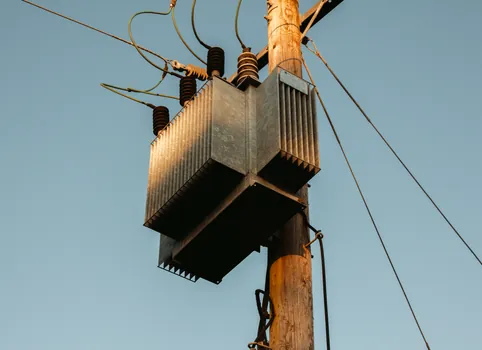
The expedite path has four failure modes that buyers underestimate until they hit them [S1][S3].
First, no contractual delivery date. Most expedite quotes come with a "best effort" or "target" delivery language, not a liquidated-damages clause, because the OEM knows they cannot commit to a date they do not control. Second, raw-material reallocation risk: if your expedite diverts copper or GOES from another customer's order, that customer gets delayed, and the OEM's commercial team will eventually push back on your slot. Third, test and inspection hold: even an expedited unit must clear the same routine test sequence as a standard-priority build, and short-cutting the test plan is the fastest way to fail a pressure transmitter commissioning loop on a substation secondary. Fourth, logistics drag: crating, permitting, oversize-load escorts, and site rigging can each add 2-4 weeks that the OEM's expedite does not control, and a transformer sitting on a truck is a transformer not earning revenue [S3].
The freight dimension deserves its own flag. Expedited freight in 2026 means direct pickup-to-delivery with no terminal transfers, and the rate premium for time-critical shipping on a 200,000 lb transformer is meaningful, separate from the OEM's own expedite fee [S6]. Some manufacturers control transportation in-house to compress this leg; others subcontract, which is where unpredictable delays enter the schedule.
Trackable signals for the next quarter
Three signals are worth watching into the end of 2026. First, the DOE 2024-2025 transformer rulemaking implementation timeline: any relaxation of efficiency compliance windows frees up factory capacity for existing orders. Second, GOES mill announcements: Cleveland-Cliffs and the handful of other domestic producers have signaled capacity additions, but commissioning dates for new grain-oriented lines run in years, not quarters. Third, hyperscale data center capex pacing: the 40-50% electrical share of the $11.3M/MW build cost means any major cloud operator pulling forward or pushing back capacity directly shifts the OEM order book, and with it the leverage a buyer has when negotiating an expedite slot [S1].
For related reading on how supply tightness cascades through adjacent electrical equipment categories, see this analysis of SCARA robot pricing dynamics under sustained demand pressure, which uses a similar capacity-constraint framework on a different component class.