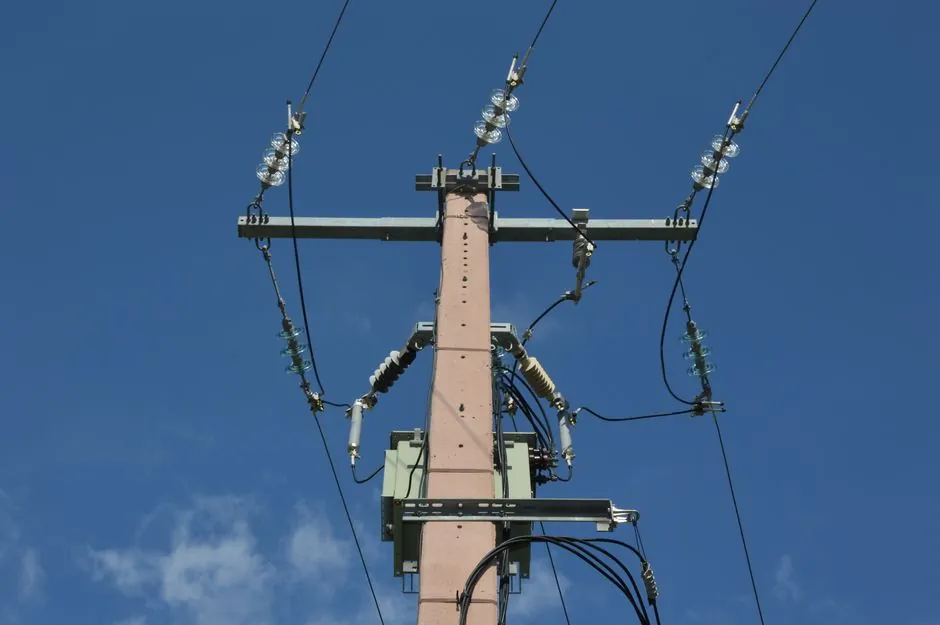
Extra-high-voltage cable capacity at the four Western suppliers is effectively sold out through 2026, with combined disclosed transmission backlogs of roughly USD 48.6 billion: Prysmian USD 19.9B, NKT USD 15.8B, Nexans USD 9.0B, plus Taihan's USD 2.9B group backlog [S1].
Order intake has run ahead of factory throughput, and the IEA's February 2025 transmission supply-chain report quantified the squeeze: transmission cable prices nearly doubled between 2019 and 2024, procurement lead times stretched to two to three years for AC transmission cable and five years or more for HVDC cable, and only about 60 specialized cable-laying vessels existed worldwide [S1].
Where the Backlog Sits: Suppliers, Voltage Bands, Order-Book Mix
Twelve publicly listed power-cable manufacturers were screened for HV (60 kV and above) and EHV (220 kV and above) capability; six disclose a directly comparable backlog, and the spread is wide [S1]. Prysmian's USD 19.9B Transmission backlog (Q2 2026) is the largest single line in the table, followed by NKT at USD 15.8B (Q1 2026 high-voltage backlog) and Nexans at USD 9.0B (H1 2026 PWR-Transmission adjusted order book); Cenergy Holdings holds USD 3.4B in cables-segment backlog at end-2025, Taihan USD 2.9B at Q2 2026, and Riyadh Cables USD 1.5B at Q1 2026 [S1].
Submarine and HVDC capability is concentrated in a smaller group: Prysmian, Nexans, and NKT run turnkey supply-and-install models with seven, three, and one cable-laying vessels respectively; ZTT covers offshore wind export and inter-array cable; Hengtong runs submarine power plus communications; Taihan has two vessels and has developed a 525 kV land-cable product; LS Cable (LS Corp exposure) is in mass production at 525 kV [S1]. The remaining listed names (Sumitomo Electric, KEI Industries, Polycab India, Riyadh Cables) are land-cable only or sub-400 kV, which is why their backlogs are not used as a proxy for EHV tightness [S1]. For context on how EHV cable and related accessories fit into substation buildouts, see the cable gland and cable tray reference pages.
Why the Bottleneck: HVDC Demand, Vessel Scarcity, Insulation Limits
Demand-side pressure is structural, not cyclical: the IEA's Electricity 2026 report forecasts global electricity demand growth of 3.6% per year from 2026 to 2030, roughly 50% faster than the previous decade, lifting consumption from 28,200 TWh in 2025 to 33,600 TWh in 2030, with more than 2,500 GW of generation projects in global connection queues [S1]. The same report estimates annual grid investment of around USD 400 billion must rise by roughly 50% by 2030 to clear that queue [S1].
Supply-side constraints are physical. Neubauer et al. (2025) model roughly 140,000 km of additional HVDC cable installed in Europe by 2050 and conclude that modeled commodity-price increases from HVDC demand are negligible, meaning the bottleneck is plant and installation capacity, not copper or aluminium [S7]. The IEA counted only around 60 specialized cable-laying vessels worldwide as of early 2025; Nexans added a third vessel, the Nexans Electra, formally handed over in May 2026 with three turntables, to relieve that constraint [S1]. The same physics shows up in plant economics: IMARC's August 2026 DPR puts raw materials at 68-78% of operating expense for a 10,000-30,000 MT/y HV cable plant, utilities at 10-14%, and gross margin at 14-22%, which leaves limited room to ramp output faster than the insulation extrusion lines and CV (continuous vulcanization) towers can run [S5].
New Capacity Coming, But Mostly 2027 and Later
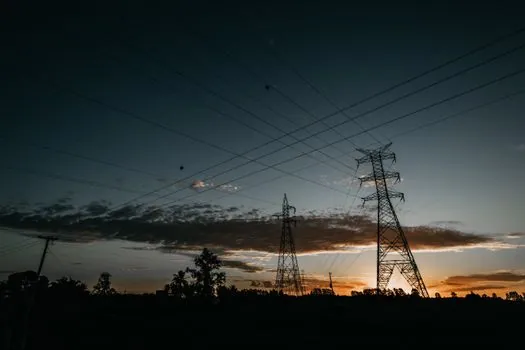
Capacity additions are concentrated in 2027-2030 commissioning windows. Taihan is building Vietnam's first 400 kV EHV cable plant on a 605,000 sq ft site adjacent to its existing cable factory, with construction scheduled to begin in the first half of the build window and operations targeted for 2027; this is Taihan's first overseas EHV production base [S2][S6]. Sumitomo Electric lists comprehensive production-through-installation services for HV cable, including DC cable systems, under its Environment and Energy segment [S3].
Capacity economics shape siting decisions. IMARC's feasibility template sizes a greenfield HV cable plant at 10,000-30,000 MT/y and the global HV cable market at USD 46.40 billion in 2025, growing to USD 70.40 billion by 2034 at a 4.6% CAGR from 2026 to 2034 [S5]. The high voltage cables market is valued at USD 37.80 billion in 2025, projected to grow to USD 39.76 billion in 2026 [S4]. The disconnect between announced demand (140,000 km of new European HVDC by 2050) and on-order Western capacity is the reason lead times are not expected to normalize inside 2026 [S7].
Selection Criteria: Who EHV Capacity Is For, and Who Should Look Elsewhere
EHV and HVDC cable is the right answer for: offshore wind export circuits above 220 kV, cross-border HVDC interconnectors, and onshore transmission rebuilds where corridor or right-of-way constraints force underground AC at 400 kV or 525 kV [S1][S6]. It is the wrong answer for: distribution feeders (use medium-voltage cable and standard medium-voltage VFD drive cable instead), short substation links inside a single switchyard, and any project where the schedule can absorb a two to three year AC lead time, since AC HV cable is the relatively easier slice of the backlog [S1].
Decision criteria for choosing a supplier: (1) voltage ceiling in mass production, 525 kV (LS Cable, Taihan) versus 400 kV (KEI, Riyadh Cables, Taihan Vietnam) versus full HVDC turnkey (Prysmian, Nexans, NKT) [S1]; (2) installation scope, turnkey supply-and-install versus supply-only, where supply-only buyers need to contract a separate installer and a vessel slot [S1]; (3) subsea or land-only, with the four subsea turnkey contractors controlling nearly all of the deepwater HVDC install pipeline [S1]; (4) order-book vintage, since the same Q2 2026 backlog number at Prysmian versus Q1 2026 at NKT reflects different reporting calendars and is not directly comparable [S1].
Failure Modes and Constraints Buyers Should Track
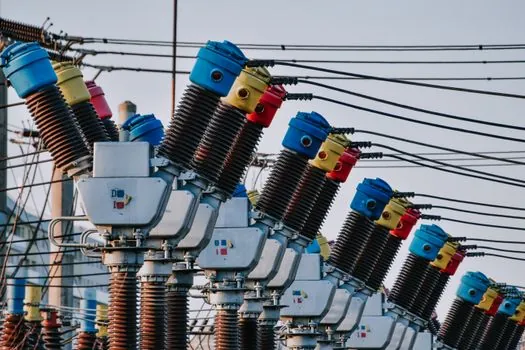
The dominant failure modes on EHV projects are schedule, not unit price. IEA's 2025 reading of procurement lead times was two to three years for transmission cable and five years or more for DC cable, and vessel availability is the binding sub-constraint, since only about 60 cable-laying ships exist globally and each EHV campaign needs one for the full campaign duration [S1]. A buyer placing an order in Q4 2026 should plan on a 2029 to 2031 delivery slot for new HVDC, and a 2028 to 2029 slot for new 400-525 kV AC land cable, absent a cancellation elsewhere in the queue [S1].
Material and qualification risks are real but smaller. XLPE insulation extrusion and CV tower throughput cap how fast any single line can ramp, and 525 kV qualification cycles typically run 18-30 months for a new factory, which is part of why Taihan's Vietnam site is targeting 2027 operations rather than 2026 [S2][S6]. A secondary risk is standards fragmentation: HVDC cable systems are qualified under CIGRE TB 496 and TB 722 in Europe, with IEC 62895 covering DC land cable, while 400-525 kV AC cable qualification follows IEC 60840 and IEC 62067; a project that mixes AC and DC sections needs both qualification tracks.
Trackable Signals for the Next Two Quarters
Three signals will indicate whether the 2026 sold-out condition extends into 2027: (1) Prysmian's H1 2026 Transmission backlog update versus the USD 19.9B Q2 2026 print, where a flat or rising figure confirms that intake is still running ahead of deliveries; (2) the Taihan Vietnam groundbreaking and first 400 kV qualification run, scheduled within the 2027 operations target; (3) vessel additions, where each new deepwater cable-laying ship (Nexans Electra-class follow-ons) tightens the install side of the equation but not the factory side [S1][S2][S6]. Buyers planning 2028-2030 energization should also watch the IEA's next grid-supply update, since the 2,500 GW queue and the USD 400 billion baseline spend figure are the leading indicators for whether Western EHV order books stay booked through 2027 [S1].
See also our earlier report, Air Impact Wrench Free Speed Ratings: What RPM Ranges Mean for Bolting Jobs.