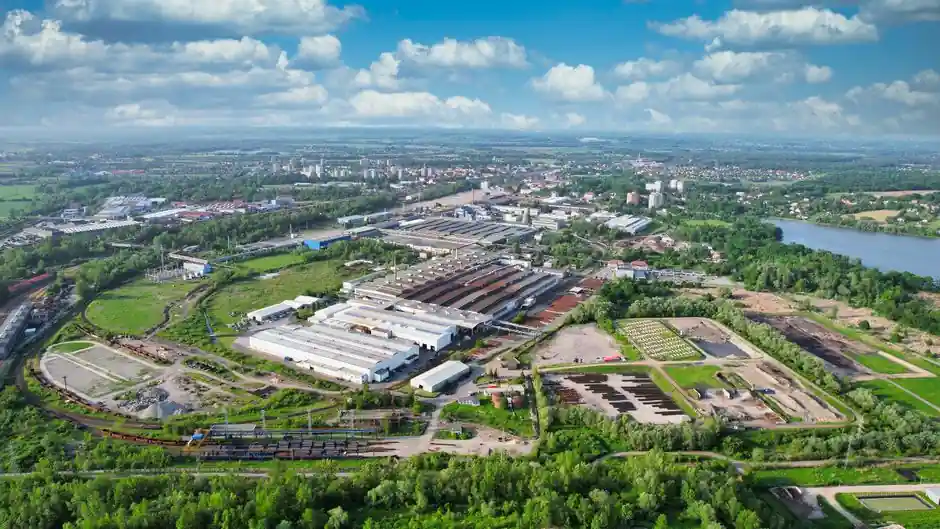
Ferrochrome remains the indispensable chromium carrier for stainless steel, with high-carbon FeCr (4-8% C) feeding 300- and 400-series grades and low-carbon FeCr (under 0.1% C) reserved for 304, 430, and 410 chemistries where carbon must be tightly controlled [S3].
South Africa holds 75% of known global chrome ore reserves, produces 57% of current chrome output, and exports roughly 12.5 Mtpa, of which more than 70% flows to Chinese smelters [S2]. This single chokepoint defines the upstream economics of the entire FeCr-to-stainless chain.
Upstream: Chromite Concentration, Grades, and Mining Structure
South African chrome output splits three ways: integrated producers contribute 48% of ore, non-integrated exporters 22%, and UG2 reef by-product from platinum miners 30%, the latter two groups feeding the export channel to Chinese ferrochrome smelters [S2]. Kazakhstan is the only other reserve base of comparable scale, but no third country has material primary chromite capacity. CAS 11114-46-8 covers FeCr alloy, with the underlying chromium (CAS 7440-47-3) and iron (CAS 7439-89-6) inputs supplied almost exclusively by chromite mining at this upstream tier [S3].
UG2 by-product chrome is a structural lever for platinum miners: it lowers their effective cost base, but it also creates supply volatility that the integrated FeCr producers must absorb when UG2 concentrator throughput shifts. For European buyers, the upstream risk is concentrated, not diversified.
Midstream Smelting: Capacity, Energy, and the South Africa-China Flip
Global ferrochrome production is approximately 12.8 Mtpa, with China at 5-6 Mtpa and South Africa at 3.6 Mtpa; South Africa's share of global FeCr has dropped from 39% in 2009 to roughly 27% today, while China rose from a marginal producer in 2002 to over 40% market share [S2]. All Chinese ferrochrome is consumed domestically by Chinese stainless steel mills, removing a flexible swing supplier from the export market.
South Africa retains a technology edge in smelting, with current focus on pre-heating of furnace feed, direct-current arc furnaces, and processing of fines to cut energy intensity [S2]. For a spec engineer, the practical signal is that DC furnace and pre-heated charge FeCr is becoming a procurement category in its own right, with measurably lower MWh/t footprints than legacy submerged-arc product.
Downstream: Stainless Steel, Foundry, and Refractory Off-Take
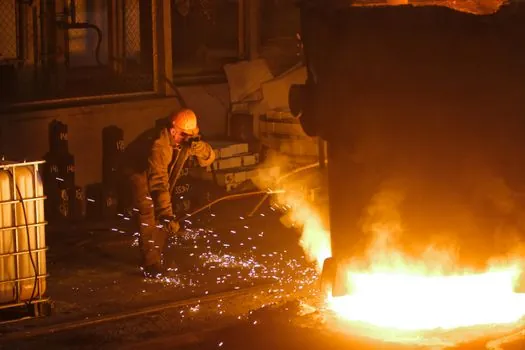
HC FeCr (4-8% C) is the workhorse charge for carbon and alloy steel production, while LC FeCr (under 0.1% C) is specified for stainless steel, foundry chromium enrichment, tool and alloy steels, and chromite-based refractory bricks and crucibles used in steelmaking furnaces and kilns [S3]. Standard stainless applications include 304 (kitchen equipment, automotive trim), 430 (appliance and architectural panels), and 410 (cutlery and wear-resistant parts).
Specialty downstream outlets are higher in margin and lower in volume: aerospace and energy turbines, jet engine components, heat exchangers, chemical processing equipment, marine hardware, and medical devices all draw on LC FeCr to hold corrosion resistance while keeping intergranular carbide precipitation in check [S3]. For procurement, this means LC FeCr supply tightness maps directly to 304L/316L stainless order books, not to commodity construction demand.
Vertical Integration as a Supply-Security Strategy
Leading producers are moving to control chromite mining, FeCr smelting, and stainless melting under one balance sheet to lock in feed and dampen price volatility [S1]. Glencore runs the full chromite-to-FeCr chain, Samancor leverages South African ore plus long-term stainless contracts, Outokumpu is backward-integrated specifically to secure FeCr for its own stainless furnaces, and Yildirim Group spreads capacity across Turkey and Kazakhstan to spread reserve risk [S1].
Eurasian Resources Group and Assore (via Assmang) compete on ore grade and energy efficiency, while Tata Steel and Hernic Ferrochrome anchor the Indian and African export channels respectively [S1]. The pattern is consistent: companies are investing in upstream mining assets and downstream steel production to enhance supply chain control [S1].
Decision Criteria: HC FeCr vs LC FeCr vs MC FeCr
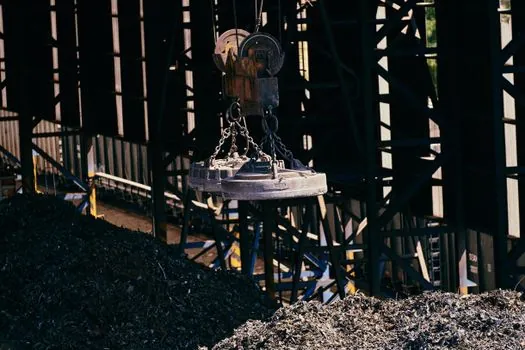
For a spec engineer choosing grade, the decision is dominated by downstream carbon tolerance and end-use corrosion duty. HC FeCr (4-8% C) is the lowest-cost option and the right pick for carbon steel, alloy steel, and most foundry work where carbon is not a control parameter. LC FeCr (under 0.1% C) is mandatory for austenitic 304/304L and ferritic 430 stainless, plus any application requiring resistance to intergranular corrosion per standard stainless metallurgical practice. Medium-carbon FeCr sits between the two and is typically a special-order item for tailored alloy targets [S3].
REACH compliance under Regulation (EC) 1907/2006 is the standard regulatory gate for European supply, and technical data sheets should be requested for any imported FeCr lot to confirm carbon, sulfur, phosphorus, and trace metal ceilings against the downstream stainless melt recipe [S3]. For stainless 304/430/410 specifically, chromium recovery in the EAF or AOD vessel is also a function of FeCr sizing and FeCr silicon content, so physical form matters alongside chemistry.
Limitations, Constraints, and Failure Modes
The structural risk is single-source concentration: 75% of reserves and 57% of chrome output sit in one country, and the largest single export channel runs to a single consuming country [S2]. South Africa has lost FeCr share to China largely on electricity cost and Chinese domestic stainless demand, not on ore quality, so any southern African grid constraint or export-rail disruption propagates straight into global FeCr availability.
Illegal mining and pre-buying of junior mine output are documented upstream failure modes, and they are exactly the factors that push integrated producers to lock in captive ore rather than rely on spot chromite [S2]. For a buyer, the failure mode to spec against is FeCr lot-to-lot carbon variance, since LC FeCr drift above 0.1% C will downgrade 304/430 stainless corrosion performance and is rarely caught without a per-lot assay.
Two trackable signals for the next planning cycle: the rate at which DC furnace and pre-heated charge FeCr capacity comes online in South Africa, given the documented energy-efficiency push [S2]; and whether integrated miners and stainless mills continue to consolidate upstream chromite assets under one owner to lock the South African ore base against further Chinese offtake, as the investment pattern through 2026 has consistently indicated [S1].
For component-level specifications, see construction machinery and equipment, lamps and light fittings, and lighting equipment and electric lamps.
See also our earlier report, Lithium Battery Procurement: A Spec-First Buyer's Workflow for 2026.