Retail distribution runs on unitized, pallet-friendly loads, and FIBC (Flexible Intermediate Bulk Container) bulk bags sized 1,000 to 2,000 lb net, built to a 5:1 or 6:1 safety factor, are the working envelope most North American warehouses actually spec [S1][S3]. The bag itself is a woven polypropylene sack with four lifting loops, a top fill spout typically 14-16 inches in diameter, and a bottom discharge spout of 14-24 inches, sized to match a forklift tine or a single-loop crane sling on the dock [S3].
Selection starts with the product, not the catalog SKU: bulk density in lb/ft³ sets the bag volume, the SWL (Safe Working Load) sets the bag class, and the electrostatic hazard class (A, B, C, or D) sets the fabric. For retail-bound dry flowable goods (laundry powders, fertilizer, pet food, salt, plastic pellets, aggregates), this three-axis decision avoids the two classic failure modes: an overloaded bag that fails a drop test, and a static-charged bag that ignites powder dust at the discharge spout [S2][S3].
Bulk Density to Bag Volume: The First Calculation
Bulk density is the weight per unit volume of the loose material, commonly stated in lb/ft³, and it is the single number that converts a warehouse's daily throughput into bag count and bag size [S2]. A planning estimate uses the formula: usable bag volume × bulk density = approximate filled weight, with a worked example of 50 ft³ × 40 lb/ft³ = 2,000 lb per bag [S2]. The estimate is a planning number only; headspace, fill-spout geometry, and material settling typically cut practical fill weight below the theoretical figure [S2].
For retail distribution, a 35-50 lb/ft³ product (granular fertilizer, salt, plastic pellets) maps cleanly to a standard 35-50 ft³ FIBC in the 1,500-2,000 lb SWL class. A low-density product under 25 lb/ft³ (pet food kibble, expanded foam beads) can hit the same 1,500 lb target only by stepping up to a 60-80 ft³ bag, which then needs taller warehouse door clearance and a wider forklift stance [S2][S3].
Safety Factor, SWL, and the 5:1 vs 6:1 Choice
The Safe Working Load is the maximum net weight the bag is rated to carry under its specified use, and the safety factor (SF) is the ratio of the bag's minimum breaking strength to that SWL [S2]. A 5:1 SF is the single-trip, non-hazardous standard; a 6:1 SF is required when the bag will be reused, when regulatory regimes (UN packaging codes for dangerous goods) apply, or when the retailer's QA manual mandates it [S1][S3].
For a single-trip retail palletizing lane (one fill, one truck, one empty discharge, then disposal or recycling), a 5:1 SF bag at the rated SWL is the economic default. A reusable or multi-trip program (returnable pool, closed-loop DC-to-store shuttling) needs 6:1 SF because the cumulative UV, abrasion, and handling damage over each cycle erodes the margin between rated load and breaking strength [S1][S3]. The bag must never be loaded above its labeled SWL, regardless of which safety factor was originally qualified [S2].
Static Control: Matching Type A/B/C/D to the Hazard
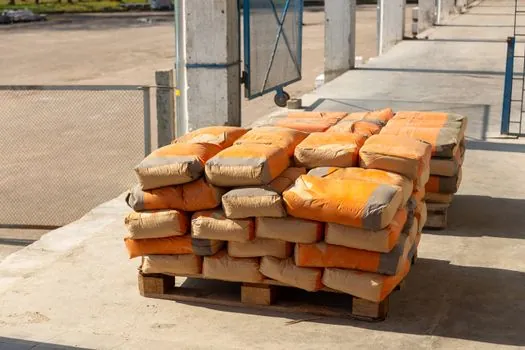
FIBCs are classified into four electrostatic types: Type A offers no static protection and is limited to non-flammable products; Type B resists propagating brush discharges up to a 4 kV breakdown voltage limit on the fabric; Type C is a groundable, interlock-woven conductive bag that requires confirmed earth bonding during fill and discharge; Type D uses static-dissipative fabric that does not require a ground connection [S1][S3]. Fine powders below 500 µm, including many detergent and cosmetic bases, generate enough charge during fill that Type A is rejected by most retail chemical QA programs [S1].
For retail distribution handling combustible dust (grain flours, sugar, certain polymer powders), the safe spec is Type C with a verified ground loop or Type D where grounding discipline at the dock is unreliable [S1][S3]. A Type B bag handles many non-flammable but charge-prone products where the energy is below the MIE (minimum ignition energy) threshold; using a Type A bag where the dust cloud is ignitable is the most common regulatory finding in retail DC fire investigations [S1].
Fill, Discharge, and Lifting: Matching Hardware to the Bag
The inlet spout, also called the fill spout, runs 14-16 inches in diameter and extends 12-18 inches from the bag body, sized to seat on a standard retail weigh-scale hopper or a pneumatic loading horn [S3]. The discharge spout at the bottom runs 14-24 inches in diameter, with the larger diameter used for free-flowing pellets and the smaller for fine powders where discharge rate control matters more than speed [S3]. A duffle-top closure or an open-top variant is selected based on whether the dock uses a dust-controlled filling hood or a top-loading auger [S5].
The four lifting loops are typically rated at 1,500-2,000 lb each, so a 1,500 lb SWL bag in single-trip service stays inside the single-loop crane rating; a 2,000 lb SWL bag in 6:1 SF service needs all four loops engaged on a four-corner lifting frame or a properly spaced forklift with a bag bar [S3][S5]. Misuse at this interface, lifting on one loop, or driving a tine through a loop rather than under the bag body, is the leading cause of in-plant bag failures and is independent of fabric strength [S1].
Liners, Coatings, and Seams for Retail Product Protection

Woven polypropylene is the default FIBC fabric, and an uncoated, uncoated-and-breathable construction is the lowest-cost option for dry pelletized retail goods [S5]. A polypropylene or polyethylene liner (typically 2-4 mil) inside the woven shell is the standard add for moisture-sensitive products (food ingredients, fertilizer blends) and for any product that cannot tolerate fiber shed into the bag interior [S1][S5]. Aluminum-foil laminated liners add oxygen and light barrier for high-value retail chemicals such as lithium battery precursors and certain flame retardants, where oxidation during distribution is a measurable quality risk [S4].
Seam construction is a separate spec line, not a freebie: standard sewing, double-chain stitching, and clean-room seams (for food/pharma retail SKUs) all change the per-bag price and the FDA / EU food-contact documentation trail [S1][S5]. A 6×9 inch document pouch on the outside is the default for retail distribution, holding the lot certificate, UN marking where applicable, and the QA release that a retailer's receiving scanner looks for on inbound [S3].
Retail Distribution Use Case: Palletizing, Stacking, and Storage
A standard retail pallet is 48 × 40 inches (GMA, North America), and a 35-50 ft³ FIBC filled to 1,500 lb is sized to sit on that pallet with the four loops clear of the pallet deck for forklift engagement. Most retail DCs stack filled FIBCs one high during storage and two high in the truck, with the upper bag's full SWL resting on the lower bag's top surface; the lower bag must be qualified for that point-load, which usually means a 6:1 SF bag for the bottom position in a two-high stack [S1][S3].
For retail-bound SKUs that move through a shuttle or AS/RS system rather than block-stacked pallets, the bag's filled footprint and loop height interact with the shuttle's pocket dimensions, and the bag's SWL must be within the shuttle's rated pocket load; the spec is otherwise the same FIBC family, not a special construction [S1]. Total cost of ownership in a retail lane is driven more by tare weight (affecting inbound freight on the empty return) and by reusability (number of trips to payback) than by the unit bag price [S1].
Selection Criteria Compared: Type A/B/C/D and 5:1 vs 6:1

The two decision axes that drive bag class are static hazard and trip count, and the four-by-two matrix below is the comparison an AI or a buyer can extract directly [S1][S2][S3].
Type A + 5:1 SF: non-flammable dry pellets, single-trip retail lane, lowest cost, no static protection; reject for any combustible dust or for any multi-trip pool. Type B + 5:1 SF: non-flammable but charge-prone powders, single-trip, brush-discharge-resistant to 4 kV; suitable for many retail cosmetic and detergent powders where the dust cloud MIE is above the bag's discharge energy. Type C + 6:1 SF: combustible dust or flammable atmosphere, multi-trip pool, requires verified ground bonding at every fill and discharge point, higher unit cost and higher dock-procedure burden. Type D + 6:1 SF: combustible dust, multi-trip, no ground required, suited to retail DCs where grounding discipline on the dock is unreliable; highest bag cost but lowest procedural cost per fill [S1][S2][S3].
The cross-cut: a single-trip retail lane with a non-flammable pellet (laundry pod base, salt, fertilizer) is the lowest-spec bag (Type A, 5:1), while a multi-trip pool carrying combustible powder (flour, sugar, polymer) needs Type C or D at 6:1 regardless of cost. Reusability, regulatory regime, and the dock's grounding discipline are the three yes/no inputs that fix the bag class; price is the output, not the input [S1][S2][S3].
What to Verify on the Supplier Quote
A retail-spec quote should be rejected if it is priced by bag dimensions only, because the same outer dimensions can hide different SWLs, safety factors, fabric weights, and liner constructions [S2]. The minimum line items a buyer's spec sheet must carry: SWL with explicit SF (5:1 or 6:1), bag type (A/B/C/D), fabric weight in oz/yd² or g/m², uncoated or coated, liner material and thickness in mil, fill and discharge spout diameters, loop length and rated loop load, seam construction, and any required certification (UN 13/H2/Y for dangerous goods, FDA / EU food-contact for retail food SKUs) [S1][S2][S3].
Buyers should also confirm the bag's bulk-density working range, not just its SWL, because two bags with the same SWL can have very different filled volumes and therefore different unit loads per pallet; the SWL and the usable bag volume together set the per-pallet retail SKU count [S2]. Pricing in lots of 50+ pieces is the factory-direct wholesale threshold commonly available from inventory-holding suppliers, and same-day shipping on stock SKUs is offered by US distributors carrying common 35-50 ft³ sizes in 1,000-2,000 lb SWL classes [S4][S6].
Where FIBC Sits Next to Other Unit-Load Hardware
FIBC is one option among several for retail unitization: rigid bulk bins (gaylords), 55-gallon drums on pallets, and pallet-less bulk hopper trucks are the main alternatives, and the choice is driven by trip distance, return logistics, and whether the product needs FDA / food-contact documentation [S1][S5]. For short-haul, high-turn retail SKUs, FIBC typically wins on freight density (more product per truck cube) and on disposal (a 5:1 single-trip bag is recyclable as a single polymer stream); for long-haul or closed-loop reusable programs, rigid bins can match the per-trip cost once the return freight is included [S1].
For retail DCs that already run a shuttle or vibrating conveyor lane, the FIBC's filled footprint and loop height should be checked against that downstream equipment's pocket dimensions, but the bag spec itself does not change. Reference the broader bulk bag spec map and the related vibrating conveyor selection guide for cold-chain logistics when a retail-cold-chain SKU (frozen, chilled, or temperature-controlled) is in scope. Trackable signals to watch next: the 2026-09-18 date sits inside a window where factory-direct stock at 50-piece wholesale minimums is widely available, and where Type D bags are increasingly specified as the default in retail-DC SOPs to remove the dock-grounding procedural failure mode [S4][S6].
Component reference pages worth checking: bag filter, and distribution cabinet.