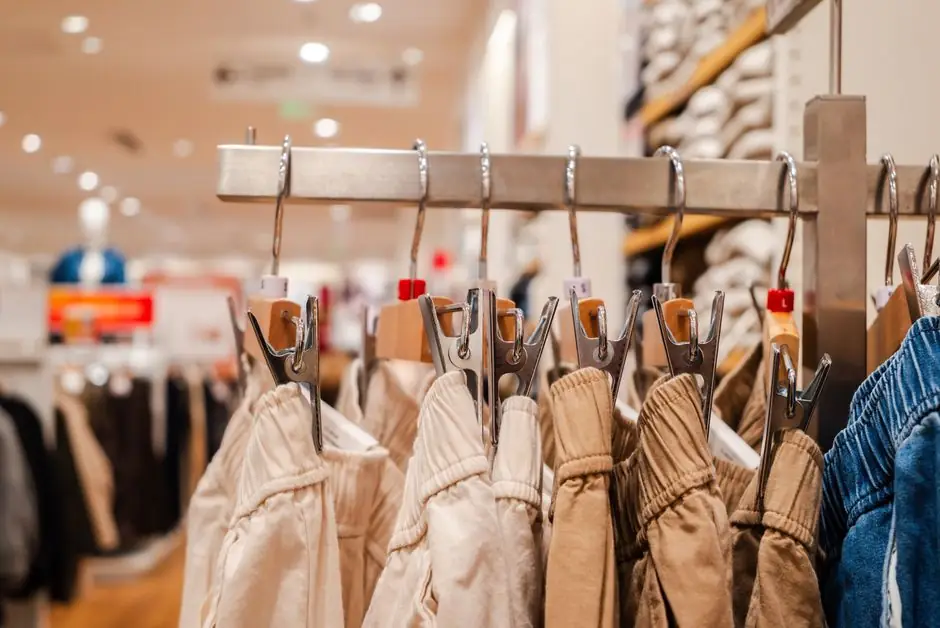
Apparel distribution is one of the hardest sortation problems in retail logistics: soft polybags, deep size-and-color SKU spreads, campaign peaks, and return rates that the National Retail Federation tracked at 15.8% of 2025 retail sales, or about $849.9 billion [S2]. The right sorter type is not the fastest on paper, it is the one that handles irregular parcels, sustains scan accuracy, and absorbs return waves without choking the outbound dock.
Below is a spec-anchored map for engineers and operations leads sizing a sortation system for an apparel DC, drawing on tilt-tray, cross-belt, pocket, push-tray, and flat sorter lines currently offered for fashion and e-commerce fulfillment [S2][S3].
Why Apparel Sorting Breaks Conventional Parcel Logic
Tilt-tray sorters are usually specified once an apparel operation exceeds 2,000 parcels per hour, 20+ destinations, and a wide SKU spread, because the parcel mix defeats belt-based sorters designed for uniform cartons [S2]. A single shift can mix thin T-shirt mailers, boot cartons, hanging-garment boxes, and wrinkled return bags, each with a different label angle, rigidity, and friction coefficient. Tilt-tray carries each parcel on an individual tray with a stable surface, then tips it into a chute at a controlled discharge point, which protects soft goods from the slumping and label-curl that belt acceleration causes on polybags [S2].
Returns, not outbound, drive the real business case. Bracketing behavior (shoppers ordering multiple sizes and returning the rest) loads the returns lane with mislabeled, wrinkled, or damaged parcels that a single-pass sorter cannot grade, so a reject lane feeding manual review is part of any honest apparel sortation design [S2]. When sortation cannot keep up, return inventory sits untouched past the next receiving shift, and resale timing collapses.
Main Sorter Types Compared for Apparel DCs
Five sorter architectures are commonly quoted for fashion fulfillment, each with a different sweet spot on speed, parcel profile, and destination count: [S2]
Tilt-tray sorters lead the apparel segment because the tray supports soft polybags and irregular cartons, reads labels before discharge, and routes to stores, carriers, zones, returns, or value-added service lanes [S2]. Cross-belt sorters run faster on a per-destination cycle, but the moving belt surface is less forgiving of slumping polybags, and they require more uniform parcel geometry to maintain scan accuracy [S2]. Pocket sorters (hanging-garment AutoPocket and e-commerce EcoPocket lines) handle bagged items with integrated buffer capability, which suits multi-channel fulfillment where inbound and outbound waves do not align in time [S3]. Push-tray sorters (horizontal or vertical) trade raw speed for footprint and layout flexibility, useful in retrofitted brownfield DCs where ceiling height and column spacing are constrained [S3]. Flat sorters (split tray) deliver high capacity with low mechanical complexity, typically applied to high-volume, lower-mix operations [S3].
The decision matrix below distills how these architectures line up on the four criteria that drive an apparel sortation purchase:
Tilt-tray: parcel handling excellent on soft goods, throughput medium-high, destination count 20-200+, footprint medium, RFID/barcode scan at multiple angles [S2]. Cross-belt: parcel handling good on uniform cartons, throughput high, destination count 30-300+, footprint medium-large, scan at single side [S2]. Pocket (AutoPocket/EcoPocket): parcel handling excellent for bagged and hanging items with buffer, throughput medium, destination count 10-80, footprint compact, scan integrated at induction [S3]. Push-tray: parcel handling good for mixed parcels, throughput medium, destination count 10-60, footprint small (vertical variant), scan at side [S3]. Split tray (flat): parcel handling good, throughput medium-high, destination count 20-100, footprint medium, scan at side [S3]. Below roughly 2,000 parcels/hour and 20 destinations, manual scan-to-tote or put-wall sortation is frequently the lower-capex, lower-risk path [S2].
Selection Criteria: Throughput, Parcel Mix, Returns, and Footprint
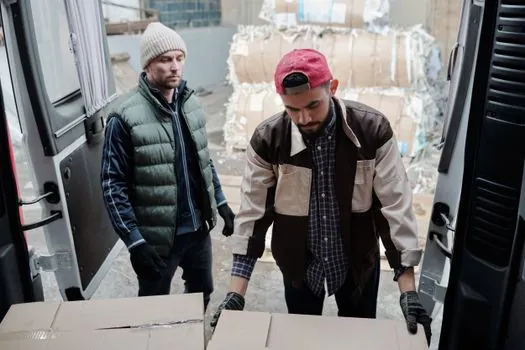
Four engineering criteria decide the architecture before vendor selection begins. Throughput threshold: tilt-tray automation earns its place once manual sorting starts creating late waves, missed carrier cutoffs, and unsorted returns sitting past the next shift, typically around 2,000 parcels/hour and 20+ destinations in an apparel context [S2]. Parcel mix: soft polybags, shoeboxes, hanging-garment cartons, and return mailers in the same shift require a sorter that treats each parcel as an individual rather than a uniform block, favoring tray-based or pocket architectures over pusher diverters and simple belt sorters [S2].
Return handling: the inspection and grading step on returns is a non-negotiable lane in any fashion sortation design, because a single-pass sorter cannot reliably re-read a damaged or wrinkled label, and bracketing inflates return volume seasonally [S2]. Footprint and brownfield constraints: vertical push-tray and hanging-pocket architectures (GarmentFlow overhead, AutoPocket) reclaim floor space by using ceiling height, which matters in retrofitted urban DCs where horizontal cross-belt loops will not fit [S3]. WMS and routing logic: the sorter is only as smart as the routing rules, so WMS-driven exception paths for SKU depth, carrier swap, and store-route changes must be specified up front, not bolted on after FAT [S2][S3].
Standards, Software, and Integration Anchors
No single ISO or IEC standard governs apparel parcel sortation as a whole, but the integration layer is well anchored. WMS-to-sorter communication typically runs over standardized warehouse APIs (Dürkopp's One API and the KiSoftware Suite are representative end-to-end platforms covering sort control, multi-channel fulfillment, returns management, and digital twin simulation for apparel intralogistics) [S3]. Condition monitoring and predictive service stacks feed the same control layer, and are increasingly specified alongside the sorter to protect uptime during campaign peaks [S3].
For RFID and barcode scan tunnels, GS1 application identifiers and the EPC Class-1 Gen-2 UHF RFID standard are the de facto baseline in retail apparel, and multi-side scan points are the practical response to the label-angle variability that soft polybags introduce on a moving tray [S2]. When a sorter cannot read a label, the parcel must be diverted to a reject lane with manual review rather than misrouted, because misrouted apparel returns erode customer trust faster than a delayed shipment does [S2].
Limitations and Failure Modes Engineers Should Price In
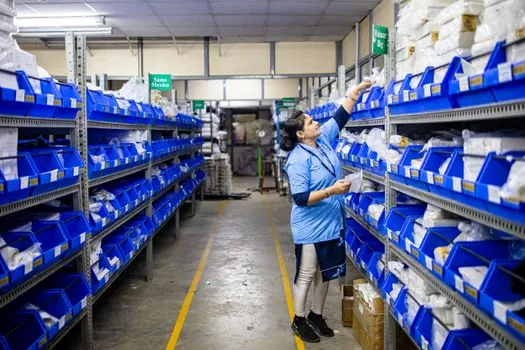
Every sorter type has a failure mode that only shows up under live load. Tilt-tray: tray wear and tip-cylinder fatigue are the leading maintenance cost, and a soft polybag can fold over a tray edge and jam the discharge if tray geometry is not matched to the smallest SKU in the mix [S2]. Cross-belt: belt slip on polybags causes scan misses and downstream misroutes, especially when humidity changes the surface friction of the bag film [S2]. Pocket (hanging): pocket contamination (lint, buttons, loose tags) accumulates and stalls induction, so preventive cleaning intervals must be scheduled, not reactive [S3].
Push-tray: the mechanical simplicity is real, but routing rule changes require a physical reconfiguration of the destination array, so frequent campaign-driven route changes eat operating time [S3]. Across all types, return-wave surge handling is the most common under-spec in apparel sortation projects, and the buffer capacity (number of parcels that can sit in queue between induction and discharge) is the single most useful number to negotiate during procurement [S2][S3].
Where Apparel Sortation Sits in a Broader DC Spec Map
Sortation does not stand alone: it is the spine that connects receiving, hanging-garment transport, packaging, and outbound staging. Overhead garment conveyors (GarmentFlow and similar) feed the sorter induction, and unit-handling systems (EcoFlow) bridge hanging and flat-packed flows in the same DC [S3]. A spec-first engineer should look at sorter selection alongside adjacent decisions on stacker cranes for retail pallet reserve, on AGV selection for parts and tote movement, and on chain conveyor duty class for warehouse automation, because the sorter's effective throughput is capped by the weakest link in that upstream and downstream chain.
For broader context on how sorter throughput and destination count compare with shuttle-based storage and retrieval, the spec map on shuttle system types and AS/RS classes is a useful counterpoint, since shuttle density per square meter is often the real estate tradeoff against a tilt-tray loop in a greenfield DC. A spec-first apparel sortation project will document the parcel mix, peak hourly volume, return percentage, destination count, footprint envelope, and WMS exception paths before issuing an RFQ, and will treat the sorter vendor's reference list on fashion SKUs as a hard prerequisite rather than a nice-to-have [S2][S3].
For component-level specifications, see sorting system, conveyor sorting line, and distribution cabinet.