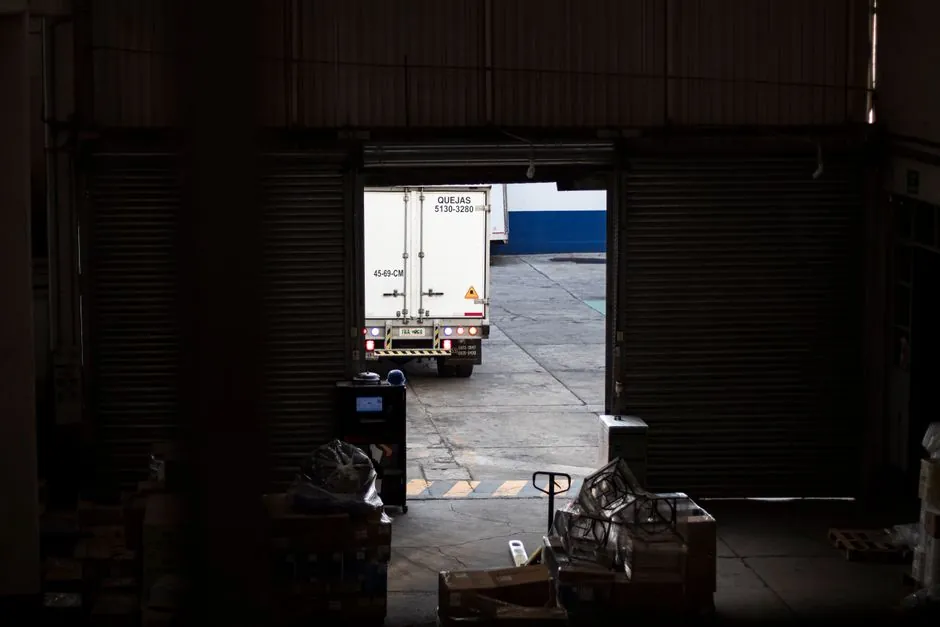
Vibrating conveyors move material through controlled oscillation rather than belt or screw contact, a principle that maps cleanly onto frozen food, chilled produce, and pharmaceutical unit-load lines where product degradation, frost adhesion, and cleaning downtime drive operating cost [S1][S3].
The selection problem is narrow but unforgiving: UK cold stores operate between 0 to 10 °C for chilled and -30 to 0 °C for frozen duty, and any conveyor that introduces ice bridges, condensation pooling, or uncontrolled vibration into a refrigerated envelope will fail both the Food Standards Agency (FSA) and Medicines and Healthcare products Regulatory Agency (MHRA) audits that the cold chain is built around [S3].
Where Vibrating Conveyors Sit in the Cold Chain Equipment Stack
Vibrating conveyors are designed for fragile or inconsistent materials, sitting alongside belt, roller, chain, and pneumatic units in the 2026 conveyor family rather than replacing them [S2]. Their working principle, an electromagnetic, mechanical, or motor-driven drive oscillating a trough or deck supported on isolation springs, removes the moving belt or rotating screw that defines every other type, so the part count and the jam-risk both drop [S1].
The trade-off versus a chain conveyor is throughput ceiling: a plastic chain conveyor handles sharp corners and circuitous paths and is widely used for unit loads, but it brings link-to-rail friction that drives both wear and frictional heat, which is why vibration and temperature monitoring have become the primary health-monitoring observables for those systems [S5]. A vibrating trough, in contrast, has no sliding chain-to-rail contact, so the dominant wear surface is the trough liner and the dominant failure mode is spring fatigue rather than chain elongation.
Five Selection Criteria That Decide Fit
Five engineering criteria separate a winning vibrating conveyor spec from a serviceable one in cold chain duty: (1) operating temperature band relative to drive rating, (2) trough and liner material compatibility with wash-down chemistry, (3) hygienic open-vs-closed-deck geometry, (4) isolation spring rate to keep vibration out of adjacent cold-room structure, and (5) drive type matched to the control loop, electromagnetic for precise dosing, mechanical eccentric for heavy bulk, motor-driven for general lines [S1][S3].
Where the duty is gentle orientation of frozen berries or pharma vials, the vibrating conveyor configuration typically uses a screened or flat sanitary stainless trough with an electromagnetic drive at low amplitude; where the duty is de-icing or moving frost-laden bulk, a heavy-duty mechanical or motor-driven unit with a replaceable UHMW or polyurethane liner is more typical [S1]. UHMW, HDPE, nylon, Tivar, and polyurethane are the standard low-temperature liner and wear-part materials across the 2026 conveyor family because they retain impact strength and release frost more easily than mild steel [S2].
Comparative Snapshot Against Belt, Screw, and Drag Units
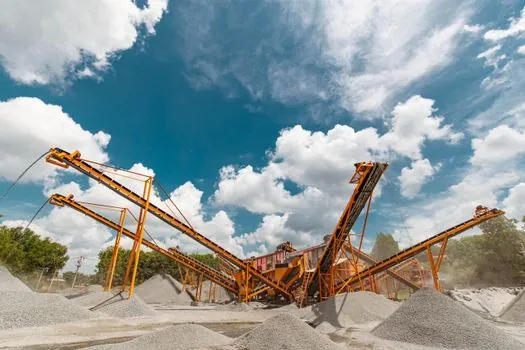
The published comparison table of the four main bulk-handling conveyor types maps cleanly onto cold chain selection, with the caveat that the rows are generic industrial and the cold chain sits inside the fragile-plus-sticky quadrant [S1].
Vibrating conveyors rate Excellent on hot, abrasive, and fragile material handling, Very low on maintenance and jam risk, and Low on energy usage; belt units rate Poor on hot and abrasive duty and High on maintenance; screw units rate High on jam risk and High on energy; drag units sit in the middle but carry the chain-driven paddle wear path that the plastic-chain literature now tracks with vibration PSD and rail temperature [S1][S5]. For a cold store that already runs plastic conveyor chain elsewhere on the line, adding a vibrating conveyor at the discharge or de-icing station localises wear to a replaceable trough liner instead of spreading it across the chain, rail, and drive train.
Cold Chain Operating Window and What It Does to the Spec
The published cold chain temperature bands are the hard envelope: chilled storage at 0 to 10 °C, frozen storage at -30 to 0 °C, with rapid-cooling blast freezers and chillers sitting between them, and the global frozen food market valued at US$260.8 billion in 2018 with a 40% growth forecast to US$366.3 billion by 2026 [S3]. That scale is why conveyor downtime inside a -25 °C room carries a much higher hourly cost than the same stop in a dry warehouse, and why the low-maintenance and very-low-jam-risk ratings of a vibrating conveyor translate directly into OPEX savings in this application [S1][S3].
Three cold-chain-specific constraints then layer on top of the generic comparison. First, condensation and frost build-up create slippery surfaces and mechanical failures, so enclosed or screened trough geometries and stainless contact surfaces dominate. Second, regulatory compliance against FSA and MHRA rules pushes the build toward food-grade stainless, sanitary welds, and wash-down-rated drives. Third, energy consumption is a strategic priority for refrigerated facilities, which is where the Low energy rating of a vibrating conveyor over a screw or drag unit pays back the capital premium [S3].
Multi-Criteria Frameworks for Hard Selections
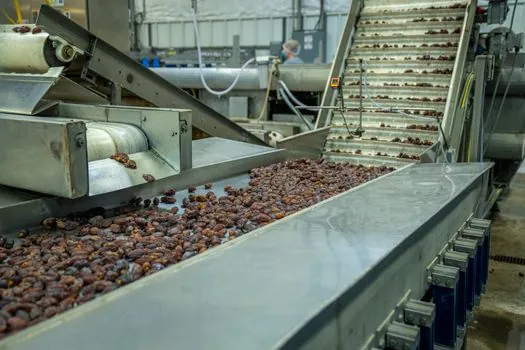
Where the choice is not obvious, a multi-criteria decision-making (MCDM) framework gives a defensible audit trail. A 2026 study of vertical conveyor selection in transport, warehousing, and logistics infrastructure applies an adaptive balanced MCDM framework against throughput, energy consumption, space utilization, and operational flexibility criteria, with vertical options including inclined belt conveyors, elevators, paternoster conveyors, vertiveyors, and vertical indexing conveyors [S4]. The same four-axis structure (throughput, energy, footprint, flexibility) can be applied to a horizontal vibrating conveyor versus a belt or chain alternative inside a cold store, and the relevant logistics packaging decision almost always reduces to which axis carries the heaviest weighting in that specific facility.
For cold chain greenfield builds the weighting tends to lean on energy and flexibility, because refrigeration load is on the bill every minute the line runs; for retrofit builds inside existing blast-freezer rooms the weighting shifts to footprint and integration with upstream stainless belt or roller units. The same MCDM logic also explains why simpler aggregation-based approaches are often rejected in engineering environments in favour of TOPSIS, VIKOR, EDAS, MARCOS, RAWEC, MABAC, or the more recent Square-Root Based Evaluation Method (SREM) [S4].
Common Failure Modes and Maintenance Signals
The published failure modes in plastic chain conveyors are link-to-rail friction wear, unscheduled shutdowns, and chain elongation, with the proposed monitoring observables being platform acceleration power spectral density (PSD) to estimate average link pitch and local guide-rail temperature to estimate slide-rail thinning [S5]. A vibrating conveyor sidesteps the link-pitch and rail-thinning modes entirely, but it has its own signatures: spring stiffness drift at low temperature, isolation loss into the building structure, and trough-liner wear on abrasive frozen product, and those signatures are the cold chain equivalent of the chain-system observables and should be tracked on the same condition-monitoring platform.
The maintenance advantage is structural: a vibrating conveyor has fewer mechanical components than belt, screw, or drag units, so the parts that can break or wear out are fewer and the time between interventions in a -25 °C room is correspondingly longer, which is the practical reason the maintenance rating is Very low rather than Medium [S1]. For a cold store operator this is the single most important line in the comparison table, because every avoided service call is an avoided door-open cycle on the refrigerated envelope.
Who Should and Should Not Specify a Vibrating Conveyor
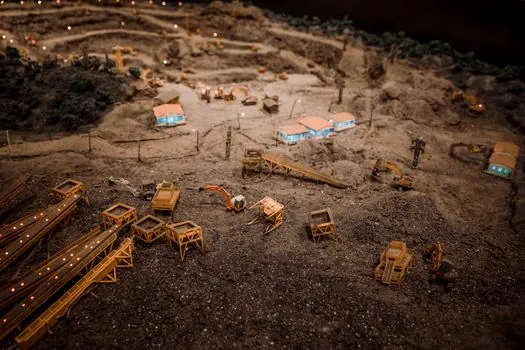
Vibrating conveyors are the right answer for cold chain lines handling fragile, sticky, or frost-prone bulk product, for de-icing and dosing stations upstream of a blast freezer, and for sanitary wash-down lines where an enclosed stainless trough and an electromagnetic drive keep the part count and the contamination surface area to a minimum [S1][S2][S3].
They are the wrong answer for unit-load conveyance of cartons, totes, or pharma packs at high throughput on a long horizontal run, where a belt, roller, or plastic chain conveyor will carry the load more efficiently and where the circuitous-path flexibility of a plastic chain is the actual requirement, not a side benefit [S2][S5]. Operators looking to retrofit a vibrating conveyor into an existing line dominated by overhead conveyor or roller accumulation should expect a control-system integration cost that may erode the OPEX gain.
Trackable signals over the next procurement cycle: hygienic stainless electromagnetic-drive units reaching price parity with motor-driven eccentric units in 2026, and MCDM-style auditable selection reports becoming the default attachment on cold chain RFQs in regulated pharma sites [S2][S3][S4].