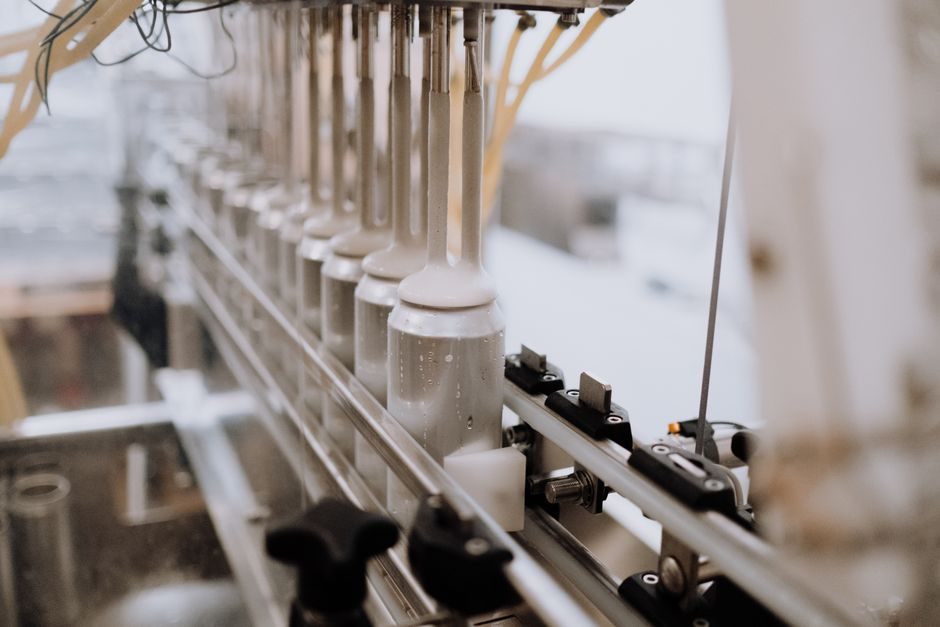
Fluoropolymers are made by polymerising fluorinated monomers (TFE, HFP, VDF, CTFE, ethylene) in aqueous emulsion or suspension, then melt-converting the resin through injection moulding, extrusion, stretch blow moulding or CNC machining [S3][S5].
The dominant industrial chain is: monomer synthesis → aqueous polymerisation with fluorinated surfactant → coagulated/isolated resin → melt processing into stock shape or finished parts; PFA, FEP, PVDF, ETFE and PCTFE are the five grades most commonly converted under that chain [S3][S4].
Polymerisation Routes: Aqueous Emulsion vs Suspension
Industrial fluoropolymer production is built on aqueous polymerisation, where TFE, HFP, VDF or CTFE are dispersed in water with a fluorinated surfactant (perfluoropolyether acid/salt classes are documented in patent literature) and a redox or persulphate initiator under controlled pressure and temperature [S5]. Emulsion routes give sub-micron particle latices that downstream fabricators either coagulate into granules for melt processing or leave as latex for coatings.
Suspension polymerisation skips surfactant and produces larger, free-flowing beads (~30–1000 µm) that are easier to feed into ram extrusion for PTFE, the grade that cannot be melt-processed because its melt viscosity stays above 10¹⁰ Pa·s above its 327 °C melting point. Modified PTFE grades (processable with co-monomers) and most other fluoropolymers are produced by aqueous emulsion with a fluorinated surfactant, with documented patents covering initiator systems and siloxane surfactants [S5].
For a wider view of how polymer plants wire these reactors into MES, IIoT and 2026 automation stacks, see the polyethylene smart-manufacturing sensor reference — the same general ISA-95 hierarchy applies, even though fluoropolymer plants run at far lower throughput.
Five Workhorse Conversion Processes
Savillex documents four workhorse fluoropolymer conversion processes — injection moulding (PFA, FEP, PVDF, ETFE, PCTFE), stretch blow moulding (PFA, FEP, ETFE, PCTFE), fusion welding (PFA, FEP) and CNC/lathe/milling of solid stock — with each resin family needing its own barrel, screw and tool-steel combination [S3].
Process windows are tight. PFA and FEP melt at roughly 260–310 °C and require melt temperatures around 340–380 °C, tool-steel moulds (corrosion-resistant grades such as 1.2316 / 1.2738 modified), and barrel/screw clearances chosen to avoid the high shear that produces bubbles, delamination and flow marks. PVDF runs cooler (~200–230 °C melt window) and tolerates standard tool steel, which is why it is the grade spec'd where chemical resistance and easier processing both matter.
Where sealing and fluid control matter downstream, flow meter and industrial valve bodies in the wetted path are routinely PFA- or PVDF-lined because the bulk metal handles pressure and the fluoropolymer liner handles the chemistry.
Defect Catalogue and Process Lockdown
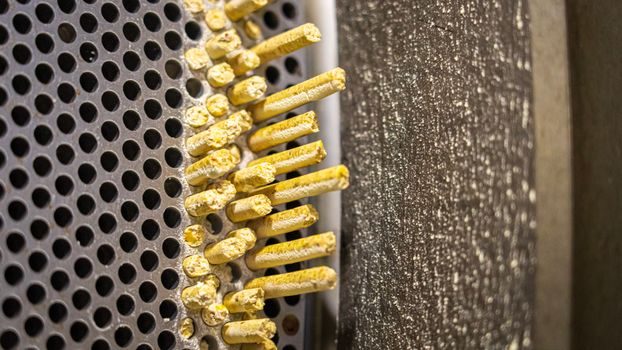
The three defects that gate fluoropolymer part release are bubbles, delamination and flow marks; each is a fingerprint of a specific process variable [S3]. Bubbles trace to trapped moisture or volatiles from overheated resin, delamination to inadequate knit-line fusion between melt fronts, and flow marks to non-uniform die or cavity surface temperature.
Process development starts from a customer specification, then runs through a design review covering tooling, machining, mould material of construction and barrel/screw geometry before any sample is pulled. New resin or new geometry typically needs a few sampling runs; Savillex reports that the first stretch-blow-moulded ETFE bottle required months of process development and the released product took close to a year [S3] — a useful benchmark when planning new fluoropolymer part launches in 2026.
Materials Compared on Cost, Process Window and Corrosion
Engineers comparing the five main grades on cost, melt temperature and chemical resistance get a clear hierarchy: PVDF is the cheapest and easiest to process (200–230 °C melt) but only handles moderate chemistry; ETFE and PCTFE sit in the middle on cost and run at ~270–290 °C; PFA and FEP are the most expensive, run at ~300–380 °C melt and offer the broadest chemical resistance, with PFA rating higher than FEP on continuous service temperature (≈260 °C vs ≈200 °C) [S3].
For semiconductor wet-benches, pharma API manufacturing and bioprocessing single-use assemblies, EFPIA industry guidance documents fluoropolymer tubing, engineered process filters and fittings as default wetted materials; PTFE and PFA dominate aggressive-chemistry lines, PVDF and ETFE cover the cheaper bulk-fluid lines, and PCTFE shows up where transparency or low permeation matters [S7].
Safety, Emissions and the FPG Manufacturing Programme
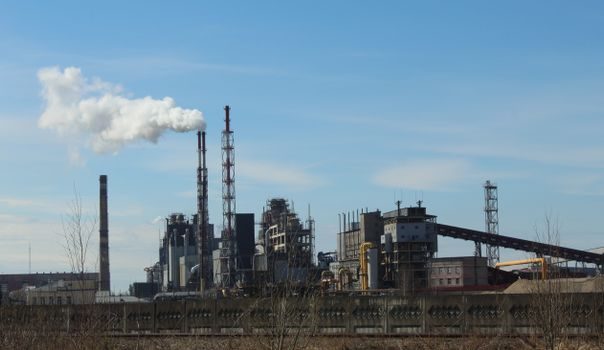
FPG (Fluoropolymers Product Group) released a Guide for the Safe Handling of Fluoropolymer Resins on 2025-09-03 as part of a voluntary industry-led Manufacturing Programme launched in September 2023, and at the end of 2024 its members had completed the first milestone on emissions control in fluoropolymer production [S6]. The programme is the de facto European benchmark for HF and PFOA-precursor handling at resin, not part, level.
For process engineers specifying a 2026 line, the practical consequences are thermal decomposition thresholds during processing (smoke / HF onset roughly 360–400 °C depending on grade) and the need for local exhaust ventilation on conversion equipment, plus dedicated dust handling for PTFE ram-extrusion rooms. These handling rules, not the polymer chemistry, are the difference between a passing and a failing audit.
Selection Gates: Who Fluoropolymers Are For (and Who They Aren't)
Fluoropolymers are the right call when the wetted fluid is HF, hot concentrated acids, halogenated solvents, or ultra-pure water at >80 °C; when service temperature exceeds 150 °C; or when the spec needs near-zero extractables for pharma or semiconductor use [S3][S7].
They are the wrong call when cost dominates (commodity PP or PVDF will beat PFA on $/kg by 3–10×), when the fluid is a strong base above 80 °C (PFA and FEP are not the answer — ECTFE or perfluoroelastomer seals are), or when the part needs high mechanical load (unfilled PTFE creeps, glass-filled grades sacrifice chemical resistance). PTFE also cannot be injection-moulded by conventional melt processing — ram extrusion and sintering are the only conversion routes, which is the single biggest rule to lock into a spec before talking to a molder.
2026 Trackable Signals
Three signals to watch over the next two quarters: (1) the FPG Manufacturing Programme Phase 2 milestones, expected to tighten HF and PFOA-precursor emissions limits at European resin sites through 2026 [S6]; (2) patent activity around non-PFAS surfactants for aqueous fluoropolymer polymerisation, which would mark the first process-level shift since the perfluoropolyether-acid class [S5]; and (3) qualification of stretch-blow-moulded ETFE bottles for single-use bioprocessing assemblies, an area where Savillex's first commercial development took roughly a year from sampling to release [S3].
For component-level specifications, see additive manufacturing material.