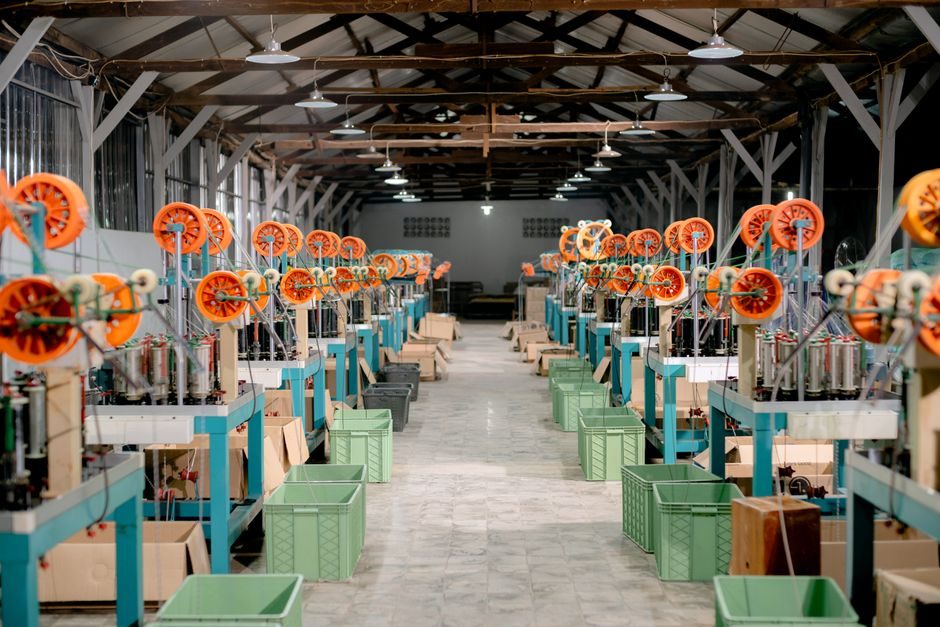
Silicone rubber manufacturing rests on two industrial cure families: peroxide-cured high-consistency solid (HTV/HCR) stock processed by extrusion, calendering, compression, transfer or injection moulding, and addition-cured liquid silicone rubber (LSR/LIMS) shot into closed moulds on precision injection lines [S5].
Both routes feed the same end-property envelope — wide service temperature, low chemical reactivity, steam and weathering resistance — but the capex, cycle time, flash content and tolerance capability differ by an order of magnitude, which is why most buyers now specify the cure system in the RFQ rather than leaving it open [S4][S5]. For foundational definitions of base polymers and curing behaviour, see the silicone rubber encyclopedia entry.
Raw Material Forms: HCR, LSR and Specialty Stocks
WACKER markets ELASTOSIL R as peroxide-curing solid grades supplied either as base stock or ready-to-use mixtures with crosslinkers, stabilisers and pigments pre-blended, while ELASTOSIL R plus covers platinum-catalysed addition-curing solid grades for applications where peroxide by-products are unacceptable [S5].
On the liquid side, Shin-Etsu's LIMS platform describes a fully automated sequence from two-part LSR metering through static mixing to injection, with addition-cure chemistry chosen specifically to give fast cure at low moulding temperatures and minimal post-cure time. Genvan, certified as a Chinese national high-tech enterprise and member of the China Silicone Industry Association, supplies both HCR and LSR grades, reflecting how mid-tier compounders now run parallel product lines rather than specialising in one family [S4].
Cure Chemistry: Peroxide vs Addition (Platinum) Systems
Peroxide cure relies on organic peroxides that decompose at elevated mould temperatures to generate free radicals which crosslink the vinyl-containing PDMS backbone; this is the workhorse system for HTV but leaves acidic by-products that can foul contacts and limit use in medical or sensor-grade parts [S5].
Addition cure uses a platinum catalyst to link vinyl groups with Si-H crosslinkers, producing no by-products and allowing faster, lower-temperature cure — the chemistry that underpins LIMS shot weights in the single-digit grams range at cycle times that compression moulding cannot match. For buyers comparing elastomer families on heat, chemical and weathering behaviour, the broader industrial rubber reference places silicone's high-temperature ceiling against EPDM, natural and nitrile options.
Primary Moulding Routes and Their Tolerance Windows
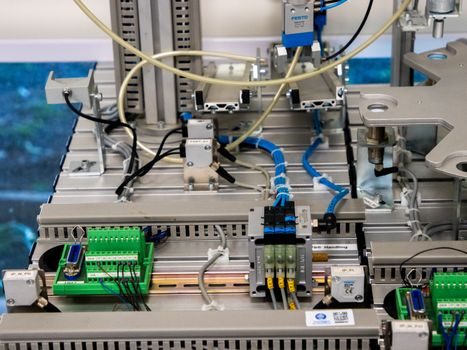
Compression moulding — placing a preform of HCR into an open heated cavity and closing under press force — is the lowest-capex route and tolerates a wide viscosity range but produces flash and limited dimensional control, so it is reserved for large gaskets, O-rings and simple seals [S1][S5].
Transfer moulding and injection moulding of HCR (WACKER documents both as standard processable routes) cut flash and tighten tolerances, with injection moulding of HCR also called HCR-IM bridging into the precision tier that LSR normally occupies [S5]. Extrusion and calendering handle continuous profiles — tubing, wire insulation, sheet — using peroxide-cured HCR in a continuous cure oven or salt bath downstream [S5]. For comparison with thermoplastic-injection workflows, the ABS plastic manufacturing process reference illustrates the same moulding-window trade-offs in a non-elastomeric family.
Liquid Injection Moulding (LIMS): Cycle, Tooling and Cleanroom Considerations
LIMS uses a two-part liquid system pumped through a static mixer into a cold-runner or runnerless mould on a horizontal LSR injection press; the parts cure inside the closed tool and are ejected ready for deflashing, with the entire metering–mixing–moulding–curing chain automated on a single machine. [S1]
Shin-Etsu lists the operational gains as shorter moulding time from fast addition-cure, lower injection pressures because the material is liquid, and reduced labour because mixing is eliminated from the shop floor. Cleanroom-compatible production is now a baseline requirement in the medical and wearable space — ZetarMoulding documents three of its 15 silicone moulding machines installed in an M7-class (ISO 14644-1 equivalent, ~10,000 particles ≥0.5 µm per ft³) dust-free room to support FDA and TS 16949 audits [S1].
Process Flow from Design to Mass Production
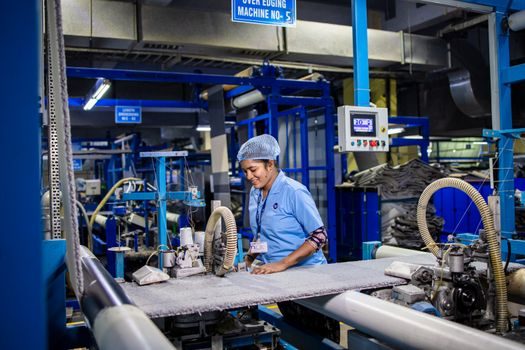
ZetarMoulding publishes a six-step flow that mirrors industry practice: idea capture by sales/engineering, 3D model build, mould design, in-house toolmaking, T1 sample submission to the customer for approval, then mass production — with assembly, logo printing and packaging as optional downstream steps [S1].
The T1 sample gate is the single most important handoff in silicone moulding because silicone's high thermal expansion, mould-shrink variation between HCR and LSR (often 2–4 % for HCR versus 2–3 % for LSR, depending on grade and filler load), and post-cure dimensional drift are not predictable from CAD alone, so a physical sample sign-off is mandatory before tool release for serial production [S1][S5].
Emerging Application: Silicone as a Triboelectric Substrate
Beyond traditional sealing and gasket use, silicone rubber is now specified as a flexible, biocompatible triboelectric layer in wearable triboelectric nanogenerators (SR-TENGs) that harvest biomechanical energy for self-powered sensors, with finger-movement, waist, head and back health monitoring cited as active research targets [S2].
The review notes that SR-TENGs convert "random, multi-directional, low-frequency mechanical energy into real-time high output" and that their manufacturing process is "relatively straightforward" compared with piezoelectric alternatives, though it requires sophisticated structuring for sensitivity and multifunction — pushing demand for precision LSR micro-moulding and surface-textured tools [S2].
Vendor Certification and Sourcing Signals

Quality-system coverage is now table-stakes: ZetarMoulding lists ISO, TS 16949, TUV and FDA certifications with a 15-machine moulding shop split between standard and M7-class cleanroom cells [S1], while Jiantaisheng (Shenzhen) is BSCI-audited and lists FDA/CE compliance for its silicone sport and dental protection lines [S3].
On the upstream compounding side, Genvan holds national high-tech enterprise status and China Silicone Industry Association membership, and supplies both HCR and LSR under the same commercial roof — a sign that dual-line capability is becoming the default for non-OEM compounders [S4]. For buyers weighing silicone against EPDM in outdoor, hot-air or steam service, the EPDM rubber reference gives a direct side-by-side on temperature, ozone and chemical resistance. The relevant machine class for compounding and mixing in a silicone plant is covered in the power mixer pros and cons brief.
Trackable signals for the next sourcing cycle: LSR press order books at the two top-tier Japanese suppliers (Shin-Etsu, WACKER) into Q4 2026, and any tightening of FDA extraction-testing thresholds for silicone components in food-contact and wearable-skin applications — both will reshape capex allocation between HCR compression cells and cleanroom LIMS lines.