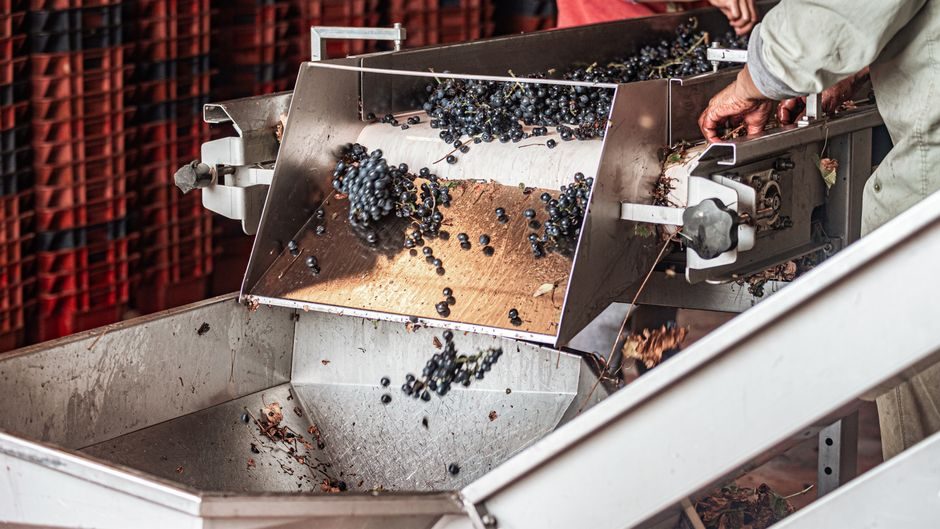
Food processing equipment is not a single market but a stack of sub-markets, and the 2026 baseline values are now published: dairy processing equipment is sized at USD 12.73 billion in 2026, growing to USD 17.36 billion by 2031 at a 6.4% CAGR, while poultry processing equipment starts 2026 at USD 4.97 billion and is projected to reach USD 8.61 billion by 2035 at 6.3% CAGR [S3].
Bakery processing equipment tracks a separate forecast of USD 14.8 billion by 2026 against a 2021 base of USD 11.6 billion, implying a 5.1% CAGR, with the meat processing equipment market valued at USD 12.34 billion in 2024 and projected to reach USD 19.73 billion by 2034 at roughly 4.8% CAGR [S1][S2]. The range — single-digit billions per sub-segment versus a 5-6% growth band — defines the spec-driven buyer's map for the year.
Sub-Market Size Comparison: Dairy, Poultry, Bakery, Meat, and Lyophilization
Dairy processing equipment is the largest 2026 sub-segment in the public MarketsandMarkets data, with USD 12.73 billion and a 6.4% CAGR through 2031; the supplier roster is led by Alfa Laval, SPX FLOW, Andritz, Pentair, Sulzer, and GEA [S3]. Across the same 2026 line item, poultry processing equipment is smaller at USD 4.97 billion (6.3% CAGR to 2035) with named leaders JBT Marel, GEA, BAADER, Meyn, Middleby, and Duravant [S3].
The global bakery processing equipment market is estimated to reach USD 14.8 billion by 2026, growing at a 5.1% CAGR from a 2021 base of USD 11.6 billion, and is segmented by application into bread, cookies & biscuits, and cakes & pastries, according to a MarketsandMarkets report published January 4, 2022. Meat processing equipment sits at USD 12.34 billion in 2024 and is projected to grow to USD 19.73 billion by 2034, with cutting equipment leading by type and processed beef leading by meat type [S2]. The food lyophilization (freeze-drying) equipment market is a separate, smaller sub-segment at USD 1.19 billion in 2025, growing to USD 1.60 billion by 2030 at 6.0% CAGR, dominated by GEA, Hosokawa Micron, Tofflon, Spincotech, and Martin Christ [S3].
Selection Criteria: What Actually Drives Spec Choices in 2026
Automation level is the first spec lever on a 2026 buyer's sheet, and the poultry segment explicitly breaks equipment out by mode of operation and plant capacity in the MnM segmentation, signalling that buyers are choosing lines by throughput tier, not just equipment type [S3]. The meat processing sub-market is driven by "adoption of fully automated technologies" with inbuilt sensor systems, rising equipment speed, and rising adoption of automated processing systems [S2].
For dairy lines, the 2026 MnM scope explicitly covers pasteurizers, homogenizers, mixers & blenders, separators, evaporators, and dryers — meaning a dairy plant spec is dominated by thermal-separation unit ops, not packaging [S3]. Across the broader equipment stack, food & beverage industry pumps are also tracked as a discrete USD-denominated sub-market segmented by application (beverages, dairy & chocolate, meat & poultry, bakery & confectionery) and by degree of engineering, flow, and pressure, which pushes the process control side — a pressure transmitter or flow meter — into the capex spec from day one [S3][S1].
Who This Market Is For — and Who It Is Not For

The 2026 food processing equipment market is built for processors scaling past manual throughput: fully automated meat lines, high-capacity dairy pasteurization trains, and continuous bakery production for convenience-food retail [S1][S2]. The named supplier sets — Alfa Laval, SPX FLOW, GEA, JBT Marel, BAADER, Middleby, Andritz, Pentair, Sulzer, Tofflon, Martin Christ — are all B2B plant-equipment OEMs, not retail or hobbyist channels [S3].
This is not a market for small artisan bakers, single-SKU food trucks, or low-throughput processors: maintenance cost of bakery wastewater lines and the high capital cost of automated meat processing machinery are flagged as restraints in their respective sub-market reports, meaning capex of this scale is uneconomic at sub-industrial volume [S1][S2].
Adjacent Sub-Markets: Sorting, Pumps, and Lyophilization
Food sorting machines form an adjacent equipment sub-market sized at USD 2,415.4 million in 2023, forecast to rise from USD 2,507.6 million in 2024 to USD 3,887.6 million in 2034 at 4.5% CAGR, with the dry food and packaged food processing segment leading revenue on convenience-food demand (2024-07) [S4]. The food lyophilization equipment sub-market — freeze dryers for shelf-stable foods — is forecast to grow from USD 1.19 billion in 2025 to USD 1.60 billion by 2030 at 6.0% CAGR, supplied by GEA, Hosokawa Micron, Tofflon, Spincotech, and Martin Christ [S3].
Food and beverage industry pumps are tracked as a separate sub-market with explicit segmentation by application across beverages, dairy & chocolate, meat & poultry, and bakery & confectionery, and by flow and pressure rating, meaning a process engineer specifying a new dairy or meat line must size both the equipment and the pumping / industrial valve system in the same capex envelope [S3]. Adjacent capex, including packaging machinery, is covered in the buyer's map at Top Packaging Machinery Companies 2026, which is where downstream throughput decisions from the bakery and meat lines flow.
Real Use Cases: Plant Capacity, Mode of Operation, and End-Product
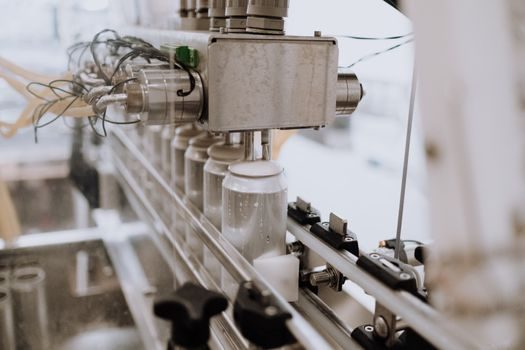
Poultry processing equipment demand splits across live bird handling, slaughtering & defeathering, evisceration, cut-up & portioning, deboning & filleting, with named plant-capacity tiers — meaning a spec sheet is choosing a line, not a single machine [S3]. Dairy lines similarly segment by application and plant capacity, where the decision is pasteurizer train throughput versus homogenizer pressure rating versus separator bowl speed [S3].
End-product segmentation is the spec driver at the buyer's level: bakery equipment is segmented by application into bread, cookies & biscuits, and cakes & pastries; meat equipment by meat type (processed beef leads); and lyophilization by application including instant coffee, fruits, and ready meals [S1][S2][S3]. Equipment cost is then tied to mode of operation (automatic vs semi-automatic) and plant capacity, both of which are explicit axis in the 2026 MnM dairy report [S3].
Limitations, Restraints, and Failure Modes
Bakery processing equipment's flagged restraint is wastewater handling on the production line: high-volume bakery plants generate effluent that requires treatment, raising operating cost and limiting the build-out of small-craft bakeries into industrial scale [S1]. Meat processing equipment is constrained by the high cost of machinery, which restricts adoption in price-sensitive markets and pushes the volume toward centralized, large-scale plants [S2].
Poultry processing equipment's growth rate (6.3% CAGR) is tied to automation penetration, so plants that delay automation investment face throughput and labour-cost disadvantages relative to JBT Marel / GEA / BAADER-equipped competitors [S3]. Across all sub-markets, food-safety regulations and traceability are stated drivers, meaning equipment that cannot log sensor data — temperature, pressure, flow — disqualifies the line for premium contracts; a PLC or pressure sensor retrofit is often the actual gating spec.
2026 Sourcing Signals: Standards, Materials, and Where the Spend Is Going

The 2026 MarketsandMarkets data names stainless-steel-contact food-grade equipment as the implicit baseline across dairy, meat, and poultry sub-segments, with GEA, Alfa Laval, SPX FLOW, and JBT Marel holding process-line positions that include hygienic separator, homogenizer, and evisceration modules [S3]. Food-grade stainless selection and EU cost dynamics for hygienic-line steel are tracked in the spec map at Marine Stainless Steel Selection: 2026 Grade Map and EU Cost Reset, which crosses over to food-grade 304 / 316L selection.
The 2026 capex flow into packaging machinery — thermoforming and automation — is the downstream complement to the 2026 food processing equipment baseline, and is mapped at Packaging Machinery 2026: Automation, Thermoforming Lead Capital Spend. Signal to track in H2 2026: the dairy sub-market's 6.4% CAGR is the highest in the published 2026 baseline set and is anchored by Alfa Laval / SPX FLOW pasteurization and separation lines [S3]; a second signal is whether the poultry 6.3% CAGR is sustained past 2027 as JBT Marel and BAADER roll out further automated deboning and filleting modules.