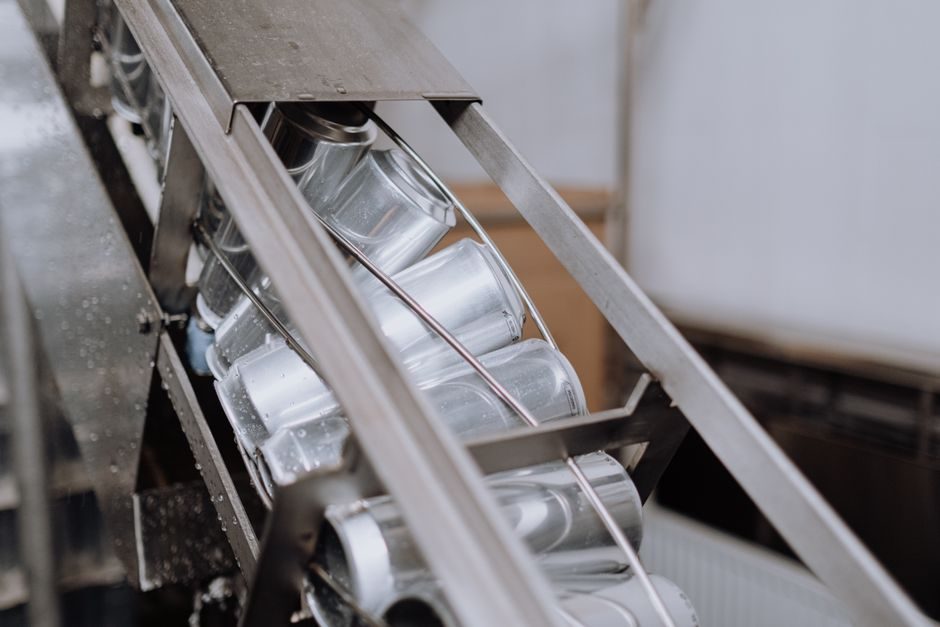
Global packaging machinery demand is forecast to reach $68.41B by 2030, expanding at a 6.1% CAGR over 2024–2030, with e-commerce volume and food/beverage throughput cited as the two largest demand drivers [S2].
Within that envelope, thermoforming equipment — covering vacuum, blister, skin and MAP/CAP formats — is projected to outpace most other packaging machinery categories through 2026, with the broader packaging machinery market tracking toward $71.1B globally by 2026 at 5.8% annual growth [S5]. APAC held roughly 35% of global packaging machinery share in 2018, anchored by China, Japan and Taiwan consumer-electronics output [S2].
Demand Split by Automation Tier and End-Use Sector
The market is segmented by IndustryARC into automated vs semi-automated tiers, and across filling-and-packing, cartoning, labelling-and-printing, palletising, wrapping, and cleaning/sterilising machine types [S2]. Electronics, retail/e-commerce, food and beverages, cosmetics, pharmaceuticals and chemicals are the six end-use verticals tracked; food/beverage and e-commerce absorb the bulk of new line-build capital.
E-commerce is modelled to grow from $38.50B in 2018 to $200.00B by 2026, a compound that pulls downstream demand for cartoning, wrapping and palletising cells; global internet penetration rose from 37.3% to 56.8% between 2016 and 2019, a structural tailwind for SKU proliferation and parcel volume [S2]. China held approximately 37–39% of global consumer electronics production in 2018, 2–3 percentage points higher than 2012, with electronics exports up 24% the same year — the manufacturing base that feeds APAC packaging line orders [S2].
Thermoforming: The Outperforming Sub-Segment
Thermoforming equipment — used to produce vacuum, blister, skin, MAP/CAP and other film-based packs — is projected to outperform most other packaging machinery types through 2026, despite starting from a small installed base [S5]. The category's growth is tied to shorter tooling changeovers, lower per-cavity cost versus injection moulding for short runs, and fit with retail-ready modified-atmosphere packaging for fresh protein, ready meals and medical trays.
For buyers evaluating a thermoforming line, decision criteria cluster around four axes: forming area (mm × mm), cycle time (cycles/min), web width compatibility (typical 320–620 mm), and tool-change time. A reference comparison frame is:
China as the Manufacturing Anchor
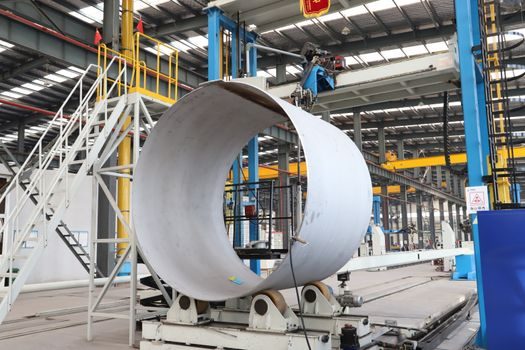
China has consolidated its position as a global leader in packaging machinery manufacturing, with domestic OEM capacity spanning premade pouch packagers (GDS180-06, GDS300-08 platforms), general packing machines (SZ100) and dumpling/wonton forming equipment aimed at food processors [S3]. Made-in-China.com lists 16 top-level industrial categories under which packaging machinery falls, with packing machinery, food packaging machines and automatic packaging machines among the most-trafficked buyer search terms [S1].
For procurement teams running cross-region sourcing, this translates into a wide quoting universe on RFQ portals — buyers can expect 24-hour quote turnaround on most packaging machinery RFQs posted to the platform [S1]. The trade-off is specification discipline: many entry-tier Chinese units ship with semi-auto controls, while European and Japanese OEMs still dominate the fully-servo, multi-axis cartoning and palletising tier.
Live Events and Specification Pressure Points in 2026
Packaging Innovations & Empack Birmingham 2026 (post-show report released 2026) aggregated exhibitor offerings across labelling, logistics, contract packing, fulfilment and third-party logistics, with smart-factory and end-to-end scalable solutions as the dominant buyer pulls [S4]. The trade show data corroborates the IndustryARC finding that the 2026 specification battle is around full-line integration, not single-machine throughput [S2][S4].
These are qualitative ranges grounded in the broader automation shift IndustryARC tracks, not a single vendor claim [S2].
Selection Criteria: Automated vs Semi-Automated Lines
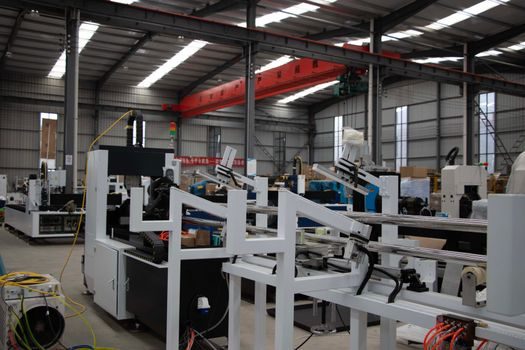
For a 2026 line-build, the automation tier is the single largest cost driver — typically a 2.5–4× capex delta between semi-auto and fully-servo auto cells. A working comparison across four decision criteria:
The two buyer profiles that should NOT default to full automation: low-SKU artisanal food producers running under 2,000 units/shift, and clinical-trial pharma packagers where format change validation cost outweighs labour savings.
Adjacent Specification Traps and Standards Anchors
Three failure modes recur on 2026 spec reviews. First, pressure and vacuum setpoints on vacuum packaging machine cells: chamber pressure for MAP/CAP is typically held in the 50–200 mbar absolute range with O₂ residual targets under 1–2% for fresh red meat — specify the vacuum pump capacity in m³/h, not just "vacuum," or skid sizing will be wrong. Second, flow meter sizing on liquid fillers: magmeters sized at 0.5–10 m/s flow velocity give cleanest accuracy, but volumetric piston fillers are still preferred for viscous products above 5,000 cP. [S1]
Third, control architecture: pneumatic manifolds controlled by industrial valve islands still dominate packaging machinery I/O count, but throughput-critical stations are migrating to integrated pressure sensor feedback for squeeze-tube and form-fill-seal applications. Buyers should demand I/O counts, cycle-time data, and OEE baselines in writing — vendor brochures rarely disclose the under-load number.
Trackable Signals to Watch Through Q4 2026

Two indicators will tell you whether the IndustryARC 6.1% CAGR track is holding: (1) the next IndustryARC update to the packaging machinery forecast, due before year-end 2026, which will revise the 2030 $68.41B target; (2) exhibitor counts and visitor counts from Packaging Innovations & Empack 2027 (autumn 2026 announcements) — both metrics were tracked at the Birmingham 2026 post-show report and form the leading indicator for European line-build intent [S2][S4]. For readers tracking related process-instrumentation demand, the polypropylene resin supply chain 2026 feedstock and spec levers map is the upstream material feed that thermoforming and form-fill-seal demand ultimately pulls.