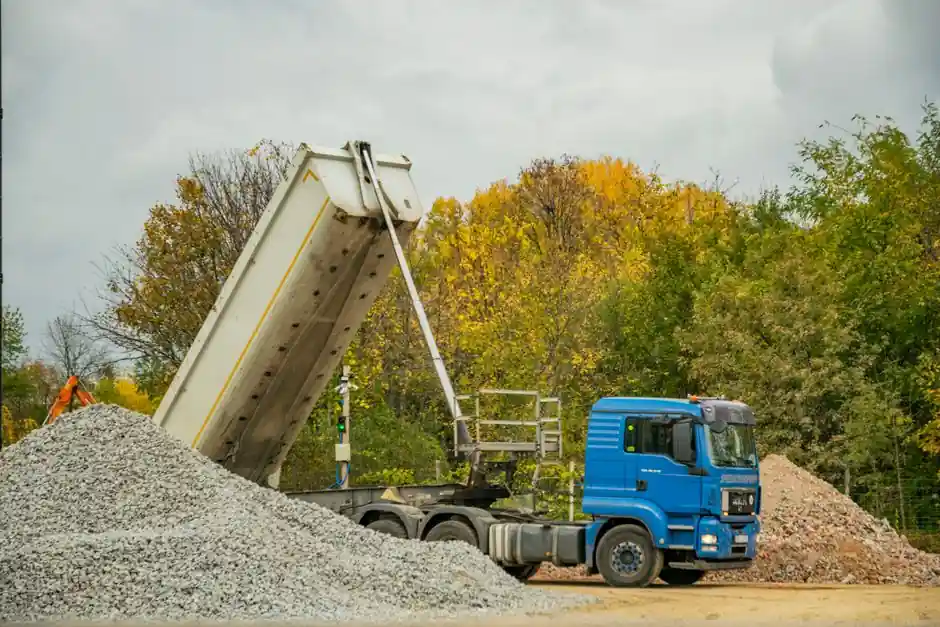
Forestry truck cranes are loader-mounted hydraulic knuckle-boom units fitted to a forwarder or commercial truck chassis, with U.S. rental fleet offerings spanning 10 t to 40 t lifting capacity [S2] and crossover machines reaching 50–80 t on the Load King product line [S3].
Selection is driven by three coupled variables: timber length (cut-to-length vs full-length), ground bearing pressure on soft forest soils, and the daily load-cycle count, all of which set the required net lifting moment, boom outreach, and chassis class [S1][S4][S7].
Forestry Crane Classes by Capacity and Reach
LOGLIFT divides its forestry range into S-type and Z-type boom kinematics, where S-type cranes deliver longer outreach with a simpler linkage, and Z-type cranes fold into a compact envelope behind the cab, which improves transport safety and operator clearance from the log bunk [S1].
PALMS uses a numeric naming convention where the leading digit indicates the series and the trailing value gives the reach in metres, so a PALMS 5.72 is a 5th-series professional-duty crane with 7.2 m outreach, while a 2nd-series unit at the same physical size targets municipal parks and can mount on a mini-forwarder [S4].
Class mapping commonly seen in 2025-2026 spec sheets puts municipal/parks work at roughly 2–5 t, small landowner firewood duty at 3–6 t, professional cut-to-length and full-length timber at 5–12 t, and crossover/dual-purpose arborist machines at 30–80 t [S2][S3][S4].
Boom Architecture: S-Type vs Z-Type vs Crossover
Z-type booms are specified when the truck must run on narrow forest roads and the operator must keep the folded boom clear of the load space behind the cab, a geometry that LOGLIFT markets as a transport and ergonomic safety gain [S1]. S-type booms win on long-reach full-length log handling because the simpler linkage path lets the crane reach further with a given net lift.
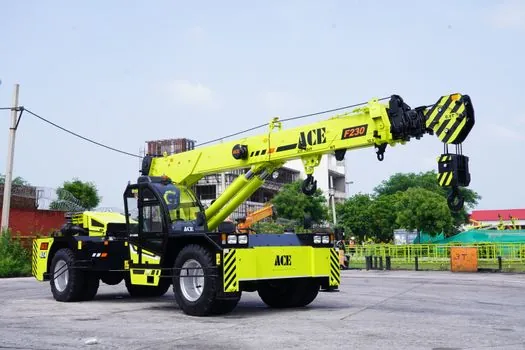
Crossover cranes are a hybrid category: a true truck crane built on a commercial chassis rather than a converted boom truck, with Load King offering 50T-80T models such as the 50-155 and 60-110, including wireless anti-two-block protection in place of a hard-wired LMI limit switch on the boom side [S3].
For context on chassis interaction, a truck-mounted crane on a forestry forwarder shares the same hydraulic knuckle-boom principles as a dump-truck-mounted loader, but forestry units are designed for repeated off-road loading cycles, not one-shot tipping duty.
Chassis, Weight, and Structural Steel Selection
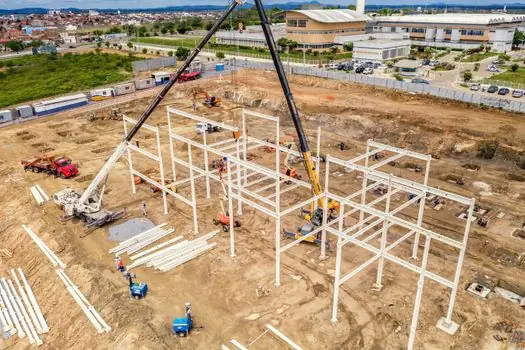
Dead weight is the binding constraint on a forestry truck: every kilogram added to the boom and subframe subtracts directly from payload, so SSAB's Strenx high-strength structural steel programme for forestry cranes is explicitly positioned to cut self-weight while keeping reach and capacity constant [S7].
SSAB cites the use of Strenx in forestry crane structures to minimise dead weight and increase transport payload, a benefit that propagates straight into transport profitability per cycle [S7]. Strenx grades typically specified in crane booms sit in the 700–1100 MPa tensile range, allowing thinner sections at equal stiffness, but the exact grade must be confirmed against the OEM's design calculation, not assumed.
Chassis pairing depends on road use: a 10–40 t forestry boom truck commonly uses a Class 7 or Class 8 commercial chassis, while a 50–80 t crossover demands heavier multi-axle commercial platforms with adequate front-axle load distribution for on-highway travel [S2][S3].
Attachments: Grapples, Saw Heads, and Quick Couplers
GMT Equipment fits its grapple saw family to forestry and recycling crane trucks and recommends the standard GMT grapple saw with the GMT C10 quick-coupler set as a default for truck-mounted forestry work, allowing the operator to swap tools without leaving the cab [S5].
Attachment choice is dictated by the timber product: cut-to-length operations pair the crane with a processing head and bunk, full-length timber work favours a log grapple with rotator, and recycling or roadside-clearance jobs use a clamshell or timber grapple with a saw option, all hung from the same boom through the quick-coupler interface [S1][S5].
For arborist and line-clearance crossover work, where the operator is lifting heavier bundles at greater radius, the same quick-coupler architecture lets the crew change from a grapple to a personnel basket or auger, which is one of the main productivity arguments for the crossover class over a fixed-configuration boom truck [S3].
Hydraulics, Controls, and Safety Systems
LOGLIFT markets intuitive controls and smart safety systems as standard on its forestry range, with the Z-type geometry also pitched as an operator-safety feature because the folded boom stays away from the operator station and the load [S1].
Load King crossovers integrate an LMI (Load Moment Indicator) with anti-two-block protection; on the 50T-80T range the anti-two-block is wireless, removing the hard-wired run along the boom side that is common on lighter boom trucks and reducing snag points in leafy canopy work [S3].
For an arborist or municipality buying a smaller 10–40 t unit, aerial-work-truck-class platform controls and LMI logic are increasingly common as base specification, not options, on North American forestry boom trucks sold through Custom Truck One Source's dealer network [S2].
Duty-Cycle and Sourcing Criteria Comparison
Three decision criteria separate the main forestry truck-crane classes: lifting moment at full reach, daily load-cycle count, and the proportion of on-road travel. Cut-to-length professional cranes (PALMS 5th series, LOGLIFT cut-to-length S-type) target 5–10 m reach, 200+ cycles per shift, and mixed on/off-road use; full-length cranes (LOGLIFT full-length, PALMS 7th) push reach to 8–10 m with higher slewing torque for heavy logs on steep terrain; crossovers (Load King 50-80T) trade some off-road agility for 30+ m radius lifting on commercial chassis for arborist and infrastructure work [S1][S3][S4].
For municipal parks work where ground pressure matters more than raw capacity, the PALMS 2nd series at sub-5 t on a mini-forwarder is the lower-impact option; for small forest owners splitting firewood, the 3rd series at 3–6 t on a tractor or small trailer covers the duty without over-spec [S4].
Purchasing lead times and service network are the third axis: dealers such as Custom Truck One Source, Load King, and Elliott run 30-plus North American locations with both sale and weekly/monthly rental options, an important hedge when a forestry contractor needs a 40 t boom truck for a six-week harvest window [S2].
Limitations and Failure Modes
Forestry truck cranes fail first at the boom pins, rotator seals, and hose routings, not at the steel structure itself, because impact loading on grapple work cycles fatigue these components faster than rated static capacity would suggest. SSAB's Strenx-based weight reduction only helps if the OEM has re-engineered the pins and bushings to match, otherwise the lighter boom simply transfers more shock into smaller hardware [S7].
Crossover cranes on commercial chassis are heavier and less manoeuvrable on soft forest soils than a purpose-built forwarder crane, and a 50–80 t unit will exceed many forest-bridge and forest-road load limits, so route surveys are mandatory before deployment [S3].
Sunfab notes that forestry crane hydraulic systems on timber trucks must withstand the most demanding conditions, and that system pressure and filtration choices cascade into the truck's PTO and reservoir sizing, an integration constraint that bites when a buyer tries to mount a forestry crane on a chassis the OEM did not design for that duty [S8].
Standards, Sourcing, and Trackable Signals
Forestry truck cranes fall under general machinery safety regimes such as the EU Machinery Regulation 2023/1230 and, in explosive or dust-laden environments, ATEX 2014/34/EU for component certification, while North American units typically comply with ASME B30.5 for mobile crane operations and applicable FMCSA rules for on-highway travel. Specific load-chart, anti-two-block, and LMI requirements should be confirmed against the OEM's compliance file rather than assumed by class. [S1]
For adjacent specification work on equipment that shares the same chassis and hydraulic integration logic, see our mining dump truck selection map and our wheel loader match-up for agriculture, both of which apply the same payload-versus-dead-weight trade-off that dominates forestry truck-crane buying.