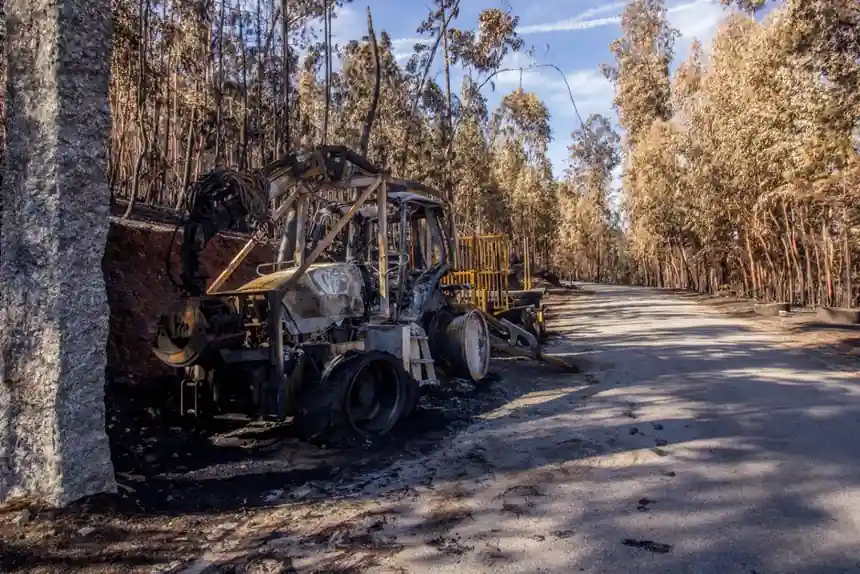
Forklifts working in forestry yards, sawmill log decks, and pulpwood reload stations fail on a different schedule than warehouse units, because abrasive slash dust, wet bark, and slope loading punish chains, mast rollers, brakes, and hydraulic seals far harder than smooth concrete floors [S2][S5].
Preventive maintenance on these machines tracks two clocks at once: OSHA 1910.178(q) inspection duties for industrial trucks, and forestry-specific wear checks on load-handling and undercarriage components, with PM intervals most commonly set at 250 operating hours or three months [S1][S3][S7].
OSHA 1910.178 Maintenance Duties That Apply on the Landing
29 CFR 1910.178(q) requires industrial trucks to be kept in clean, safe operating condition, and OSHA's vehicle-maintenance guidance lists 1910.178(g) battery charging, 1910.178(f) fuel handling and storage, and 1910.178(q) as the three sections that govern day-to-day upkeep on every powered industrial truck, including forestry-rated units [S1].
Operators themselves are expected to perform refueling on diesel units, propane tank swaps on LPG trucks, and battery servicing on electric forklifts, which means the same crew that runs the load also signs off on the daily check sheet [S1][S3]. 29 CFR 1910.147 lockout/tagout, enforced under OSHA directive CPL 02-00-147, applies whenever a mechanic is pulled into a mast, hydraulic, or engine service task, and 29 CFR 1910.151(c) requires eye-wash and body-flushing facilities at any battery-charging station [S1].
Forestry-Specific Wear Items Beyond the Standard Daily Checklist
Forestry-environment PM extends the general daily checklist with checks for chains, blades, belts, and hydraulic lines, all of which suffer accelerated wear from bark debris, sand, and continuous shock loading at the landing [S2][S5].
Tine and mast-roller inspection matters more in a log yard than in a pallet rack aisle: a daily visual check for bent or cracked tines is mandatory, and any tine showing damage must be repaired or replaced before the truck returns to service, because a tine failure at full rated load can drop a log bundle onto the operator deck [S5]. Hydraulic hoses, mast chains, and lift-cylinder seals are the three highest-failure items cited for rough-terrain and yard forklifts, and forestry guidance calls them out as the first items to inspect after every shift in dirty conditions [S2]. For a deeper look at how rough-terrain designs differ from warehouse units, the rough terrain forklift reference covers the undercarriage and mast geometry that drives these wear patterns. Operators in mixed-fleet operations can also compare platform options in Forklift Selection for Urban Infrastructure: RT vs Electric vs Truck-Mounted.
Power-Source-Specific Maintenance for Yard Service
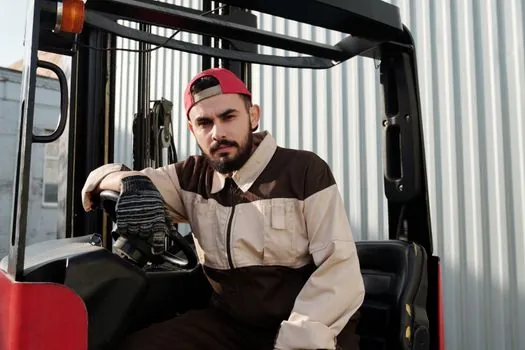
Diesel and gasoline forklifts, which dominate outdoor log-handling work, need engine oil, coolant, brake-fluid, belt, hose, radiator, and air-filter checks at every pre-shift inspection, with the air filter normally replaced at or before 500 operating hours [S3].
Electric forklifts used inside mill buildings and dry-sort sheds require battery-water level checks, sulfur-deposit cleaning on lead-acid cells, and cable-fray inspection, plus verified battery-restraint torque, while LPG forklifts rated for lifts above 15,000 lb are checked for tank mounting, leak-tight connectors, and functional relief valves at every shift [S3][S4]. Forest-yard sites that run diesel forklifts for chip and log handling are typically tied into broader supply contracts, and the Diesel Forklift Suppliers and Manufacturers: 2026 Supply Map and Selection Criteria reference lays out how warranty terms interact with PM intervals in this segment.
PM Cadence: 250 Hours, Three Months, or Both
Standard industry guidance sets planned forklift service at roughly every 250 operating hours, with a calendar cap of about three months, so whichever threshold lands first triggers the PM [S7].
Forestry use compresses that interval in practice: dust ingestion, hydraulic cycling at near-rated loads, and wash-down cycles with high-pressure water all accelerate wear on filters, seals, and bearings, so many operators shorten the cycle to 200 hours in peak season [S2][S7]. Pre-shift inspection remains a separate, shorter loop (fluids, tires, brakes, tines, safety devices, lights, horn, backup alarm) that must run before any operator turns the key, and a written log is required to demonstrate compliance under 1910.178(q) [S1][S4][S5].
Hydraulic, Brake, and Tire Systems: Where Forest Failures Start
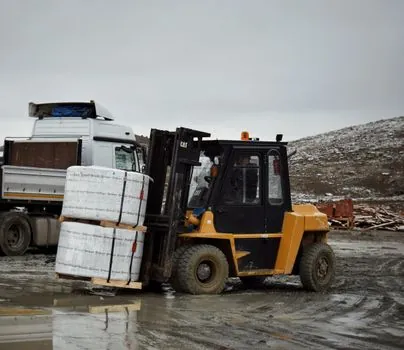
Hydraulic systems, brakes, and tires are the three subsystems where maintenance dollars concentrate on a forestry forklift, and they are also the three items most often cited in incident reports tied to maintenance gaps [S5].
Tires take a beating from log-deck steel and stump debris, so a daily pressure check and visual tread inspection is the minimum, with any under-inflation or cuts flagged for replacement before the shift starts [S4][S5]. Brakes are non-negotiable: OSHA guidance and field practice both require a confirmed effective stop test before the truck enters the work area, and brake failure on a loaded log handler is treated as a top-tier hazard rather than a repair ticket [S5]. Hydraulic leaks, usually at cylinder rod seals or hose crimps, are the most common defect found during the daily walk-around, and forestry guidance treats any active drip as a same-shift out-of-service condition rather than a watch-and-wait item [S2]. For procurement teams weighing rough-terrain forklifts against other yard equipment, Rotary Drilling Rig Selection for Forestry: Spec Map and Site-Fit Criteria and Forestry Gantry Crane Selection: 10T–32T Capacity Fit show where the forklift sits in a wider yard-fleet spec matrix.
Acceptance Criteria and When to Repair Versus Replace
Acceptance criteria include checking brake-stop distance against the unit's published spec, examining hydraulic lines for leaks or signs of aging, inspecting moving parts such as mast chains for wear and tear within the manufacturer's elongation limit, and verifying tire pressure against the data plate rating [S2][S5].
Repair is appropriate when a single component is out of spec but the surrounding system is intact, for example, a leaking cylinder seal with no scored rod, or a brake pad past minimum thickness with the rotor still within runout limit. Replace, do not repair, when tines are bent or cracked, when mast chains show stretch past 3% or visible pitting, when tire sidewalls are cut through to the cord, or when hydraulic hoses show bulges, abrasion, or age-cracking anywhere along the run [S2][S5]. Any brake failure during a pre-shift test is an immediate out-of-service tag, and the truck stays down until the system is rebuilt and re-verified, not just adjusted [S1][S5].
Documentation, Operator Training, and What an Auditor Will Ask For

Documentation is the only evidence that the PM program exists, and OSHA inspections under 1910.178(q) will request the daily-check logs, PM interval records, and operator-training certificates (CPL 02-01-028) on site [S1][S5].
Operators performing daily checks must hold valid OSHA-compliant forklift training, and the same standard applies when they perform refueling, propane swaps, or battery servicing, since those tasks are explicitly listed as operator-level maintenance in the OSHA guidance [S1][S3]. A maintenance CMMS that tracks inspections, schedules repairs, and logs downtime is now the norm in multi-unit forestry fleets, replacing paper sheets that were easy to lose on a remote landing [S6]. Trackable signals to watch over the next PM cycle: PM-interval compression to 200 hours on dust-heavy sites, growth in hydraulic-seal replacement spend as a share of total maintenance cost, and any uptick in brake-related pre-shift failures, which usually points to either operator-level inspection drift or a contaminated friction surface [S5][S6].
Spec-level background on the components involved: forklift, and pressure transmitter.