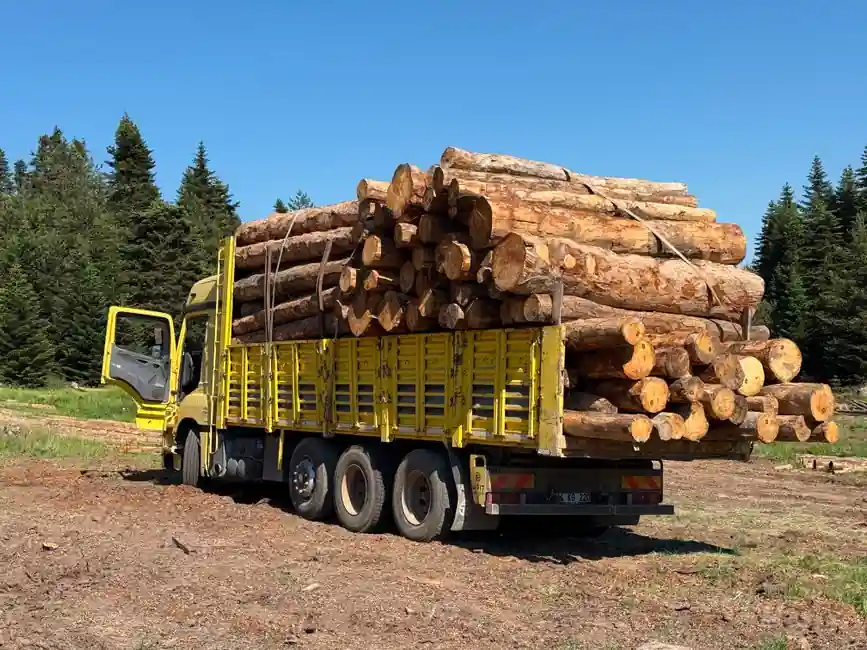
A rotary drilling rig in a forestry context is a compact, track-mounted machine that uses a rotary drill string and auger to sink shallow, narrow-diameter holes for tree planting, soil sampling, fence-post anchoring, and forest-road drainage, with operating weights often held below 50 t to keep ground pressure inside the low bearing capacity of forest soils [S1][S5].
Forestry applications rarely need the 20,000 ft deep-formation capability used in oil and gas; instead, the working envelope typically lands between 50 mm and 500 mm hole diameter and 2–30 m depth, which puts the procurement focus on mobility, footprint, and quick rig-up rather than raw hook load [S2][S4].
Why Forestry Sites Force a Different Rig Class
Forestry drilling sites combine three constraints that few construction or oilfield rigs are designed for: low soil bearing capacity (often 30–80 kPa on wet topsoil), restricted access corridors (single-lane forest tracks, 3–4 m wide), and tight working radii near standing timber, per site-access guidance compiled in foundation-rig buyer literature [S4].
A standard oilfield rotary rig running 200–300 t of mast, substructure, and BOP stack cannot reach most cut-block sites and would exceed soil bearing capacity by a wide margin, which is why forestry buyers are steered toward compact rotary platforms in the 5–20 t class on rubber or lightweight steel tracks [S3][S5].
Forestry operators also need shorter rig-up and rig-down cycles than civil contractors; reported target cycles in the 2026 buyer literature for foundation rigs sit in the 30–90 minute band, and forestry buyers should treat that as a hard procurement criterion because every extra hour on a remote site costs travel, crew, and lost production time [S4].
Rotary Drilling Method Match by Task
Auger-driven dry rotary methods (Kelly bar and Continuous Flight Auger, CFA) are the dominant match for forestry because they handle soft to medium soils and deliver clean 50–500 mm holes without external flushing fluid, which simplifies environmental handling on cut-blocks [S4].
For the forestry task mapping the practical method selection looks like: tree-planting pit boring at 100–300 mm uses small-diameter CFA; soil sampling and root-zone investigation at 50–150 mm uses a lightweight Kelly bar or handheld rotary core; fence-post and sign-post anchoring at 150–300 mm down to 2–3 m uses a compact auger rig; forest-road drainage and slope anchors at 200–500 mm to 10–30 m uses a mid-sized rotary rig with telescopic Kelly bar, per the depth and diameter envelopes published in the 2026 foundation-rig guide [S4].
Reverse circulation and down-the-hole hammer methods, while powerful, are generally over-specified for forestry and tend to be ruled out on environmental and cost grounds; reverse circulation can deliver around 3.2 m diameter holes in karst but is built for civil foundation work, not remote forestry access [S4].
Selection Criteria: Weight, Footprint, Power, and Reach
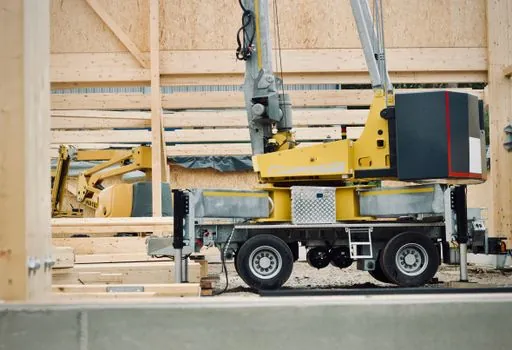
Operating weight is the single most important forestry-specific spec: the IADC and buyer literature note some rotary rigs come in under 50 t, and forestry buyers should target the lower half of that range where possible, because ground-pressure-limited sites will bog heavier units on the first rain [S5].
Track type and ground pressure: rubber tracks typically deliver 20–40 kPa ground pressure, composite or light steel tracks 30–60 kPa, and standard steel tracks 50–100+ kPa, so a forestry buyer on wet sites should spec rubber or composite and accept the trade-off of higher unit cost and faster wear.
Powerpack selection for forestry is increasingly electric or hybrid, since diesel engines on forest sites trigger fire-risk restrictions in dry seasons; the 2026 buyer guide flags electric and hybrid rigs as the direction of travel for environmental compliance, and forestry operations in fire-risk jurisdictions should plan for at least a hybrid option from shortlist stage [S3].
Drill-string reach, mast height, and Kelly bar extension: for the typical forestry envelope of 2–30 m hole depth, a 4–6 m mast with a 2-stage or 3-stage telescopic Kelly bar covers the range without forcing the operator to add pipe joints in the field, which is a common source of downtime cited in the 2026 foundation-rig selection literature [S4].
Comparison: Forestry vs Civil Foundation vs Oilfield Rotary Rigs
On the four decision criteria that matter for forestry buyers, the rig classes line up as follows: operating weight (forestry 5–20 t, civil 30–80 t, oilfield 200–1000+ t); typical hole depth (forestry 2–30 m, civil 10–80 m, oilfield 1000–6000+ m); mobility on soft soil (forestry high with rubber tracks, civil medium, oilfield very low); and rig-up cycle (forestry 30–60 min target, civil 1–4 h, oilfield 24–72 h for pad and BOP stack), synthesized from 2026 buyer data [S2][S4][S5].
The same comparison shows why a civil foundation rig is not a cheap substitute for a forestry rig: a 50 t Kelly-bar rig on rubber tracks can do forestry work but burns extra fuel, needs wider access corridors, and costs roughly 2–4x the daily operating cost of a purpose-built compact unit, per the 2026 US market pricing benchmarks that put compact rotary rigs well below deep-foundation pricing [S2].
For procurement writing, a one-line rule is: if more than 50% of the working year is on cut-blocks, plantations, or forest roads, specify a compact forestry-class rig; if more than 50% is on prepared civil pads, a mid-sized foundation rig remains the better fleet anchor [S4].
Limitations, Failure Modes, and What Rigs Cannot Do
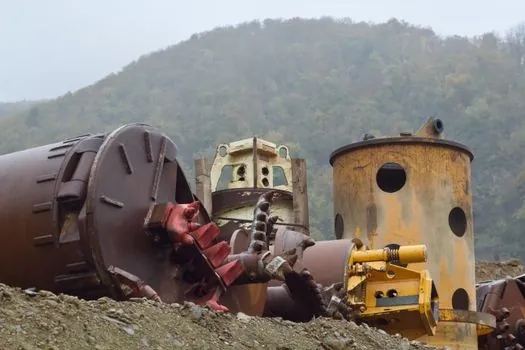
Compact rotary rigs for forestry hit a hard ceiling in rocky or boulder-rich glacial till, where a down-the-hole hammer or rotary-percussion head is needed; attempting to drill such ground with a low-torque forestry auger ends in burned-out auger flights and frequent bit replacement, which is the most common failure mode reported in the 2026 buyer literature for under-spec'd rigs [S3][S4].
Another documented limit is hole straightness over depth: compact Kelly-bar rigs on soft soils can wander beyond 2% deviation past 15 m, which is acceptable for drainage and anchor holes but disqualifies them for any geotechnical sampling that must meet verticality tolerances set by the testing lab.
Automation features common on modern rigs (AI-driven failure prediction, automated rod handling) are still largely packaged for oilfield and large civil units; on sub-20 t forestry rigs buyers should expect basic telematics at most, and treat full automation claims from shortlist vendors with caution, per the 2026 buyer-guide caution on over-promising automation [S3][S4].
Standards, Compliance, and Sourcing
Forestry drilling rarely triggers oilfield-grade regulatory frameworks, but the 2026 US buyer literature still flags API, OSHA, and EPA obligations for any rotary rig used in adjacent markets, and forestry buyers who occasionally cross into geotechnical or water-well work should confirm the shortlist rig is API-compliant at the driller-interface level rather than the full oilfield spec [S2].
Operator protection requirements on forestry sites typically follow general OSHA machinery guarding rules, and emergency-stop plus operator-cab ROPS/FOPS should be treated as baseline acceptance criteria, not optional extras, in line with the safety prioritization published in the 2026 rig-selection guidance [S3].
For technical reference and term definitions, the engineering overview at the rotary drilling rig encyclopedia page is a good cross-check on mast, Kelly bar, and drill-string nomenclature used in this article.
Adjacent forestry fleet decisions feed into the same operating envelope, including forestry tower crane selection for site, load, and mast trade-offs when mast height and soft-soil pad design overlap with drilling rig siting on the same cut-block.
Trackable signals for forestry buyers in the next procurement cycle are: (1) whether shortlisted vendors have a sub-20 t rubber-track model with documented ground-pressure figures, not just marketing claims, and (2) whether the OEM offers a hybrid or battery-electric powerpack as a 2026 catalogue option rather than as a future roadmap line, per the 2026 buyer-guide emphasis on near-term availability [S2][S3][S4].
The underlying component specifications are covered under rotary encoder, and rotary hammer.